Why it works: Pork and flour are a kitchen classic. They rank in the top 27% of all ingredient pairs, and cooks put them together in 11,187 recipes. Both carry isobutyraldehyde, which smells malty, green. The science ↓
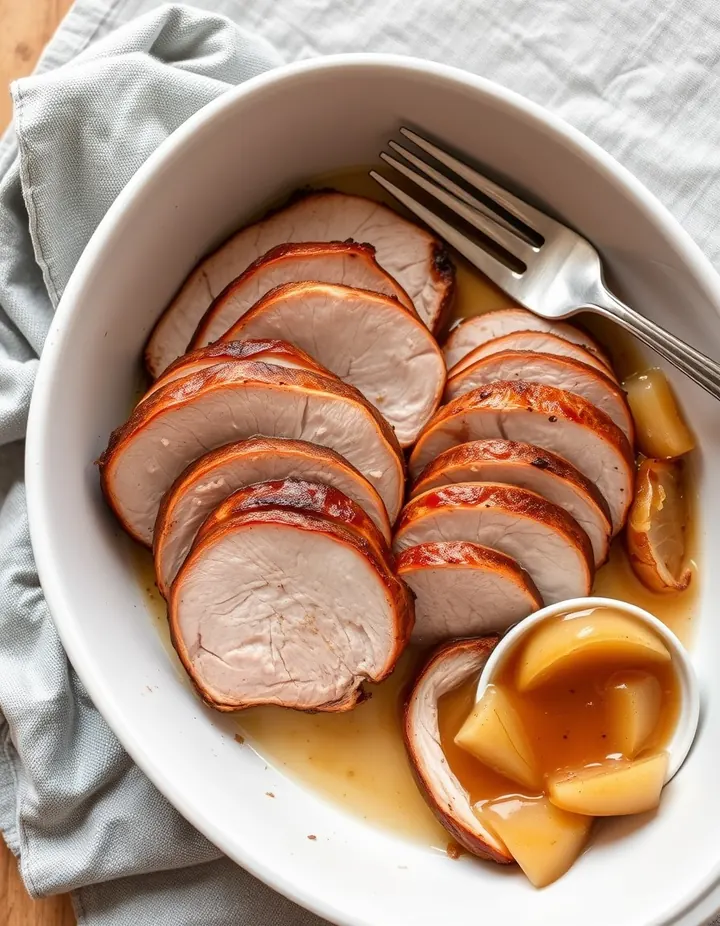
Saddle of Pork, Roasted
Ingredients
Directions
Prepare the joint
Have the butcher cut a saddle of pork as he would a saddle of mutton.
Strip off the skin and trim the joint neatly.
Cover the fat with buttered paper.
Roast and baste
Prepare a clear fire and baste the pork liberally.
Half an hour before it is done, remove the paper and dredge the meat lightly with flour.
Baste until the meat is brightly browned.
Serve
Serve with brown gravy and apple sauce or tomato sauce.
Transcribed from a scanned cookbook and modernised for today's kitchens. Where the book gave no heat or time, or said "a moderate oven", the temperatures and times here may be modern equivalents rather than the book's own figures.
Explore the science
The flavor team
The pairs that carry this dish. Each one is judged two ways: how much their aromas overlap, and how often cooks already put them together.
-
Pork + flourtop 27% of all pairsSmell alikelowCooked together11,187 recipes
Shared aroma: isobutyraldehyde (malty, green).
Pork and flour barely smell alike, yet cooks put them together in 11,187 recipes: they work on texture and structure more than aroma.
Ranks compare each pair with 20,000 random ingredient pairs on CompKitchen. How we score pairs
What each ingredient does
- Saddle of pork
- The main cut, whose fat and meat are cooked slowly over the fire to become tender and juicy.
- Buttered paper
- Shields the fat from direct heat so the surface does not scorch before the meat is cooked.
- Flour
- Dusted on the surface, it helps the meat develop a crisp, golden-brown crust during basting.
The step that matters
Dredge the meat lightly with flour. Too much flour forms a pasty, floury layer that burns or tastes raw, while a thin dusting on the dry surface, combined with basting, encourages even browning.
“What each ingredient does” and “The step that matters” were written by Claude from this recipe’s own method and reviewed in samples by CompKitchen.
You might also like
 Pork Cake107 recipes
 Roast Pork82 recipes
 Tomato Soup526 recipes
 Brown Bread461 recipes
The free Flavor Lab newsletter: one surprising pairing a week and the molecular reason it works, in 60 seconds. No spam, unsubscribe anytime.
Prefer an account? Create a free account to save pairings and unlock the full chemistry.