Why it works: Beef and pork match in chemistry and in kitchens. They rank in the top 1% of all ingredient pairs, and cooks put them together in 5,690 recipes. Both carry 12-methyltridecanal, which smells tallowy, beefy. The science ↓
Fillet of Beef, Roasted
Ingredients
Directions
The book gives no oven temperature. The 400°F (200°C) in the steps was added when the recipe was transcribed, as a starting point.
Prepare
Remove the sinewy covering and excess fat from the fillet.
Trim the fillet into shape and fold the thin end under.
Lard the upper surface with salt-pork and dredge with flour.
Brown and roast
Brown the fillet on the lean side to a depth of ¼ inch.
Roast in a very hot oven at 400°F (200°C) for 30 minutes, basting frequently.
Serve
Serve with brown mushroom sauce or gravy made from drippings.
Transcribed from a scanned cookbook and modernised for today's kitchens. Where the book gave no heat or time, or said "a moderate oven", the temperatures and times here may be modern equivalents rather than the book's own figures.
Explore the science
The flavor team
The pairs that carry this dish. Each one is judged two ways: how much their aromas overlap, and how often cooks already put them together.
-
Beef + porktop 1% of all pairsSmell alikestrongCooked together5,690 recipes
Shared aroma: 12-methyltridecanal (tallowy, beefy).
-
Beef + flourtop 25% of all pairsSmell alikelowCooked together10,677 recipes
Shared aroma: isobutyraldehyde (malty, green).
-
Pork + flourtop 27% of all pairsSmell alikelowCooked together11,187 recipes
Shared aroma: isobutyraldehyde (malty, green).
Beef and flour barely smell alike, yet cooks put them together in 10,677 recipes: they work on texture and structure more than aroma.
Ranks compare each pair with 20,000 random ingredient pairs on CompKitchen. How we score pairs
What each ingredient does
- Beef fillet
- Forms the main body of the dish, cooking to a tender, juicy interior when roasted quickly.
- Salt-pork
- Larded into the surface to add fat that keeps the lean meat moist while it roasts.
- Flour
- Dredged over the surface to help form a browned crust during searing and roasting.
The step that matters
Brown the fillet on the lean side. Searing creates a flavourful crust through the Maillard reaction. A shallow, even browning before roasting builds that colour and taste, so the surface should be well coloured rather than pale.
“What each ingredient does” and “The step that matters” were written by Claude from this recipe’s own method and reviewed in samples by CompKitchen.
You might also like
 Roast Beef211 recipes
 Beef Loaf175 recipes
 Pork Cake107 recipes
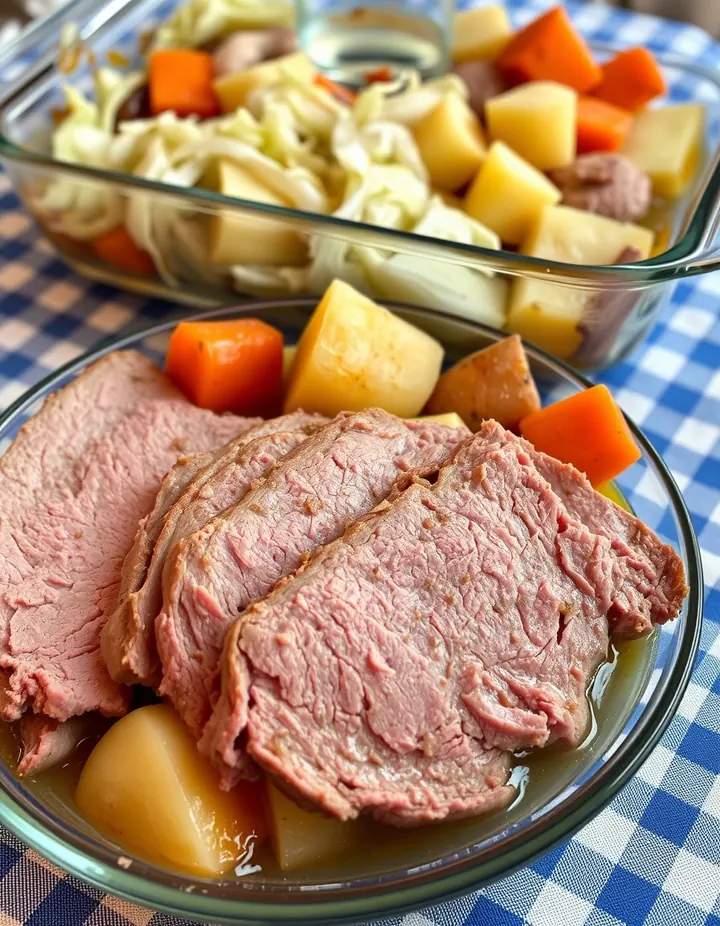 Corned Beef87 recipes
The free Flavor Lab newsletter: one surprising pairing a week and the molecular reason it works, in 60 seconds. No spam, unsubscribe anytime.
Prefer an account? Create a free account to save pairings and unlock the full chemistry.