Why it works: Currant and sugar are a kitchen classic. They rank in the top 26% of all ingredient pairs, and cooks put them together in 12,256 recipes. The science ↓
John Admjm S Receipt Tor Making Currant Wine
Ingredients
Directions
Prepare the must
Bruise the currants and add the water.
Press or squeeze out all the liquid.
Dissolve the sugar in the liquid and pour it into a cask in the cellar to ferment.
Keep some liquid to refill the cask as it ferments.
Ferment and seal
After about ten days, seal the cask tightly.
Bore a small hole near the bung.
Insert a peg lightly into the hole.
Drive the peg in tightly after a month.
Rack and clarify
Check the wine in November or early December; it should be fine and bright.
Rack the wine into a clean, well-fumigated cask.
Fine the wine before bottling or racking again if it is not perfectly clear.
Transcribed from a scanned cookbook and modernised for today's kitchens. Where the book gave no heat or time, or said "a moderate oven", the temperatures and times here may be modern equivalents rather than the book's own figures.
Explore the science
The flavor team
The pairs that carry this dish. Each one is judged two ways: how much their aromas overlap, and how often cooks already put them together.
-
Currant + sugartop 26% of all pairsSmell alikelowCooked together12,256 recipes
Currant and sugar barely smell alike, yet cooks put them together in 12,256 recipes: they work on texture and structure more than aroma.
Ranks compare each pair with 20,000 random ingredient pairs on CompKitchen. How we score pairs
What each ingredient does
- Currants
- Provide the juice, flavour and natural colour of the wine.
- Sugar
- Feeds the yeast during fermentation, producing alcohol and shaping the wine's sweetness.
The step that matters
Keep the cask topped up with reserved liquid. As fermentation proceeds, gas and foam push liquid out and air is drawn in. Refilling keeps the cask full, limiting exposure to air that can spoil the wine by oxidation or allow unwanted microbes to grow.
“What each ingredient does” and “The step that matters” were written by Claude from this recipe’s own method and reviewed in samples by CompKitchen.
More currant wine recipes
You might also like
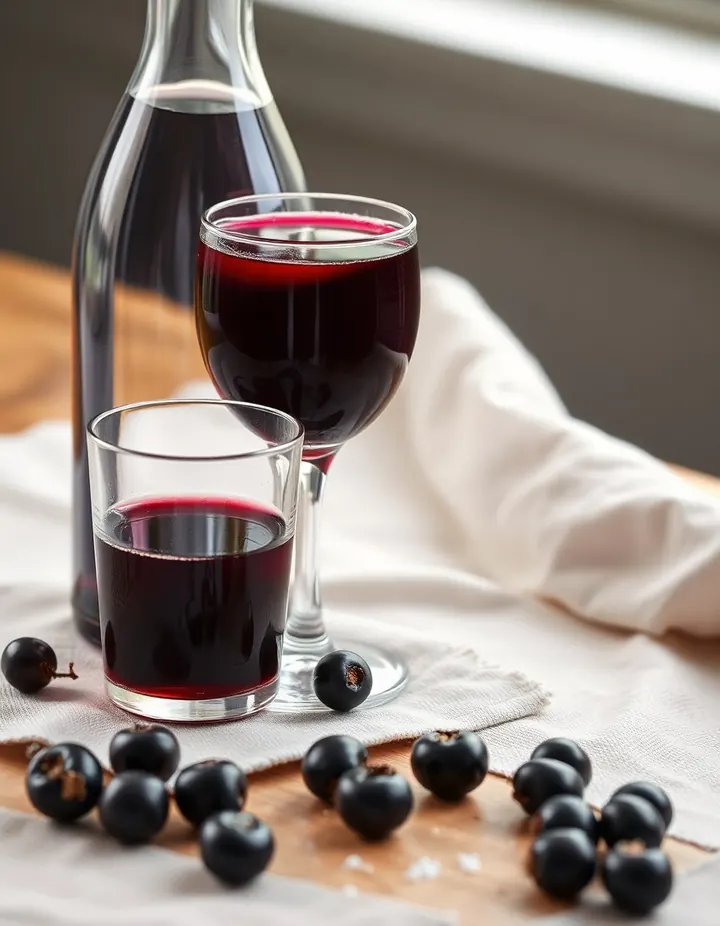 Black Currant Cordial11 recipes
 Vegetable Soup350 recipes
 Raspberry Vinegar214 recipes
 Brown Coffee with Egg175 recipes
The free Flavor Lab newsletter: one surprising pairing a week and the molecular reason it works, in 60 seconds. No spam, unsubscribe anytime.
Prefer an account? Create a free account to save pairings and unlock the full chemistry.