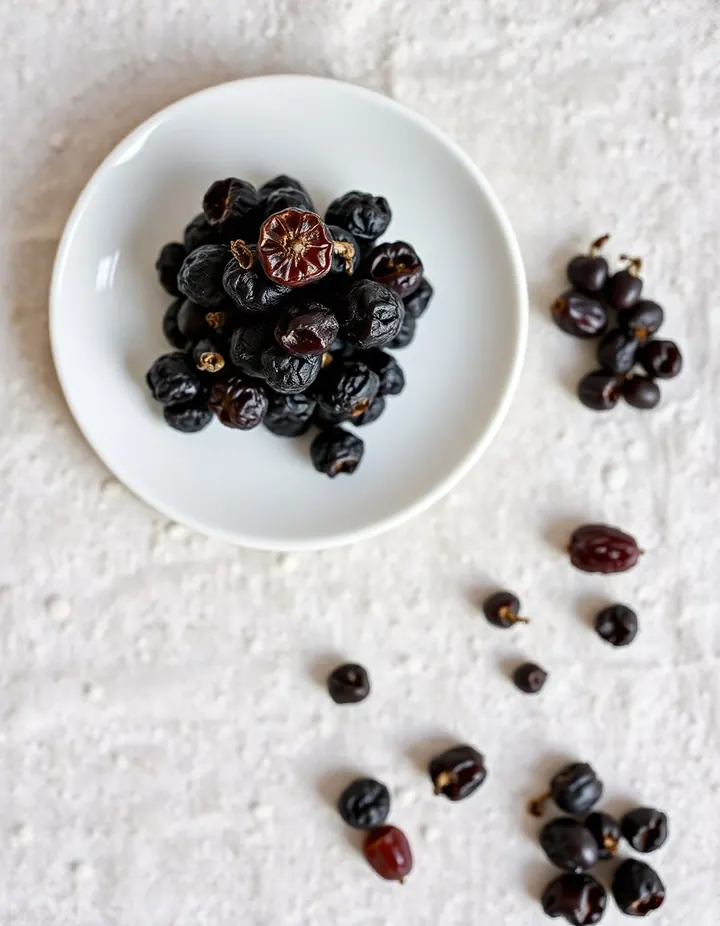
Why it works: Sugar and red currant are a kitchen classic. They rank in the top 26% of all ingredient pairs, and cooks put them together in 1,156 recipes. Both carry 2,3-butanedione, which smells butter, sweet. The science ↓
Dried Currants
Ingredients
Directions
Prepare the coating
Dissolve a sufficient quantity of gum Arabic in a basin of water to make it thick.
Coat and dry
Dip bunches of ripe red currants into the gum water.
Roll the currants in pounded sugar.
Lay the currants separately on a dish to dry in the sun.
Transcribed from a scanned cookbook and modernised for today's kitchens. Where the book gave no heat or time, or said "a moderate oven", the temperatures and times here may be modern equivalents rather than the book's own figures.
Photo for illustrative purposes only · Contact us to use it
Explore the science
The flavor team
The pairs that carry this dish. Each one is judged two ways: how much their aromas overlap, and how often cooks already put them together.
-
Sugar + red curranttop 26% of all pairsSmell alikelowCooked together1,156 recipes
Shared aroma: 2,3-butanedione (butter, sweet).
Ranks compare each pair with 20,000 random ingredient pairs on CompKitchen. How we score pairs
What each ingredient does
- Gum arabic
- Thickened water acts as a sticky binder that holds the sugar to the fruit.
- Pounded sugar
- Forms a dry, sweet coating on the outside of each currant as it dries.
- Ripe red currants
- Provide the tart fruit, which concentrates in flavour as its moisture evaporates.
The step that matters
Rolling the currants in sugar while still sticky. The gum water is the only adhesive, so the currants must be rolled soon after dipping, while the film is wet, or the sugar will not cling. Laying them apart lets air dry them evenly and stops them sticking together.
“What each ingredient does” and “The step that matters” were written by Claude from this recipe’s own method and reviewed in samples by CompKitchen.
You might also like
 Black Currant Cordial11 recipes
 Vegetable Soup350 recipes
 Raspberry Vinegar214 recipes
 Brown Coffee with Egg175 recipes
The free Flavor Lab newsletter: one surprising pairing a week and the molecular reason it works, in 60 seconds. No spam, unsubscribe anytime.
Prefer an account? Create a free account to save pairings and unlock the full chemistry.