Why it works: Carrot and turnip match in chemistry and in kitchens. They rank in the top 1% of all ingredient pairs, and cooks put them together in 8,002 recipes. Both carry coumarin, which smells sweet, hay. The science ↓
Braized Ox-cheek, with Stewed Cabbages
Ingredients
Directions
Prepare the meats
Prepare the ox-cheek for braising as directed.
Add the German sausage to the pot.
Add the bacon to the pot.
Braise gently for about 2 hours.
Press the cooked ox-cheek.
Cut the ox-cheek into scallops.
Cut the bacon into neat scallops.
Cut the sausage into neat scallops.
Keep the bacon and sausage scallops hot.
Prepare the cabbages
Cut the savoy cabbages in halves.
Remove the stalks from the cabbages.
Parboil the cabbages.
Tie the cabbages with string.
Cover the cabbages with buttered paper.
Drain the cabbage.
Press the drained cabbage in a napkin.
Cut the cabbage into cork-shaped pieces.
Plate and serve
Arrange the ox-cheek, bacon, and sausage scallops in a circle on a serving dish.
Place the cabbage around the base.
Garnish with carrot rings.
Garnish with turnip pears.
Fill the center with small fancy-shaped carrots.
Fill the center with turnips boiled in broth with sugar.
Pour half glaze around the base.
Pour thin Espagnole sauce around the base.
Serve.
Transcribed from a scanned cookbook and modernised for today's kitchens. Where the book gave no heat or time, or said "a moderate oven", the temperatures and times here may be modern equivalents rather than the book's own figures.
Explore the science
The flavor team
The pairs that carry this dish. Each one is judged two ways: how much their aromas overlap, and how often cooks already put them together.
-
Carrot + turniptop 1% of all pairsSmell alikestrongCooked together8,002 recipes
Shared aroma: coumarin (sweet, hay).
-
Cabbage + turniptop 2% of all pairsSmell alikestrongCooked together897 recipes
Shared aroma: coumarin (sweet, hay).
-
Cabbage + carrottop 7% of all pairsSmell alikemoderateCooked together1,505 recipes
Shared aroma: 2-isopropyl-3-methoxypyrazine (earthy, pea).
-
Butter + sugartop 17% of all pairsSmell alikemoderateCooked together98,233 recipes
Shared aroma: guaiacol (smoky, sweet).
-
Butter + carrottop 24% of all pairsSmell alikemoderateCooked together10,083 recipes
Shared aroma: trans-2-nonenal (cardboard, fatty).
Ranks compare each pair with 20,000 random ingredient pairs on CompKitchen. How we score pairs
What each ingredient does
- Ox-cheek
- Long braising breaks down connective tissue, leaving the meat tender and moist.
- Streaky bacon
- Renders fat and adds smoky, savoury flavour to the braising liquid and dish.
- German sausage
- Adds savoury, spiced flavour and richness to the platter.
- Savoy cabbages
- Form the tender, mild vegetable base that carries the braised flavours.
- Half glaze
- Adds concentrated meaty flavour and body to the sauce served with the dish.
The step that matters
Braise gently for about 2 hours. Low, gentle heat lets collagen in the ox-cheek slowly convert to gelatin, giving tenderness. A hard boil toughens the meat and dries the surface, so keep the liquid at a bare simmer.
Swap the cabbage
How well each one fits the dish's main ingredients (butter, carrot, turnip, sugar):
- Leekfits better
- Parsnipfits better
- Beetrootfits better
- Cabbagethe original
Fit is the average pairing score against butter, carrot, turnip, sugar. Candidates are from the same food group and used in at least 100 recipes.
“What each ingredient does” and “The step that matters” were written by Claude from this recipe’s own method and reviewed in samples by CompKitchen.
You might also like
 Carrot Soup134 recipes
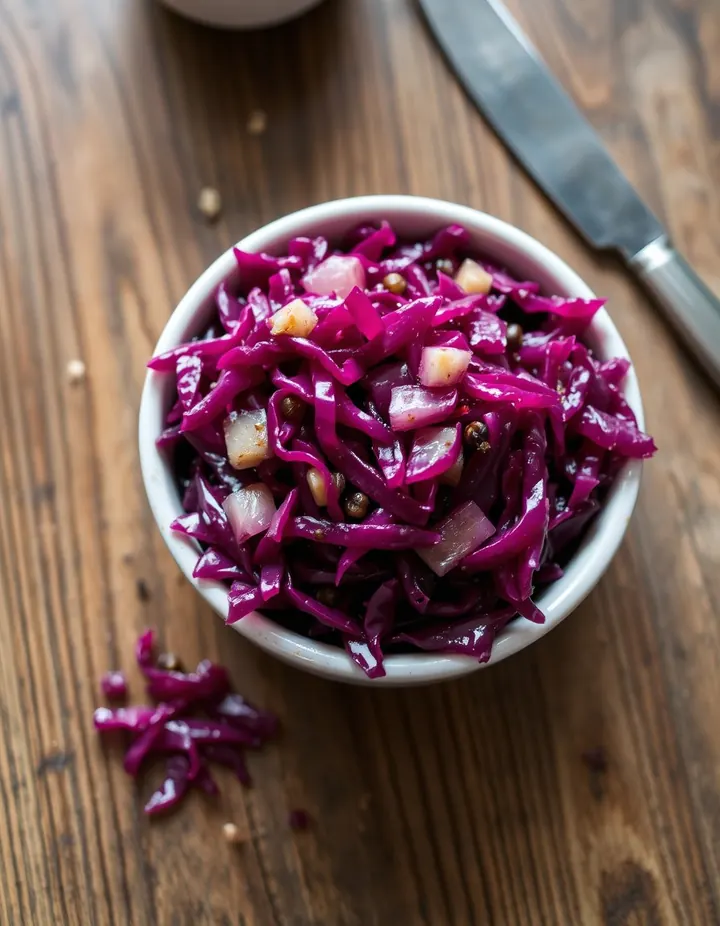 Red Cabbage65 recipes
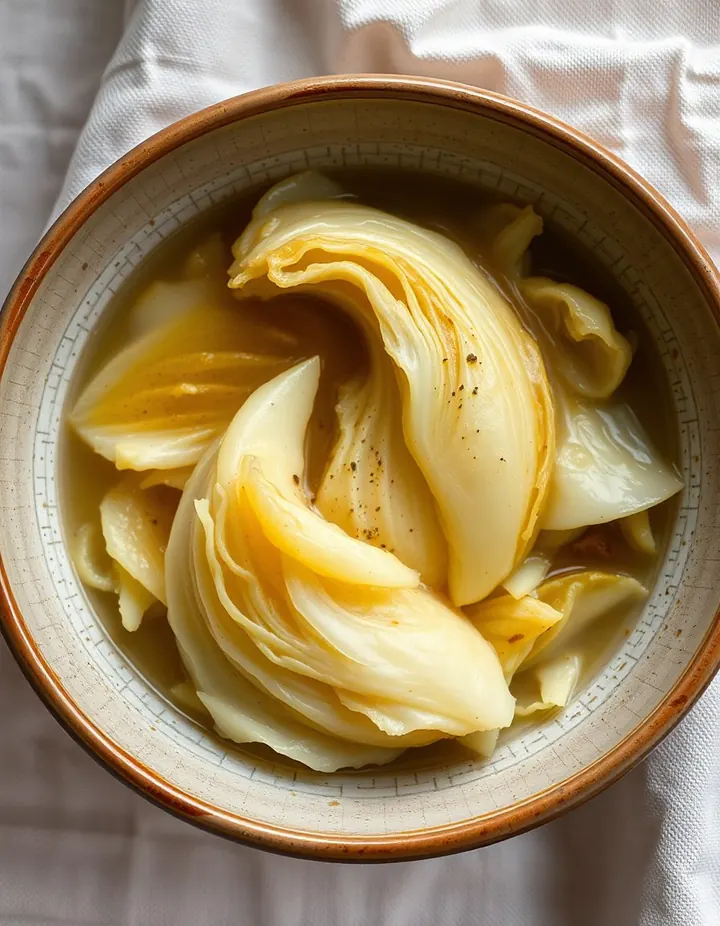 Stewed Cabbage58 recipes
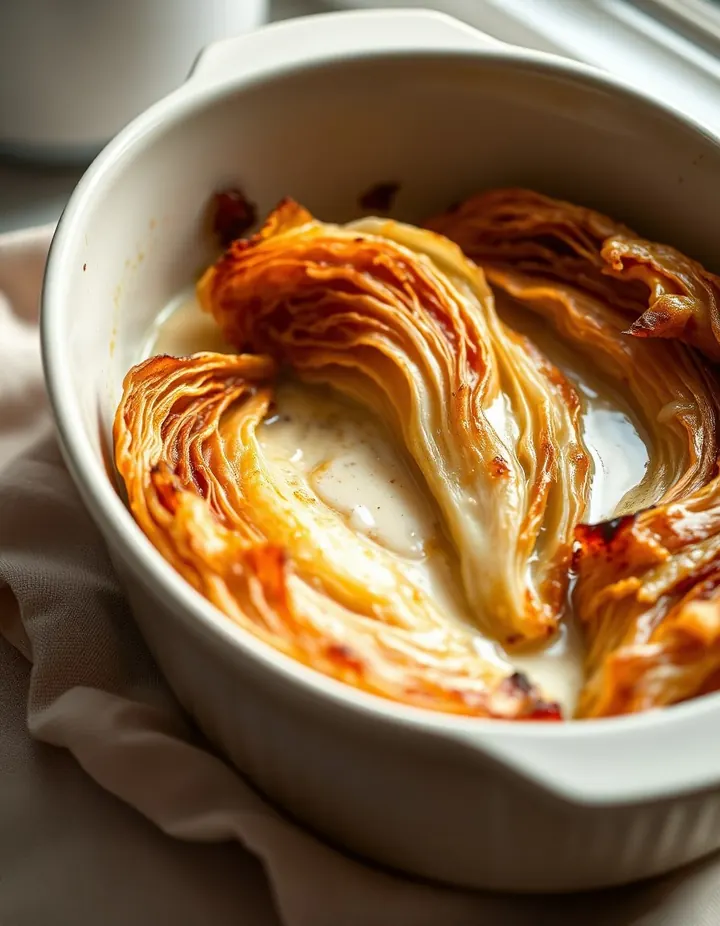 Baked Cabbage51 recipes
The free Flavor Lab newsletter: one surprising pairing a week and the molecular reason it works, in 60 seconds. No spam, unsubscribe anytime.
Prefer an account? Create a free account to save pairings and unlock the full chemistry.