Why it works: Cinnamon and clove match in chemistry and in kitchens. They rank in the top 1% of all ingredient pairs, and cooks put them together in 14,189 recipes. Both carry ethyl cinnamate, which smells sweet, balsamic. The science ↓
Water Melon Pickle
Ingredients
Directions
Prepare the rind
Remove the green part of the rind and the red core; cut the rind into 1-2 inch pieces.
Place the rind in a kettle with salt and enough water to nearly cover it.
Boil until tender enough to pick with a fork; drain in a colander and dry pieces with a towel.
Make the syrup and pack the jar
In a separate pot, combine vinegar and sugar; boil, skim, and pour the hot syrup over the fruit.
Layer the fruit in a jar with cinnamon and cloves, repeating until the jar is full.
Boil the mixture for 20 minutes, then transfer to a jar and pour the syrup over it.
If scum rises, drain it off, then boil until the syrup is thin like molasses.
Rest and thicken
Repeat pouring the syrup over the fruit daily until the color is uniform and the syrup is thick like thin molasses.
Scald the syrup each morning for three days and pour it boiling hot over the fruit.
Transcribed from a scanned cookbook and modernised for today's kitchens. Where the book gave no heat or time, or said "a moderate oven", the temperatures and times here may be modern equivalents rather than the book's own figures.
Explore the science
The flavor team
The pairs that carry this dish. Each one is judged two ways: how much their aromas overlap, and how often cooks already put them together.
-
Cinnamon + clovetop 1% of all pairsSmell alikestrongCooked together14,189 recipes
Shared aroma: ethyl cinnamate (sweet, balsamic).
-
Cider + vinegartop 6% of all pairsSmell alikemoderateCooked together3,431 recipes
Shared aroma: 4-ethyl-2-methoxyphenol (smoky, clove).
-
Sugar + cinnamontop 10% of all pairsSmell alikelowCooked together30,779 recipes
Shared aroma: guaiacol (smoky, sweet).
-
Cider + clovetop 14% of all pairsSmell alikelowCooked together1,683 recipes
Shared aroma: ethyl octanoate (fruity, wine).
-
Vinegar + sugartop 15% of all pairsSmell alikemoderateCooked together20,806 recipes
Shared aroma: beta-damascenone (apple, rose).
Sugar and cinnamon barely smell alike, yet cooks put them together in 30,779 recipes: they work on texture and structure more than aroma.
Ranks compare each pair with 20,000 random ingredient pairs on CompKitchen. How we score pairs
What each ingredient does
- Watermelon rind
- Forms the firm, tender-crisp body of the pickle once boiled and soaked in syrup.
- Sugar
- Sweetens the pickle and thickens the syrup as it is boiled down.
- Cider vinegar
- Adds acidity that gives the pickle its tangy flavor and helps preserve it.
- Coarse sea salt
- Draws out moisture and helps firm the rind before the syrup is added.
The step that matters
Repeated daily syrup pouring. Reheating and pouring the syrup over the fruit each day lets it penetrate gradually, so the color evens out and the syrup thickens as water evaporates. Skipping or rushing this can leave the pickle pale, watery, or under-flavored.
Swap the clove
How well each one fits the dish's main ingredients (cider, vinegar, sugar, cinnamon):
- Allspicefits about as well
- Clovethe original
- Nutmegfits about as well
- Cardamomfits less well
Fit is the average pairing score against cider, vinegar, sugar, cinnamon. Candidates are from the same food group and used in at least 100 recipes.
“What each ingredient does” and “The step that matters” were written by Claude from this recipe’s own method and reviewed in samples by CompKitchen.
You might also like
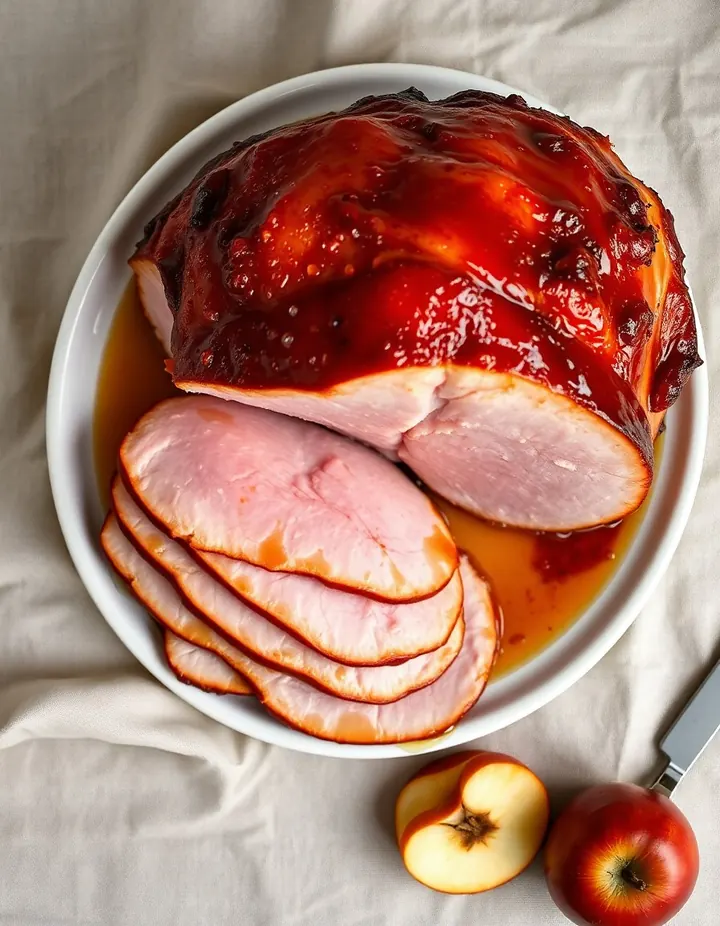 Ham in Cider10 recipes
 Tomato Soup526 recipes
 Brown Bread461 recipes
 Mutton Broth292 recipes
The free Flavor Lab newsletter: one surprising pairing a week and the molecular reason it works, in 60 seconds. No spam, unsubscribe anytime.
Prefer an account? Create a free account to save pairings and unlock the full chemistry.