Why it works: Cider and vinegar are a kitchen classic. They rank in the top 6% of all ingredient pairs, and cooks put them together in 3,431 recipes. Both carry 4-ethyl-2-methoxyphenol, which smells smoky, clove. The science ↓
Pickles in Grape Leaves
Ingredients
Directions
Prepare the pickles
Sprinkle 1 cup of coarse sea salt over 1 gallon of pickles and cover with boiling water.
Let the pickles stand overnight, then drain the water.
Heat the pickles and pour hot water over them again. Repeat this for three mornings.
Drain well and line a jar with washed grape leaves.
Pack the jar
Add a layer of pickles, scatter spices and whole mustard seeds, and add small branches of mustard in the pod.
Continue layering with grape leaves, pickles, and spices until the jar is almost full.
Cover and keep
Cover the pickles with cider vinegar.
Place a small weight on top to keep the pickles submerged in vinegar.
Tie a paper or cloth over the top to keep out dust.
If the vinegar turns white, drain it off and cover with fresh vinegar.
Transcribed from a scanned cookbook and modernised for today's kitchens. Where the book gave no heat or time, or said "a moderate oven", the temperatures and times here may be modern equivalents rather than the book's own figures.
Explore the science
The flavor team
The pairs that carry this dish. Each one is judged two ways: how much their aromas overlap, and how often cooks already put them together.
-
Cider + vinegartop 6% of all pairsSmell alikemoderateCooked together3,431 recipes
Shared aroma: 4-ethyl-2-methoxyphenol (smoky, clove).
-
Mustard + vinegartop 7% of all pairsSmell alikemoderateCooked together14,067 recipes
Shared aroma: isobutyraldehyde (malty, green).
-
Grape + cidertop 11% of all pairsSmell alikemoderateCooked together349 recipes
Shared aroma: 1-octen-3-one (mushroom, metallic).
-
Mustard + cidertop 13% of all pairsSmell alikelowCooked together1,414 recipes
Shared aroma: linalool (floral, citrus).
-
Grape + vinegartop 14% of all pairsSmell alikemoderateCooked together1,589 recipes
Shared aroma: isoamyl acetate (banana, fruity).
Ranks compare each pair with 20,000 random ingredient pairs on CompKitchen. How we score pairs
What each ingredient does
- Pickles
- They are the main vegetable, and the salt and hot water treatment softens and prepares them for packing.
- Coarse sea salt
- Salt draws water out of the pickles and seasons them before they are packed in vinegar.
- Grape leaves
- They line and layer the jar, adding a tannin-rich leaf flavour and helping keep the pickles crisp.
- Cider vinegar
- Its acidity preserves the pickles and gives them their sharp, tangy flavour.
- Whole mustard seeds
- They add a sharp, pungent flavour that mellows as the pickles stand.
The step that matters
Keeping the pickles fully submerged in vinegar. Any pickles left above the liquid can spoil or grow mould, because air exposure allows microbes to grow. A weight holds everything under the vinegar, and the acidity then protects the pickles during storage.
Swap the grape
How well each one fits the dish's main ingredients (mustard, cider, vinegar):
- Applefits better
- Plumfits about as well
- Pineapplefits about as well
- Grapethe original
Fit is the average pairing score against mustard, cider, vinegar. Candidates are from the same food group and used in at least 100 recipes.
“What each ingredient does” and “The step that matters” were written by Claude from this recipe’s own method and reviewed in samples by CompKitchen.
You might also like
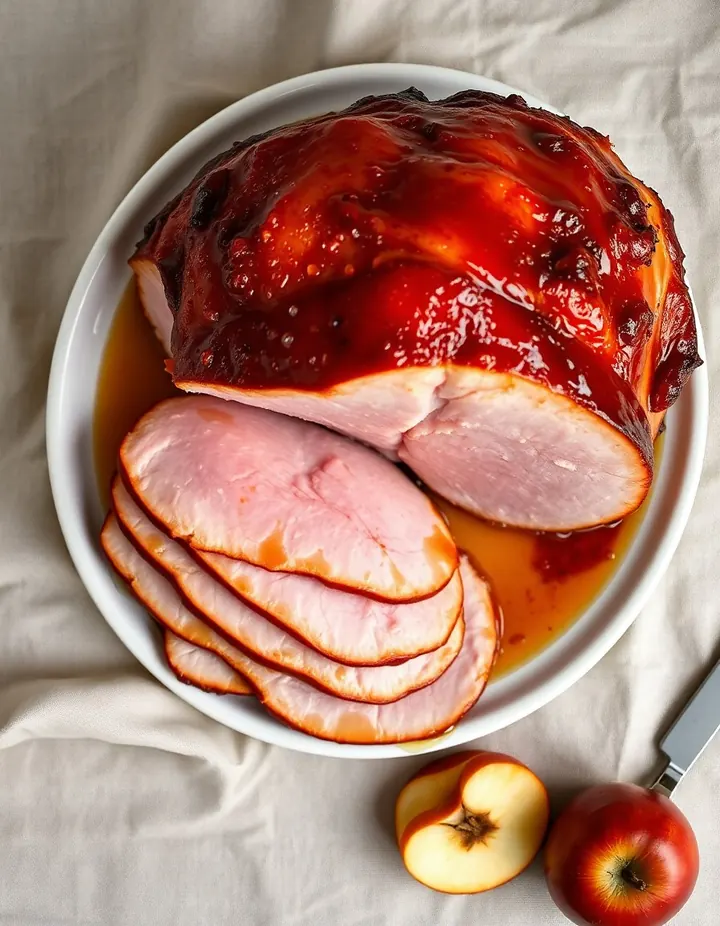 Ham in Cider10 recipes
 Tomato Soup526 recipes
 Brown Bread461 recipes
 Mutton Broth292 recipes
The free Flavor Lab newsletter: one surprising pairing a week and the molecular reason it works, in 60 seconds. No spam, unsubscribe anytime.
Prefer an account? Create a free account to save pairings and unlock the full chemistry.