Why it works: Parsley and capers match in chemistry and in kitchens. They rank in the top 1% of all ingredient pairs, and cooks put them together in 1,550 recipes. Both carry coumarin, which smells sweet, hay. The science ↓
Stuffed and Baked Trout
Ingredients
Directions
The book gives no oven temperature. The 400°F (200°C) in the steps was added when the recipe was transcribed, as a starting point.
Prepare the stuffing
Mix cracker crumbs, melted butter, salt, pepper, onion, parsley, capers, and pickles to make stuffing.
Moisten the stuffing with warm water.
Clean, wash, and wipe the fish.
Stuff the fish and sew it up.
If the fish is narrow, skewer it in shape and fasten the skewers.
Rub the fish all over with salt, pepper, and butter.
Cut gashes two inches apart and insert strips of fat salt pork.
Dredge the fish with flour.
Bake the fish
Place the fish in the oven at 400°F (200°C).
When the flour browns, add water and baste the fish occasionally.
Bake the fish for an hour or more.
Carefully remove the fish to a heated platter.
Remove the pork and skewers.
Make the Hollandaise sauce
Cream the butter for Hollandaise sauce.
Add flour and egg yolks one at a time, mixing until smooth.
Gradually add salt, cayenne, and lemon juice.
Stir in boiling water and heat the sauce over water until thickened.
Pour sauce around the fish.
Transcribed from a scanned cookbook and modernised for today's kitchens. Where the book gave no heat or time, or said "a moderate oven", the temperatures and times here may be modern equivalents rather than the book's own figures.
Explore the science
The flavor team
The pairs that carry this dish. Each one is judged two ways: how much their aromas overlap, and how often cooks already put them together.
-
Parsley + caperstop 1% of all pairsSmell alikestrongCooked together1,550 recipes
Shared aroma: coumarin (sweet, hay).
-
Pepper + parsleytop 2% of all pairsSmell alikestrongCooked together34,122 recipes
Shared aroma: 4'-methylacetophenone (bitter almond).
-
Capers + flourtop 6% of all pairsSmell alikestrongCooked together1,024 recipes
Shared aroma: isobutyraldehyde (malty, green).
-
Onion + caperstop 7% of all pairsSmell alikestrongCooked together1,381 recipes
Shared aroma: coumarin (sweet, hay).
-
Onion + parsleytop 9% of all pairsSmell alikemoderateCooked together25,843 recipes
Shared aroma: 2,4-decadienal (seaweed).
Ranks compare each pair with 20,000 random ingredient pairs on CompKitchen. How we score pairs
What each ingredient does
- Cracker crumbs
- Form the bulk of the stuffing and absorb the butter and moisture.
- Butter
- Adds richness and moisture to the stuffing, the fish, and the sauce.
- Egg yolks
- Emulsify and thicken the Hollandaise sauce into a smooth, rich texture.
- Flour
- Dredged on the fish, it browns in the oven and helps form a golden crust.
- Fat salt pork
- Bastes the fish from within as it cooks, adding fat and savory flavor.
The step that matters
Stirring the Hollandaise over water until thickened. Egg yolks scramble if they get too hot, so the sauce should be heated gently over water and stirred constantly. Adding the boiling water slowly and keeping the heat moderate helps it thicken smoothly instead of curdling.
Swap the onion
How well each one fits the dish's main ingredients (butter, pepper, parsley, capers, pork, flour, sauce):
- Shallotfits better
- Chivefits better
- Mustardfits better
- Onionthe original
Fit is the average pairing score against butter, pepper, parsley, capers, pork, flour, sauce. Candidates are from the same food group and used in at least 100 recipes.
“What each ingredient does” and “The step that matters” were written by Claude from this recipe’s own method and reviewed in samples by CompKitchen.
You might also like
 Lemon Sauce236 recipes
 Pork Cake107 recipes
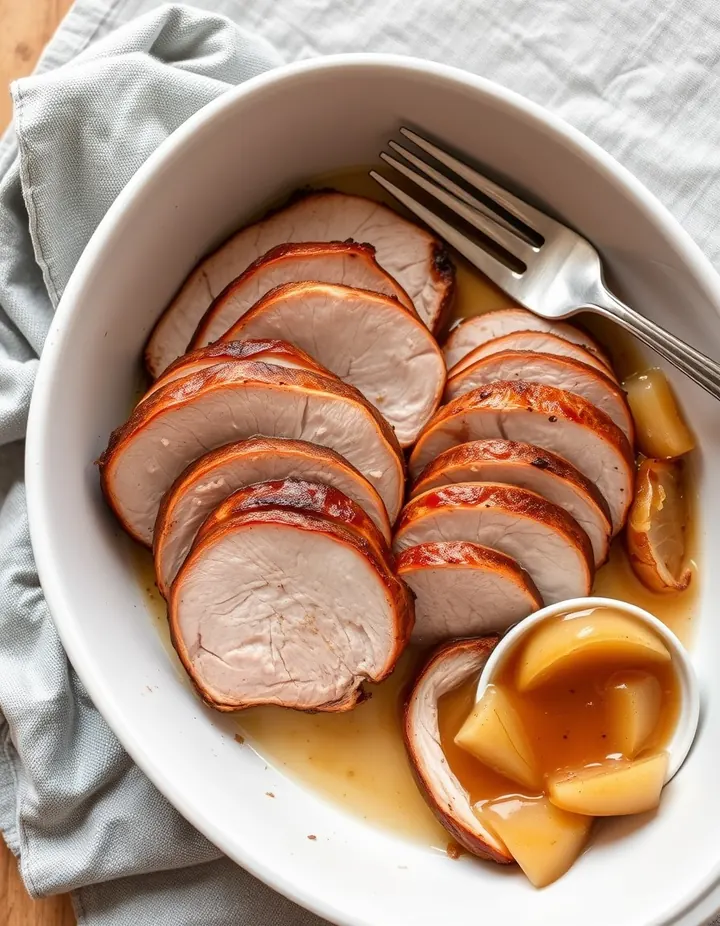 Roast Pork82 recipes
 Tomato Soup526 recipes
The free Flavor Lab newsletter: one surprising pairing a week and the molecular reason it works, in 60 seconds. No spam, unsubscribe anytime.
Prefer an account? Create a free account to save pairings and unlock the full chemistry.