Why it works: Veal and liver match in chemistry and in kitchens. They rank in the top 3% of all ingredient pairs, and cooks put them together in 392 recipes. Both carry enoic acid, which smells butter, cheesy. The science ↓
A Partridge Pie
Ingredients
Directions
The book gives no oven temperature. The 350°F (175°C) in the steps was added when the recipe was transcribed, as a starting point.
Prepare the pie
Preheat oven to 350°F (175°C).
In a pie dish, layer slices of veal at the bottom.
Add force-meat.
Place boned partridges filled with force-meat and a whole raw truffle in each.
Season with fine herbs and chopped mushrooms.
Cover the partridges with slices of bacon.
Cover the pie.
Garnish as desired.
Make the sauce
In a stew-pan, combine ham pieces, partridge bones, livers, gizzards, and any loose giblets.
Add shallots and mace.
Cover with a little stock and simmer for 10 minutes.
Add 3 pints of stock and ½ pint of Madeira.
Boil gently for 2 hours.
Strain the mixture.
Melt butter in a stew-pan.
Add enough flour to absorb the butter.
Gradually stir in the strained liquid.
Boil slowly for a few minutes.
Strain through a tammy.
Bake and serve
Pour off the fat from the pie and add the sauce.
Optionally, add fat livers and sweetbread cut as a ragout.
Bake for 3 hours.
Transcribed from a scanned cookbook and modernised for today's kitchens. Where the book gave no heat or time, or said "a moderate oven", the temperatures and times here may be modern equivalents rather than the book's own figures.
Explore the science
The flavor team
The pairs that carry this dish. Each one is judged two ways: how much their aromas overlap, and how often cooks already put them together.
-
Veal + livertop 3% of all pairsSmell alikestrongCooked together392 recipes
Shared aroma: enoic acid (butter, cheesy).
-
Mushroom + shallottop 4% of all pairsSmell alikemoderateCooked together1,982 recipes
Shared aroma: 2,4-decadienal (seaweed).
-
Truffle + mushroomtop 4% of all pairsSmell alikemoderateCooked together1,900 recipes
Shared aroma: 2,4-nonadienal (fatty, green).
-
Veal + truffletop 11% of all pairsSmell alikelowCooked together815 recipes
Shared aroma: 2,4-nonadienal (fatty, green).
-
Truffle + hamtop 12% of all pairsSmell alikemoderateCooked together516 recipes
Shared aroma: 1-octen-3-one (mushroom, metallic).
Ranks compare each pair with 20,000 random ingredient pairs on CompKitchen. How we score pairs
What each ingredient does
- Partridges
- Provide the main meat, which cooks gently inside the pie and stays moist.
- Force-meat
- Forms a soft, tender stuffing that keeps the birds moist as they bake.
- Flour
- Thickens the butter and strained liquid into a smooth, body-giving sauce.
- Butter
- Enriches the sauce with fat and carries flavour through the roux.
- Madeira
- Adds sweetness and a rich, aromatic depth to the sauce.
- Bacon
- Adds fat and savoury flavour as it covers and bastes the partridges.
The step that matters
Straining and thickening the sauce. Adding flour to butter and then liquid needs gentle stirring and slow boiling so lumps do not form and the starch thickens evenly. Straining through a tammy removes solids so the sauce is smooth.
Swap the mace
How well each one fits the dish's main ingredients (veal, meat, truffle, mushroom, ham, liver, shallot):
- Thymefits better
- Capersfits better
- Parsleyfits better
- Macethe original
Fit is the average pairing score against veal, meat, truffle, mushroom, ham, liver, shallot. Candidates are from the same food group and used in at least 100 recipes.
“What each ingredient does” and “The step that matters” were written by Claude from this recipe’s own method and reviewed in samples by CompKitchen.
You might also like
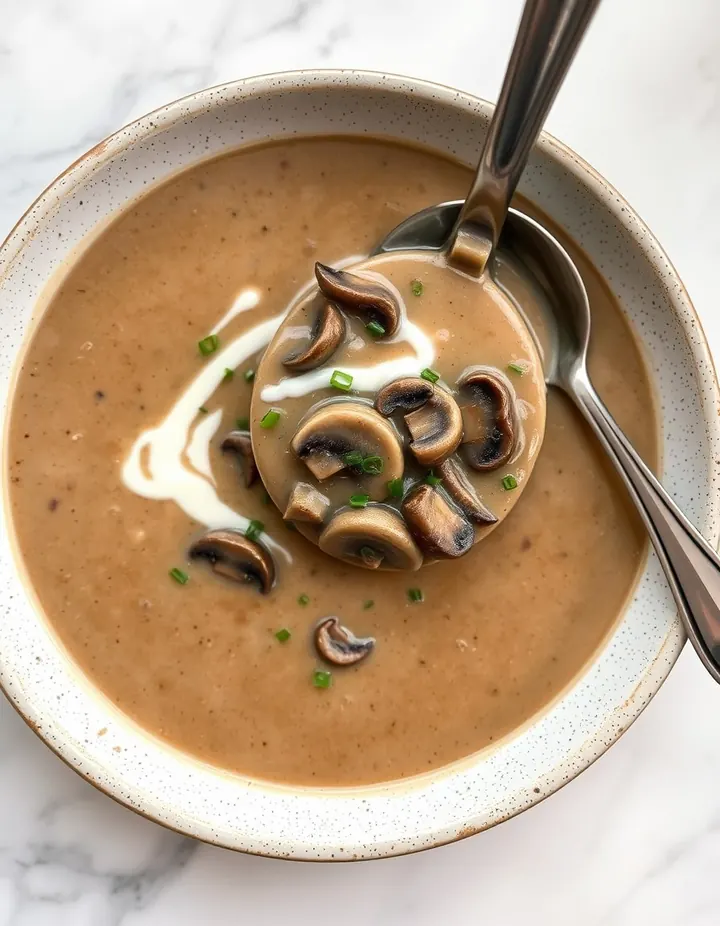 Mushroom Soup60 recipes
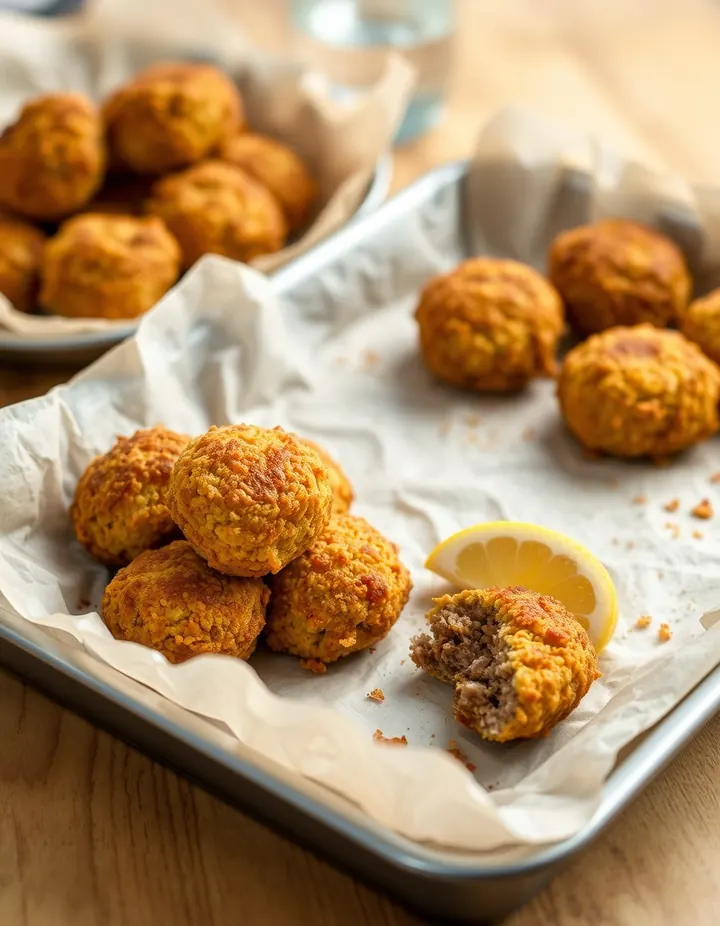 Meat Croquettes52 recipes
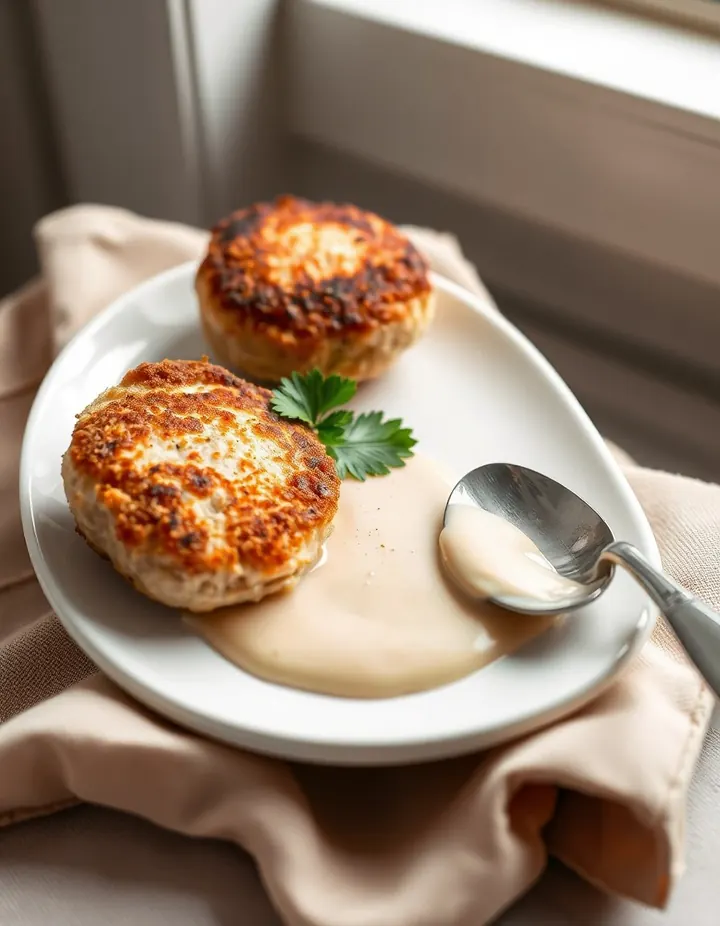 Veal Patties50 recipes
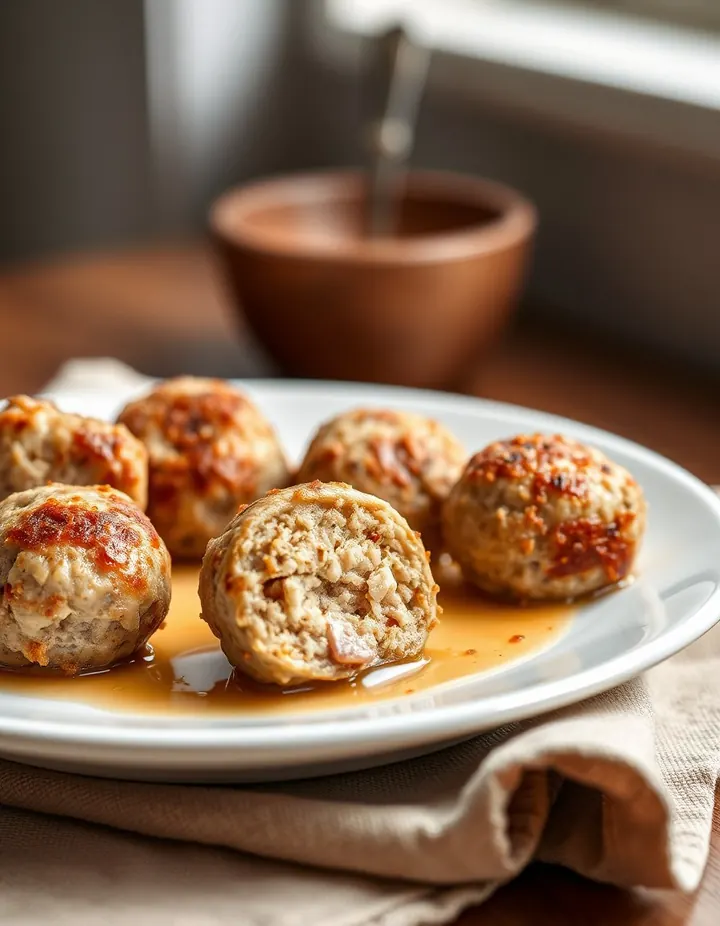 Meatballs37 recipes
The free Flavor Lab newsletter: one surprising pairing a week and the molecular reason it works, in 60 seconds. No spam, unsubscribe anytime.
Prefer an account? Create a free account to save pairings and unlock the full chemistry.