Why it works: Marjoram and thyme match in chemistry and in kitchens. They rank in the top 1% of all ingredient pairs, and cooks put them together in 2,225 recipes. Both carry terpineol, which smells pine, woody. The science ↓
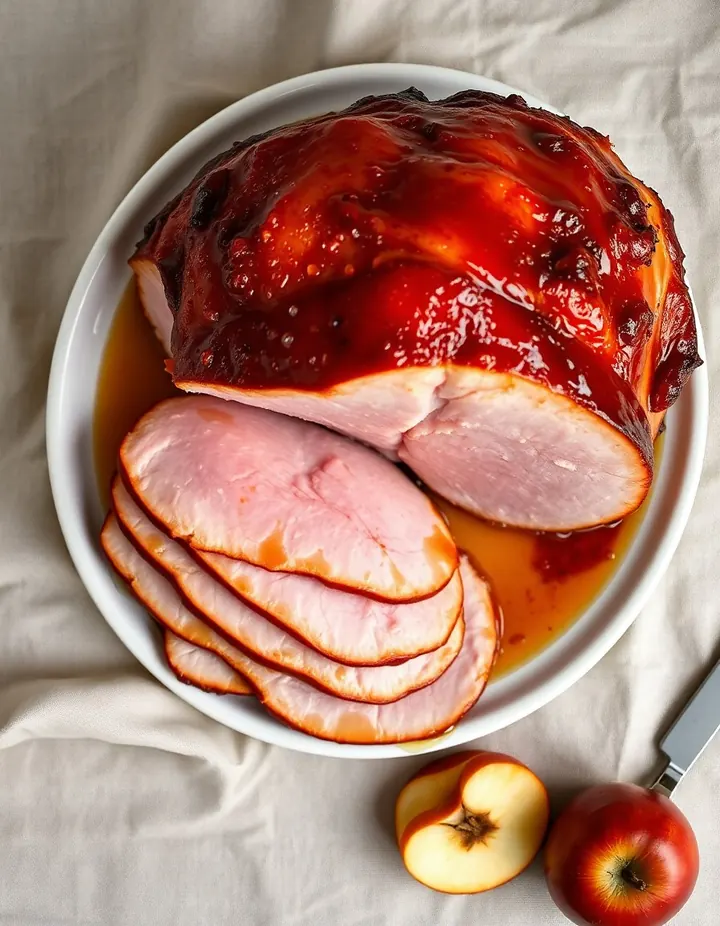
To Dress a Ham
Ingredients
Directions
The book gives no oven temperature. The 400°F (200°C) in the steps was added when the recipe was transcribed, as a starting point.
Prepare the liquid
In a large pot, combine the stale ale or cider, vinegar, and sweet herbs.
Cook and finish
Add the ham and simmer until it is two-thirds cooked.
Remove the ham, skin it, and cover it with raspings.
Place the ham in a 400°F (200°C) oven until fully cooked.
Transcribed from a scanned cookbook and modernised for today's kitchens. Where the book gave no heat or time, or said "a moderate oven", the temperatures and times here may be modern equivalents rather than the book's own figures.
Explore the science
The flavor team
The pairs that carry this dish. Each one is judged two ways: how much their aromas overlap, and how often cooks already put them together.
-
Marjoram + thymetop 1% of all pairsSmell alikestrongCooked together2,225 recipes
Shared aroma: terpineol (pine, woody).
-
Winter savory + thymetop 1% of all pairsSmell alikestrongCooked together780 recipes
Shared aroma: eucalyptol (eucalyptus, herbal).
-
Marjoram + winter savorytop 1% of all pairsSmell alikestrongCooked together455 recipes
Shared aroma: methyleugenol (clove, spice).
-
Marjoram + basiltop 1% of all pairsSmell alikestrongCooked together688 recipes
Shared aroma: terpineol (pine, woody).
-
Thyme + parsleytop 1% of all pairsSmell alikestrongCooked together9,057 recipes
Shared aroma: cuminaldehyde (Spicy, cumin).
Ranks compare each pair with 20,000 random ingredient pairs on CompKitchen. How we score pairs
What each ingredient does
- Stale ale or cider
- Adds acidity and malty flavour to the simmering liquid that penetrates the ham.
- Vinegar
- Adds acidity that tenderises the ham and sharpens the overall flavour.
- Sweet herbs
- Contribute aroma and savoury flavour to the braising liquid.
- Ham
- Main protein that absorbs flavour from the liquid while gently cooking.
- Raspings
- Form a crisp, browned crust when the ham is baked.
The step that matters
Simmer the ham only until two-thirds cooked. Cooking the ham fully in the liquid would make it stringy and waterlogged. Finishing it in dry oven heat keeps the texture firm and lets the crumb coating brown.
Swap the basil
How well each one fits the dish's main ingredients (cider, vinegar, marjoram, winter savory, thyme, parsley, ham):
- Tarragonfits better
- Sagefits better
- Allspicefits better
- Basilthe original
Fit is the average pairing score against cider, vinegar, marjoram, winter savory, thyme, parsley, ham. Candidates are from the same food group and used in at least 100 recipes.
“What each ingredient does” and “The step that matters” were written by Claude from this recipe’s own method and reviewed in samples by CompKitchen.
You might also like
 Ham in Cider10 recipes
 Tomato Soup526 recipes
 Brown Bread461 recipes
 Mutton Broth292 recipes
The free Flavor Lab newsletter: one surprising pairing a week and the molecular reason it works, in 60 seconds. No spam, unsubscribe anytime.
Prefer an account? Create a free account to save pairings and unlock the full chemistry.