Why it works: Turnip and carrot match in chemistry and in kitchens. They rank in the top 1% of all ingredient pairs, and cooks put them together in 8,002 recipes. Both carry coumarin, which smells sweet, hay. The science ↓
Mock-turtle, of Calf’s-head
Ingredients
Directions
Prepare the head
Scald and clean the calf's head well, then soak it in hot water.
Parboil the head in veal broth with turnip, carrot, onions, and sweet herbs for richness.
After 30 minutes, remove the head and let it cool until firm enough to handle.
Cut the meat into thin round slices for the eyes, long narrow stripes for the ears, round slices for the fleshy parts, small dice for the cheeks, long stripes for the forehead, and square bits for the peeled tongue.
Put the bones and trimmings back into the stew pot with a piece of bacon.
Make the soup
Fry minced shallot in plenty of butter browned with flour.
Add the cut meat to the browned mixture and toss for a few minutes.
Strain enough stock over the meat to make the dish slightly thicker than stew-soup.
Season with mace, pepper, salt, and ½ pint of Madeira.
Stew the meat slowly, soaking it in the gravy without boiling.
When nearly ready, add cayenne, catsup, a little soy, and chopped herbs.
Just before serving, add the juice of a lemon.
Serve
Serve in a large, shallow soup dish, garnished with forcemeat balls, egg balls, and optional green pickles.
Transcribed from a scanned cookbook and modernised for today's kitchens. Where the book gave no heat or time, or said "a moderate oven", the temperatures and times here may be modern equivalents rather than the book's own figures.
Explore the science
The flavor team
The pairs that carry this dish. Each one is judged two ways: how much their aromas overlap, and how often cooks already put them together.
-
Turnip + carrottop 1% of all pairsSmell alikestrongCooked together8,002 recipes
Shared aroma: coumarin (sweet, hay).
-
Turnip + oniontop 5% of all pairsSmell alikestrongCooked together7,585 recipes
Shared aroma: coumarin (sweet, hay).
-
Carrot + peppertop 6% of all pairsSmell alikestrongCooked together14,555 recipes
Shared aroma: 2-isopropyl-3-methoxypyrazine (earthy, pea).
-
Carrot + oniontop 6% of all pairsSmell alikemoderateCooked together21,601 recipes
Shared aroma: 2-isopropyl-3-methoxypyrazine (earthy, pea).
-
Turnip + flourtop 7% of all pairsSmell alikestrongCooked together2,874 recipes
Shared aroma: isobutyraldehyde (malty, green).
Ranks compare each pair with 20,000 random ingredient pairs on CompKitchen. How we score pairs
What each ingredient does
- Calf's head
- Provides the gelatinous meat and skin that give the soup its body and richness.
- Butter
- Carries the flavour of the browned base and helps build a rich, savoury foundation.
- Flour
- Browned with butter, it thickens the gravy so it clings to the meat.
- Madeira
- Adds sweetness and depth to the gravy as it simmers with the meat.
- Lemon juice
- Adds acidity that brightens the rich gravy just before serving.
- Veal broth
- Forms the liquid base that cooks the head and supplies savoury body to the soup.
The step that matters
Stew without boiling. Boiling toughens meat proteins and can make the gravy cloudy or greasy, so the meat should simmer gently while soaking in the gravy until tender.
Swap the mace
How well each one fits the dish's main ingredients (veal, turnip, carrot, onion, butter, flour, pepper):
- Parsleyfits better
- Celeryfits better
- Thymefits better
- Macethe original
Fit is the average pairing score against veal, turnip, carrot, onion, butter, flour, pepper. Candidates are from the same food group and used in at least 100 recipes.
“What each ingredient does” and “The step that matters” were written by Claude from this recipe’s own method and reviewed in samples by CompKitchen.
You might also like
 Lemon Sauce236 recipes
 Carrot Soup134 recipes
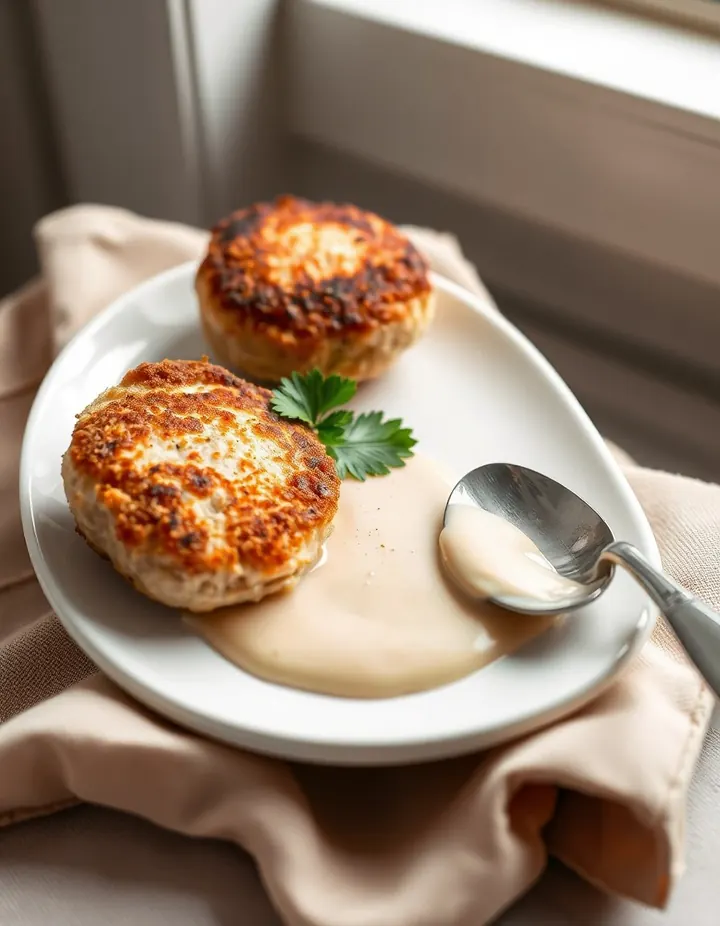 Veal Patties50 recipes
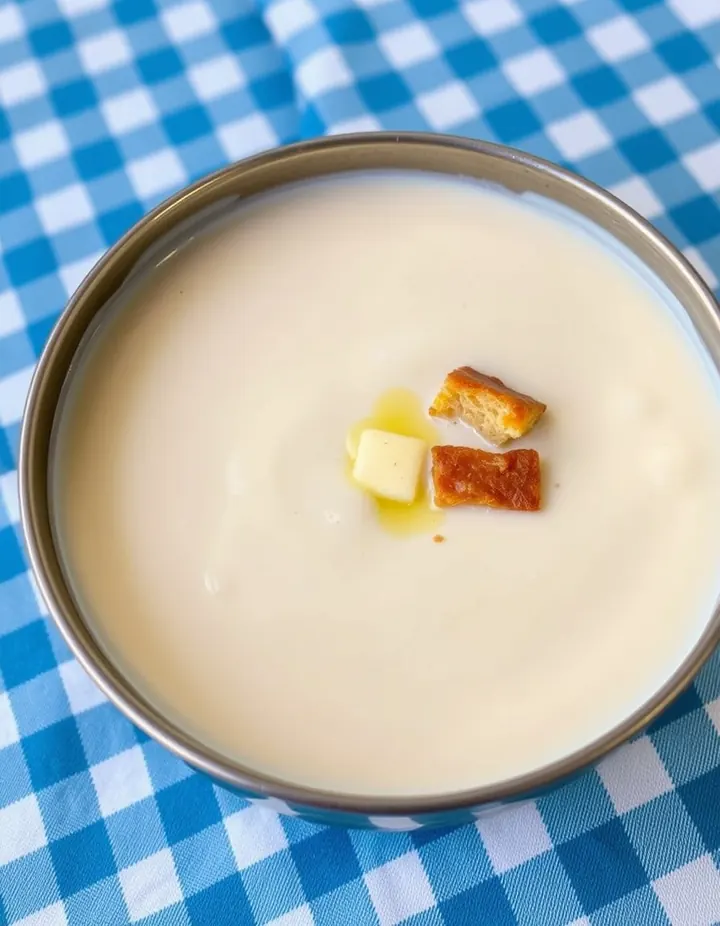 Turnip Soup43 recipes
The free Flavor Lab newsletter: one surprising pairing a week and the molecular reason it works, in 60 seconds. No spam, unsubscribe anytime.
Prefer an account? Create a free account to save pairings and unlock the full chemistry.