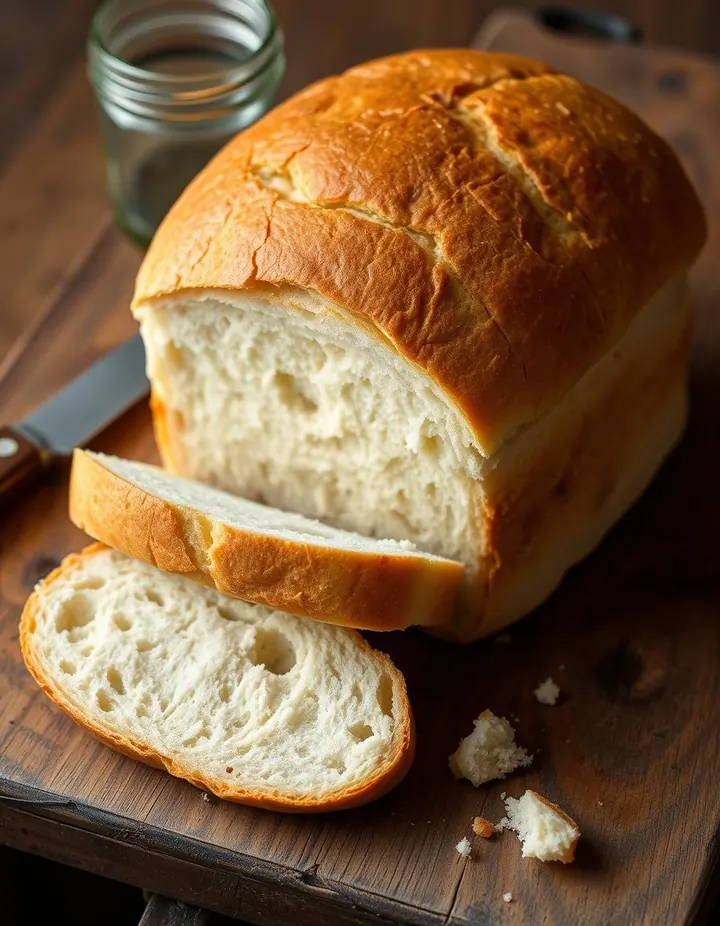
Why it works: Ham and bread match in chemistry and in kitchens. They rank in the top 3% of all ingredient pairs, and 2,536 recipes mention both. Both carry 2-acetyl-1-pyrroline, which smells popcorn, roasted. The science ↓
The recipe
Ingredients
Contains: milk, wheat (auto-detected from the ingredients and method; we can miss things, so check labels)
Also mentioned in the method: cream
Directions
Make the broth
Stew veal with ham, herbs, carrots, onions, mace, and peppercorns in water until reduced to 5 pints.
Strain the broth.
Let the broth cool to remove fat.
Prepare the fowls
Clean the fowls.
Remove dark parts from the fowls.
Boil the fowls in the veal broth for 45-60 minutes.
Remove the fowls from the broth.
Mince the white flesh of the fowls.
Pound the minced flesh into a fine paste.
Return the fowl bodies to the stock.
Simmer the stock for 2.5 hours, seasoning with salt and cayenne.
Strain the stock.
Let the stock cool, skimming off fat.
Make the soup
Soak bread in a small portion of boiling stock.
Drain the soaked bread.
Mix the drained bread with the minced fowl paste.
Gradually add stock to the mixture, blending smoothly.
Pass the mixture through a sieve.
Heat the mixture in a clean pan.
Stir in 1-1.5 pints of boiling cream.
Transcribed from a scanned cookbook and modernised for today's kitchens. Where the book gave no heat or time, or said "a moderate oven", the temperatures and times here may be modern equivalents rather than the book's own figures.
Explore the science
The flavor team
The pairs that carry this dish. Each one is judged two ways: how much aroma chemistry they share, and how many recipes mention both.
-
Ham + breadtop 3% of all pairsAroma overlapstrongMentioned together2,536 recipes
Shared aroma: 2-acetyl-1-pyrroline (popcorn, roasted).
-
Carrot + oniontop 4% of all pairsAroma overlapstrongMentioned together21,599 recipes
Shared aroma: 2-isopropyl-3-methoxypyrazine (earthy, pea).
-
Carrot + macetop 5% of all pairsAroma overlapstrongMentioned together2,592 recipes
Shared aroma: myristicin (spice, warm).
-
Veal + hamtop 6% of all pairsAroma overlapmoderateMentioned together3,264 recipes
Shared aroma: trans-2-decenal (waxy, orange).
-
Veal + carrottop 7% of all pairsAroma overlapmoderateMentioned together3,015 recipes
Shared aroma: 2-nonenal (fatty, green).
Ranks compare each pair with 20,000 random ingredient pairs on CompKitchen. How we score pairs
What each ingredient does
- Veal
- Slow stewing builds a rich, full-bodied broth as the meat gives up its gelatin and flavor.
- Fowls
- Their white meat, pounded to a paste, gives the soup its substance and smooth body.
- Stale bread
- Soaked in stock, it absorbs liquid and helps thicken and bind the mixture.
- Cream (in the method)
- Adds richness, fat and a silky texture to the finished soup.
The step that matters
Gradually adding stock to the bread and fowl mixture. Adding liquid slowly lets the soaked bread and fine meat paste disperse evenly, so the mixture blends smoothly without lumps.
Flavor stand-ins for the mace
How well each one fits the dish's main ingredients (veal, ham, carrot, onion, bread):
- Celerybetter flavor fit
- Parsleybetter flavor fit
- Marjorambetter flavor fit
- Macethe original
Fit is the average pairing score against veal, ham, carrot, onion, bread. Candidates are from the same food group and used in at least 100 recipes. This compares flavor only: it does not check the job the ingredient does in the dish (bulk, moisture, acidity, structure).
“What each ingredient does” and “The step that matters” were written by Claude from this recipe’s own method and reviewed in samples by CompKitchen.
You might also like
 Illustration
 Illustration
 Illustration
 Illustration
The Sunday pairing: one pairing, the chemistry behind it, and how to cook it. No spam, unsubscribe anytime.
Prefer an account? Create a free account for sign-in; Pro adds the full results and chemistry.