Why it works: Bread and butter are a kitchen classic. They rank in the top 7% of all ingredient pairs, and cooks put them together in 27,232 recipes. Both carry delta-decalactone, which smells sweet, creamy. The science ↓
Dinner Menus
Ingredients
Directions
The book says “a hot oven”. The 400°F (200°C) in the steps is the modern equivalent, not the book's own figure.
Roast the chicken
Preheat the oven to 400°F (200°C).
Add ½ pint of stock to a casserole, sprinkle the chicken with coarse sea salt, and cover with a lid.
Cook in the oven for 45 minutes to 1 hour, basting frequently with gravy.
Once cooked, remove the chicken, discard strings and skewers, and keep warm.
Remove excess fat from the gravy, return the chicken to the casserole, and heat for a few more minutes.
Make the bread sauce
For the bread sauce, boil the onion in ½ pint of milk with a blade of mace and a pinch of cayenne pepper.
Once boiling, remove from heat and let infuse for 15 minutes.
Strain the milk over 2 oz. of bread-crumbs in a bowl, cover, and let soak for another 15 minutes.
In a saucepan, combine the soaked bread-crumbs with 1 oz. of butter and salt to taste, then bring to a boil.
Make and fry the potato balls
For the potato balls, boil 1 lb. of potatoes until tender, then dry and mash them.
Mix in 2 oz. of butter, 2 eggs, and season with pepper and salt.
Shape into balls, coat with white bread-crumbs, and fry in hot fat until golden.
Transcribed from a scanned cookbook and modernised for today's kitchens. Where the book gave no heat or time, or said "a moderate oven", the temperatures and times here may be modern equivalents rather than the book's own figures.
Explore the science
The flavor team
The pairs that carry this dish. Each one is judged two ways: how much their aromas overlap, and how often cooks already put them together.
-
Bread + buttertop 7% of all pairsSmell alikemoderateCooked together27,232 recipes
Shared aroma: delta-decalactone (sweet, creamy).
-
Milk + buttertop 7% of all pairsSmell alikemoderateCooked together81,283 recipes
Shared aroma: (z)-4-heptenal (biscuit, cream).
-
Chicken + oniontop 8% of all pairsSmell alikemoderateCooked together17,814 recipes
Shared aroma: gamma-nonanolactone (coconut, sweet).
-
Bread + milktop 11% of all pairsSmell alikemoderateCooked together11,466 recipes
Shared aroma: 2-undecenal (sweet).
-
Onion + peppertop 11% of all pairsSmell alikemoderateCooked together68,474 recipes
Shared aroma: 2-isopropyl-3-methoxypyrazine (earthy, pea).
Ranks compare each pair with 20,000 random ingredient pairs on CompKitchen. How we score pairs
What each ingredient does
- Chicken
- Forms the main protein of the dish and browns in the oven as it roasts.
- Bread-crumbs
- Soak up the hot milk and thicken it into a smooth, spoonable bread sauce.
- Potatoes
- Bind the potato balls with starch and give them a soft, fluffy interior.
- Eggs
- Bind the mashed potato mixture so the balls hold their shape when fried.
- Butter
- Adds richness and fat, giving the bread sauce and potato balls a rounder flavour.
- Milk
- Forms the liquid base of the bread sauce, absorbing flavour from the onion and mace.
The step that matters
Frying the potato balls until golden. The fat must be hot enough to brown the crumb coating quickly; if it is too cool, the balls absorb grease and turn heavy and soggy inside.
Swap the mace
How well each one fits the dish's main ingredients (chicken, bread, sauce, milk, onion, pepper, butter):
- Garlicfits better
- Thymefits better
- Parsleyfits better
- Macethe original
Fit is the average pairing score against chicken, bread, sauce, milk, onion, pepper, butter. Candidates are from the same food group and used in at least 100 recipes.
“What each ingredient does” and “The step that matters” were written by Claude from this recipe’s own method and reviewed in samples by CompKitchen.
You might also like
 Brown Bread461 recipes
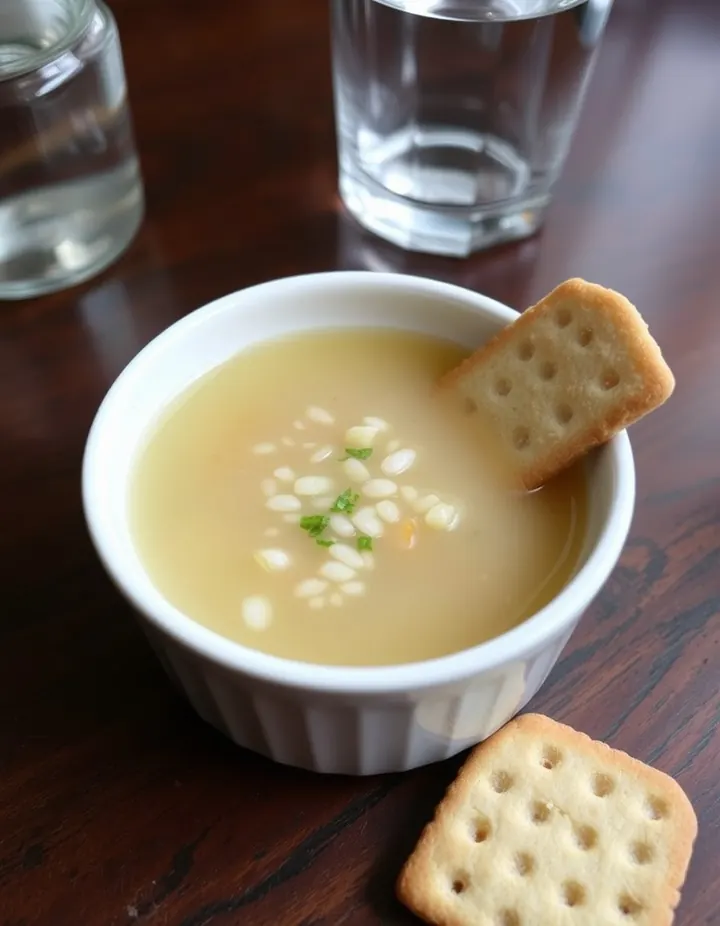 Chicken Broth257 recipes
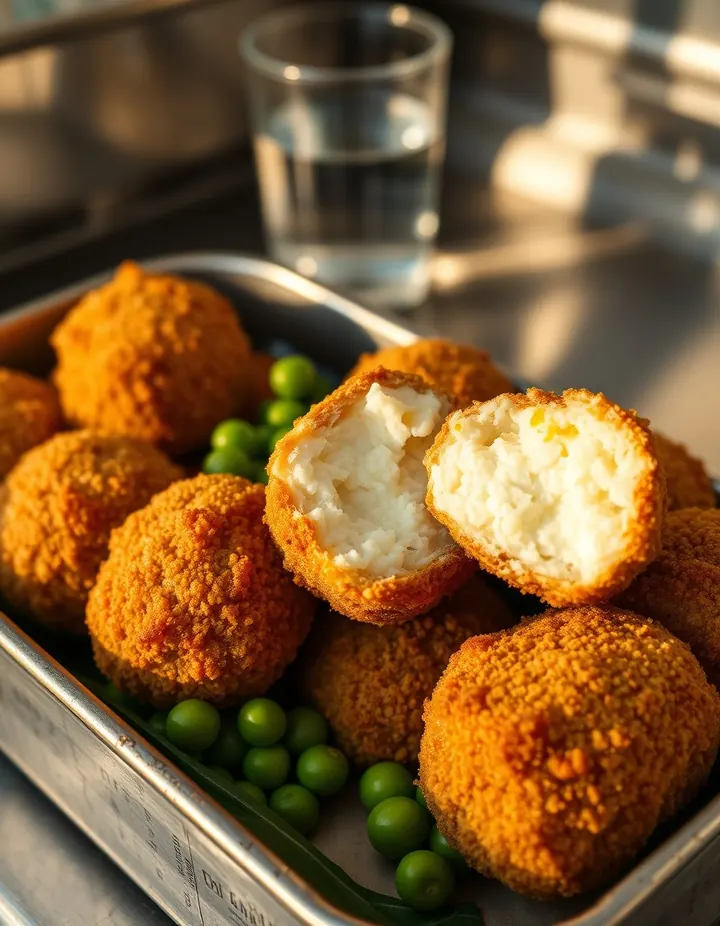 Potato Croquettes255 recipes
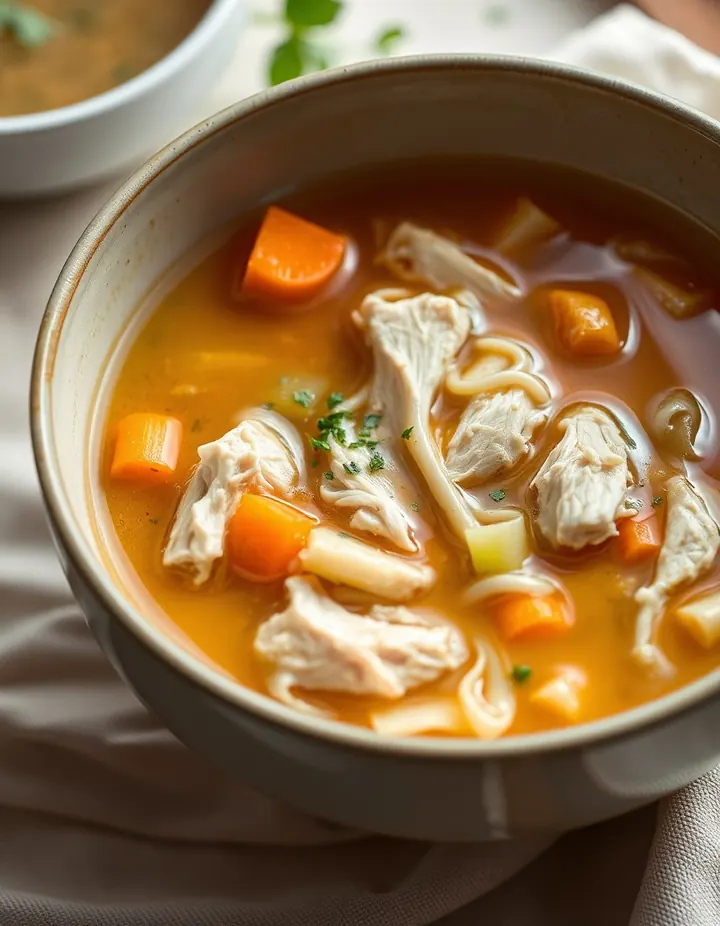 Chicken Soup156 recipes
The free Flavor Lab newsletter: one surprising pairing a week and the molecular reason it works, in 60 seconds. No spam, unsubscribe anytime.
Prefer an account? Create a free account to save pairings and unlock the full chemistry.