Why it works: Turnip and parsley match in chemistry and in kitchens. They rank in the top 2% of all ingredient pairs, and cooks put them together in 2,842 recipes. Both carry coumarin, which smells sweet, hay. The science ↓
Turnips a LA Bechamel
Ingredients
Directions
The book says “a moderate oven”. The 350°F (175°C) in the steps is the modern equivalent, not the book's own figure.
Prepare the turnips
Wash and peel the turnips, then cut them into quarters.
Place the turnips in a saucepan with cold water and a pinch of salt, then bring to a boil.
Once boiling, strain the turnips and rinse them in cold water.
Transfer the turnips to a saucepan of boiling salted water and boil until tender.
Drain thoroughly and wring them dry in a strong cloth.
Rub the turnips through a wire sieve into a saucepan.
Make the puree
Add butter, cream, white pepper, and salt to the puree, then sift in the flour.
Stir with a wooden spoon until boiling.
Bake and serve
Butter a deep fireproof dish and pour the puree into it.
Pour 2 tablespoons of cream over the puree.
Whip the egg whites with a pinch of salt until stiff, then pipe them over the top of the puree.
Place the dish in a tin of boiling water and bake in a 350°F (175°C) oven until the egg is golden.
Sprinkle with finely chopped parsley and serve.
Transcribed from a scanned cookbook and modernised for today's kitchens. Where the book gave no heat or time, or said "a moderate oven", the temperatures and times here may be modern equivalents rather than the book's own figures.
Explore the science
The flavor team
The pairs that carry this dish. Each one is judged two ways: how much their aromas overlap, and how often cooks already put them together.
-
Turnip + parsleytop 2% of all pairsSmell alikestrongCooked together2,842 recipes
Shared aroma: coumarin (sweet, hay).
-
Turnip + flourtop 7% of all pairsSmell alikestrongCooked together2,874 recipes
Shared aroma: isobutyraldehyde (malty, green).
-
Butter + creamtop 8% of all pairsSmell alikemoderateCooked together41,516 recipes
Shared aroma: delta-dodecalactone (sweet, creamy).
-
Sauce + creamtop 9% of all pairsSmell alikemoderateCooked together4,787 recipes
Shared aroma: ethanol (alcoholic, ethereal).
-
Butter + flourtop 12% of all pairsSmell alikelowCooked together124,287 recipes
Shared aroma: isobutyraldehyde (malty, green).
Butter and flour barely smell alike, yet cooks put them together in 124,287 recipes: they work on texture and structure more than aroma.
Ranks compare each pair with 20,000 random ingredient pairs on CompKitchen. How we score pairs
What each ingredient does
- Turnips
- Form the main bulk of the puree, providing body and a mild, sweet flavour.
- Butter
- Adds richness and a smooth mouthfeel to the puree.
- Cream
- Adds moisture and richness, keeping the casserole soft and creamy.
- Fine flour
- Thickens the puree as it boils, giving it a stable, spoonable texture.
- Egg whites
- Whipped into a foam, they set in the oven to form a light, golden topping.
The step that matters
Whipping the egg whites until stiff. Egg whites must be beaten until they hold firm peaks, because the foam's air traps and sets in the oven to create the light topping; under-whipped whites will collapse and become dense.
Swap the white pepper
How well each one fits the dish's main ingredients (turnip, sauce, butter, cream, flour, egg, parsley):
- Capersfits better
- Tarragonfits better
- Nutmegfits better
- White pepperthe original
Fit is the average pairing score against turnip, sauce, butter, cream, flour, egg, parsley. Candidates are from the same food group and used in at least 100 recipes.
“What each ingredient does” and “The step that matters” were written by Claude from this recipe’s own method and reviewed in samples by CompKitchen.
You might also like
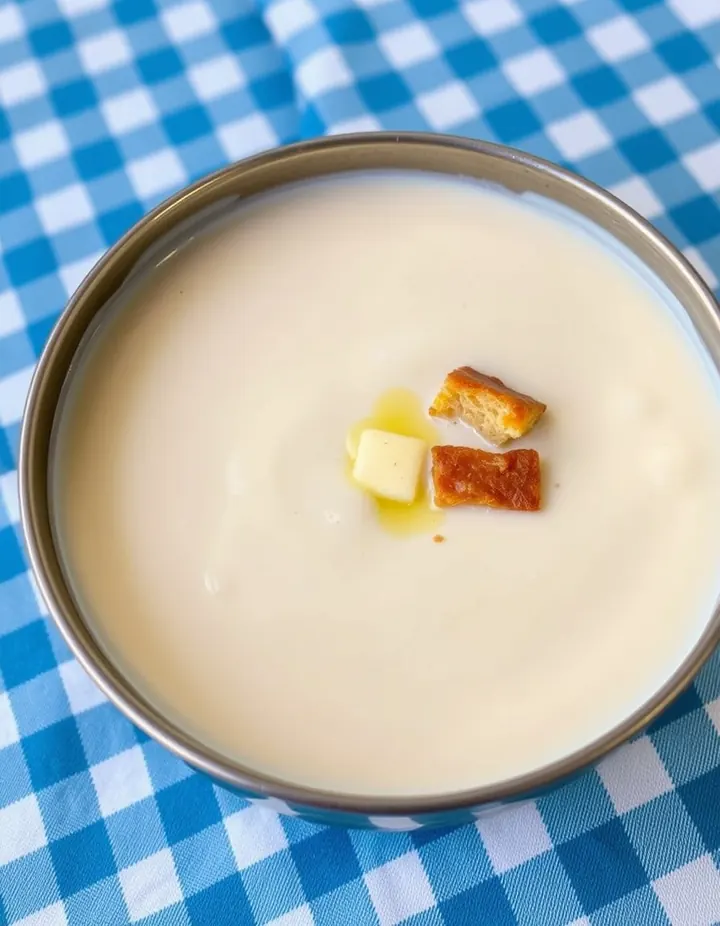 Turnip Soup43 recipes
 Tomato Soup526 recipes
 Brown Bread461 recipes
 Mutton Broth292 recipes
The free Flavor Lab newsletter: one surprising pairing a week and the molecular reason it works, in 60 seconds. No spam, unsubscribe anytime.
Prefer an account? Create a free account to save pairings and unlock the full chemistry.