Why it works: Mutton and beef are a kitchen classic. They rank in the top 10% of all ingredient pairs, and cooks put them together in 2,373 recipes. Both carry trans-2-nonenal, which smells cardboard, fatty. The science ↓
To Clarify Butter for Potting or Frying, and Suet and Dripping for Frying
Ingredients
Directions
Cut the butter into slices and place it in a jar.
Set the jar in a pan of boiling water and let it melt and heat.
Skim off the foam, then pour the melted butter gently into another container, leaving the sediment behind.
Roughly chop the suet and lard, removing all skin and fibrous parts.
Melt the suet and lard slowly over low heat or in a Dutch oven, collecting the fat as it drips.
Strain the melted fat and discard the sediment.
Transcribed from a scanned cookbook and modernised for today's kitchens. Where the book gave no heat or time, or said "a moderate oven", the temperatures and times here may be modern equivalents rather than the book's own figures.
Explore the science
The flavor team
The pairs that carry this dish. Each one is judged two ways: how much their aromas overlap, and how often cooks already put them together.
-
Mutton + beeftop 10% of all pairsSmell alikemoderateCooked together2,373 recipes
Shared aroma: trans-2-nonenal (cardboard, fatty).
-
Butter + muttontop 16% of all pairsSmell alikemoderateCooked together3,781 recipes
Shared aroma: trans-2-nonenal (cardboard, fatty).
-
Butter + beeftop 16% of all pairsSmell alikemoderateCooked together10,847 recipes
Shared aroma: 2-furfurylthiol (coffee, roasted).
Ranks compare each pair with 20,000 random ingredient pairs on CompKitchen. How we score pairs
You might also like
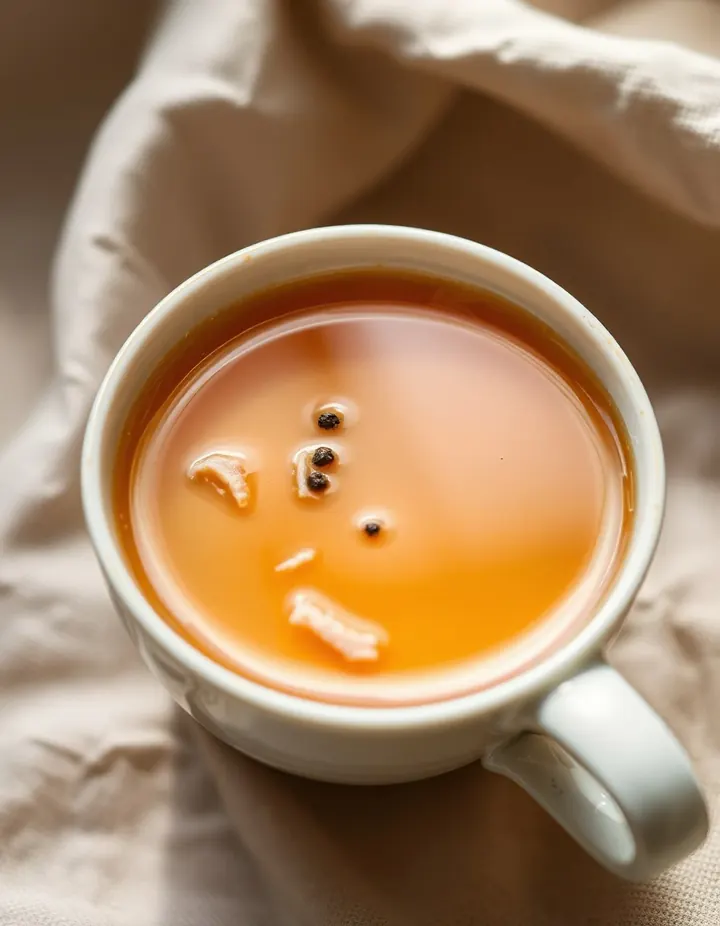 Beef, Mutton, or Veal Broth6 recipes
 Mutton Broth292 recipes
 Roast Beef211 recipes
 Beef Loaf175 recipes
The free Flavor Lab newsletter: one surprising pairing a week and the molecular reason it works, in 60 seconds. No spam, unsubscribe anytime.
Prefer an account? Create a free account to save pairings and unlock the full chemistry.