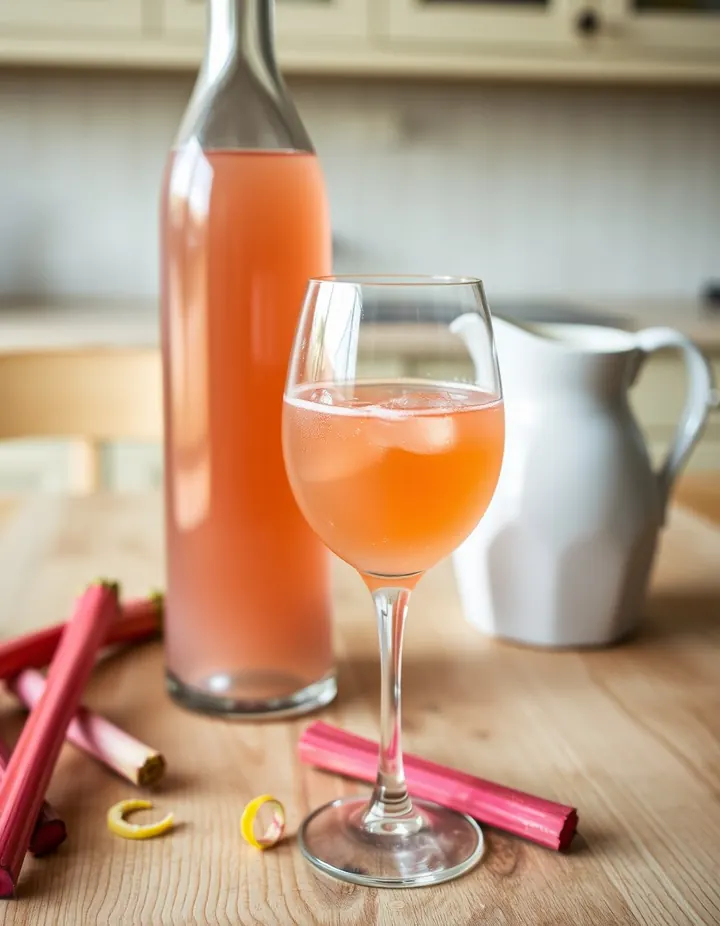
Why it works: Rhubarb and lemon match in chemistry and in kitchens. They rank in the top 7% of all ingredient pairs, and cooks put them together in 546 recipes. Both carry acetic acid, which smells sour, vinegar. The science ↓
Rhubarb Wine
Ingredients
Directions
Prepare the pulp
Gather rhubarb in mid-May and wipe it with a wet cloth.
Bruise the rhubarb in a large wooden tub using a mallet until it becomes pulp.
Weigh the pulp and add 1 gallon of cold spring water for every 5 lbs of pulp.
Let the mixture sit for 3 days, stirring 3 or 4 times daily.
On the fourth day, press the pulp through a fine sieve into a tub.
Add 3 lbs of loaf sugar for every gallon of liquid and stir until dissolved.
Ferment
Add the lemon rind and let the mixture sit until fermentation begins, about 4 to 6 days.
Skim off any crust that forms when it starts to crack.
Transfer the wine into a cask.
If it ferments again, rack it into another cask.
After two weeks, stop it down.
Add more sugar if it has lost sweetness.
Bottle and mature
Bottle the wine in February or March.
It will be ready to drink in summer.
Transcribed from a scanned cookbook and modernised for today's kitchens. Where the book gave no heat or time, or said "a moderate oven", the temperatures and times here may be modern equivalents rather than the book's own figures.
Photo for illustrative purposes only · Contact us to use it
Explore the science
The flavor team
The pairs that carry this dish. Each one is judged two ways: how much their aromas overlap, and how often cooks already put them together.
-
Rhubarb + lemontop 7% of all pairsSmell alikestrongCooked together546 recipes
Shared aroma: acetic acid (sour, vinegar).
-
Sugar + lemontop 18% of all pairsSmell alikelowCooked together53,532 recipes
Shared aroma: 2-nonenal (fatty, green).
-
Rhubarb + sugartop 18% of all pairsSmell alikemoderateCooked together1,852 recipes
Shared aroma: 1-penten-3-one (fish, pungent).
Sugar and lemon barely smell alike, yet cooks put them together in 53,532 recipes: they work on texture and structure more than aroma.
Ranks compare each pair with 20,000 random ingredient pairs on CompKitchen. How we score pairs
What each ingredient does
- Rhubarb pulp
- Provides the main fruit flavour, acidity and body for the wine.
- Cold spring water
- Dilutes the pulp to a drinkable liquid that can carry the flavour and sugar.
- Loaf sugar
- Feeds the yeast during fermentation, producing alcohol and carbon dioxide, and sets the sweetness.
- Isinglass
- Acts as a fining agent that helps clear the wine by settling suspended particles.
- Lemon rind
- Adds aromatic oils and a bright citrus note to the wine.
The step that matters
Add the sugar only after the pulp is strained and stirred until dissolved. Sugar must fully dissolve so the yeast can ferment it evenly. Undissolved sugar can leave pockets of uneven sweetness and fermentation, and the later sugar additions control the final sweetness.
Swap the rhubarb
How well each one fits the dish's main ingredients (sugar, lemon):
- Cinnamonfits better
- Gingerfits better
- Marjoramfits better
- Rhubarbthe original
Fit is the average pairing score against sugar, lemon. Candidates are from the same food group and used in at least 100 recipes.
“What each ingredient does” and “The step that matters” were written by Claude from this recipe’s own method and reviewed in samples by CompKitchen.
You might also like
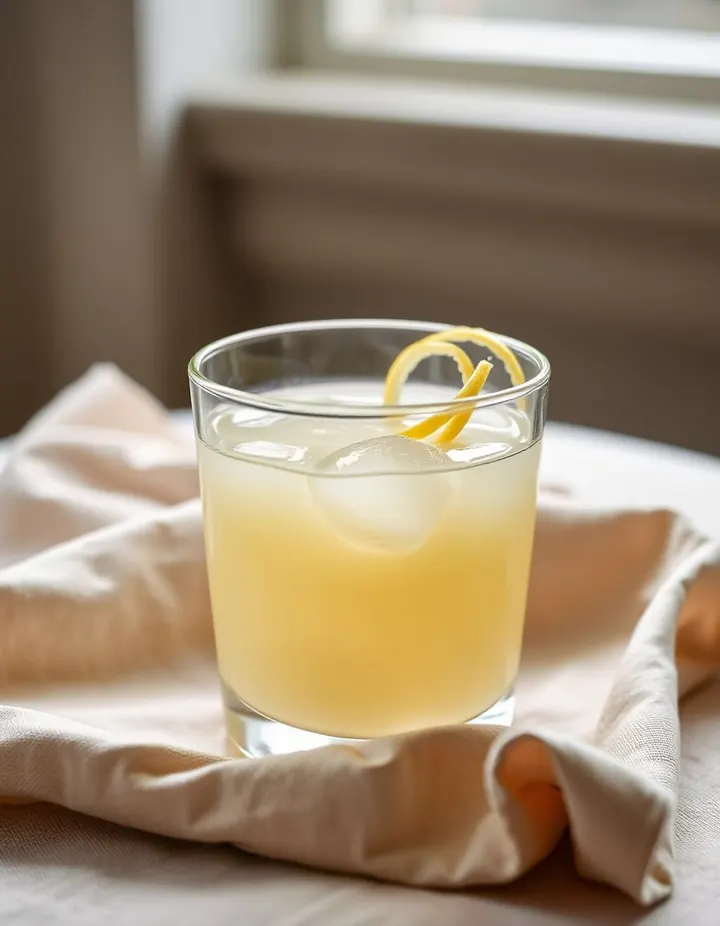 Lemon Whey33 recipes
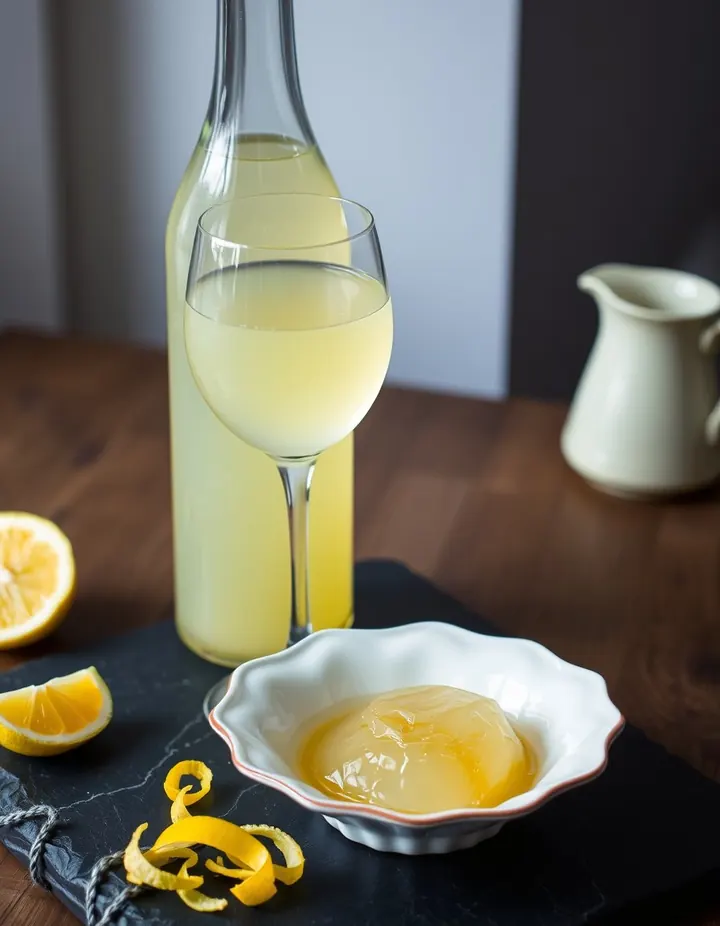 Lemon Wine31 recipes
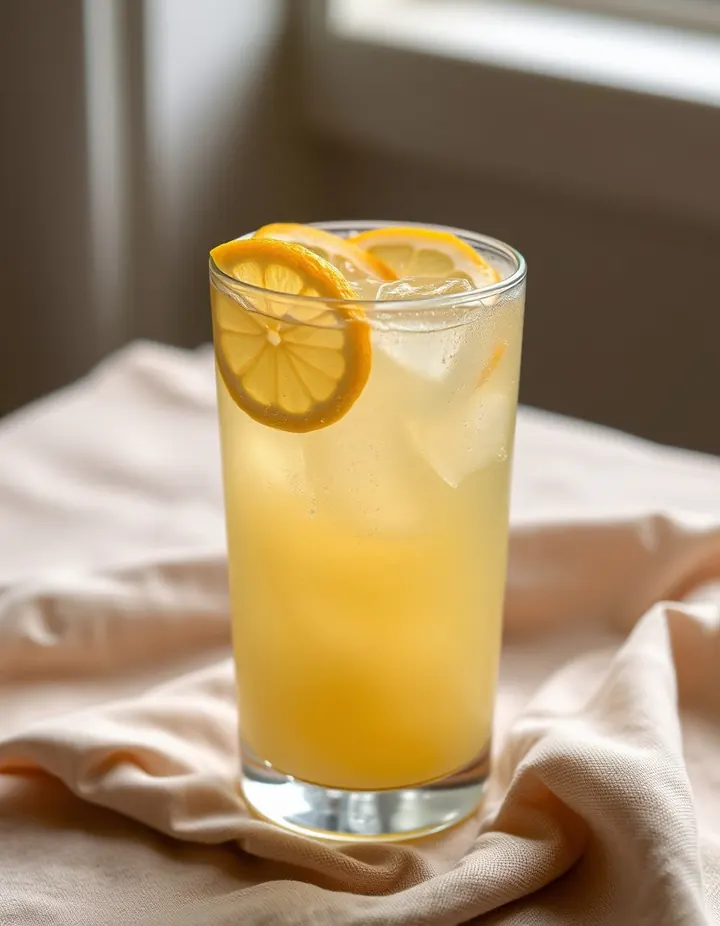 Lemon Squash10 recipes
 Lemon Essence8 recipes
The free Flavor Lab newsletter: one surprising pairing a week and the molecular reason it works, in 60 seconds. No spam, unsubscribe anytime.
Prefer an account? Create a free account to save pairings and unlock the full chemistry.