Why it works: Potato and onion are a kitchen classic. They rank in the top 3% of all ingredient pairs, and cooks put them together in 9,023 recipes. Both carry 2-isopropyl-3-methoxypyrazine, which smells earthy, pea. The science ↓
Cold Meat Pie
Ingredients
Directions
The book says “a good oven”. The 400°F (200°C) in the steps is the modern equivalent, not the book's own figure.
Remove meat from bones, discarding any tough or gristly pieces and excess fat.
Cut the mixed meat into slices about ¼ inch thick and the remaining meat into 1-inch or ½-inch lengths.
Mince any solid fat finely and add it as needed.
In a stew pan, crack the bones and add them with the poorer meat parts, excluding fat.
If available, chop leftover cold steak and add it with its gravy.
If desired, slice in onion and cover with cold water, then heat slowly to a boil.
Skim if necessary, then simmer for 1 hour and strain the liquid.
Add any leftover cold gravy to the strained liquid and thicken with browned flour mixed with milk or water.
Heat the thickened gravy to a boil and set aside to cool.
Prepare a pie crust and fill a wide, shallow bake pan with the meat and potato mixture.
Pour the gravy over the filling, covering it halfway or two-thirds.
Roll out the crust to ½ inch thick, place it on top, and pinch the edges to seal.
Prick the crust with a fork and cut a cross-slit in the center.
Bake in a preheated oven at 400°F (200°C) until golden.
Transcribed from a scanned cookbook and modernised for today's kitchens. Where the book gave no heat or time, or said "a moderate oven", the temperatures and times here may be modern equivalents rather than the book's own figures.
Explore the science
The flavor team
The pairs that carry this dish. Each one is judged two ways: how much their aromas overlap, and how often cooks already put them together.
-
Potato + oniontop 3% of all pairsSmell alikemoderateCooked together9,023 recipes
Shared aroma: 2-isopropyl-3-methoxypyrazine (earthy, pea).
-
Beef + oniontop 7% of all pairsSmell alikemoderateCooked together17,092 recipes
Shared aroma: 2-isopropyl-3-methoxypyrazine (earthy, pea).
-
Beef + potatotop 8% of all pairsSmell alikemoderateCooked together2,052 recipes
Shared aroma: sotolon (curry, maple).
-
Potato + milktop 9% of all pairsSmell alikemoderateCooked together3,611 recipes
Shared aroma: (e,z)-2,6-nonadienal (cucumber, melon).
-
Beef + milktop 12% of all pairsSmell alikemoderateCooked together3,759 recipes
Shared aroma: 1-hexanal (fruit).
Ranks compare each pair with 20,000 random ingredient pairs on CompKitchen. How we score pairs
Swap the onion
The recipe marks onion as optional. How well each one fits the dish's main ingredients (beef, potato, flour, milk, cream):
- Chivefits about as well
- Leekfits about as well
- Onionthe original
- Asparagusfits about as well
Fit is the average pairing score against beef, potato, flour, milk, cream. Candidates are from the same food group and used in at least 100 recipes.
You might also like
 Potato Croquettes255 recipes
 Roast Beef211 recipes
 Beef Loaf175 recipes
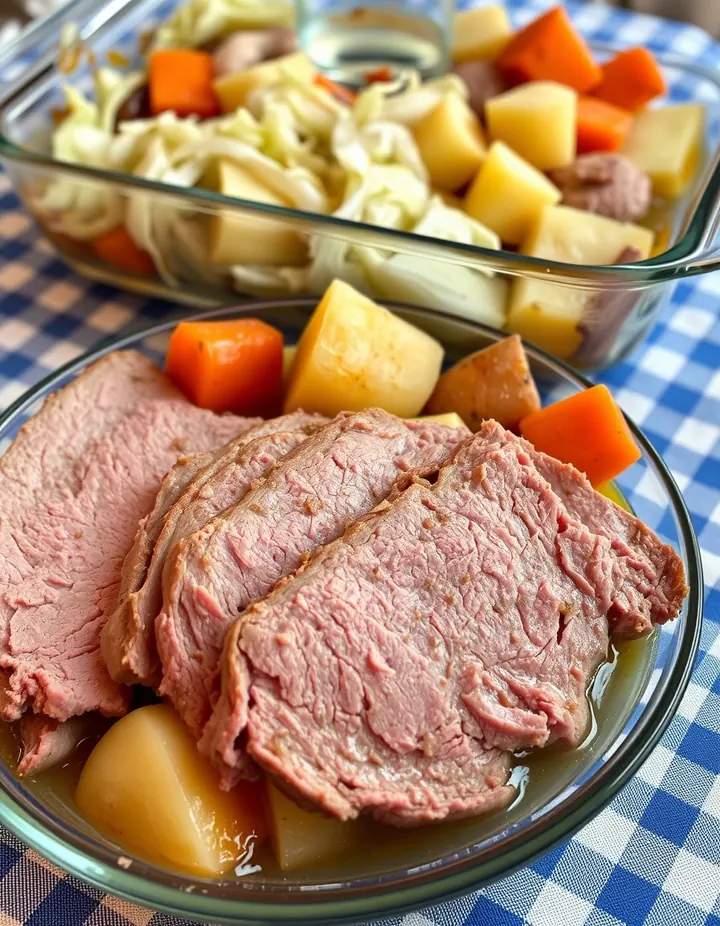 Corned Beef87 recipes
The free Flavor Lab newsletter: one surprising pairing a week and the molecular reason it works, in 60 seconds. No spam, unsubscribe anytime.
Prefer an account? Create a free account to save pairings and unlock the full chemistry.