Why it works: Lemon and thyme match in chemistry and in kitchens. They rank in the top 1% of all ingredient pairs, and cooks put them together in 3,973 recipes. Both carry beta-phellandrene, which smells minty, terpene. The science ↓
Pheasant, Salmis of
Ingredients
Directions
The book says “a quick oven”. The 400°F (200°C) in the steps is the modern equivalent, not the book's own figure.
Prepare the pheasant
Pluck the pheasant.
Draw the pheasant.
Truss the pheasant for roasting.
Baste the pheasant well with hot butter.
Roast the pheasant in a 400°F (200°C) oven for 30 minutes, basting frequently.
Strain the basting butter into a stewpan.
Divide the bird into neat joints.
Set aside the breast, wings, and legs.
Cut the remainder into small pieces.
Make the sauce and braise
Reheat the butter in the stewpan.
Add the small pieces of pheasant to the stewpan.
Add the lemon rind, shallots, bay leaf, and thyme to the stewpan.
Fry the mixture well.
Drain off the butter.
Return the pheasant pieces to the stewpan.
Heat the brown sauce in a stewpan.
Add the wine to the sauce.
Season the sauce to taste.
Simmer the sauce for 10 minutes.
Add the pheasant to the sauce.
Assemble and serve
Reheat the butter.
Fry the slices of liver.
Drain the liver slices well.
Arrange the pheasant in a casserole or stewpan.
Intermix slices of liver and truffle with the pheasant.
Pour the sauce over the mixture.
Garnish with fried bread.
Serve hot.
Transcribed from a scanned cookbook and modernised for today's kitchens. Where the book gave no heat or time, or said "a moderate oven", the temperatures and times here may be modern equivalents rather than the book's own figures.
Explore the science
The flavor team
The pairs that carry this dish. Each one is judged two ways: how much their aromas overlap, and how often cooks already put them together.
-
Lemon + thymetop 1% of all pairsSmell alikestrongCooked together3,973 recipes
Shared aroma: beta-phellandrene (minty, terpene).
-
Shallot + thymetop 1% of all pairsSmell alikestrongCooked together1,476 recipes
Shared aroma: eucalyptol (eucalyptus, herbal).
-
Shallot + lemontop 6% of all pairsSmell alikestrongCooked together2,523 recipes
Shared aroma: eucalyptol (eucalyptus, herbal).
-
Pheasant + shallottop 11% of all pairsSmell alikemoderateCooked together89 recipes
Shared aroma: geraniol (rose, geranium).
-
Truffle + buttertop 11% of all pairsSmell alikemoderateCooked together2,209 recipes
Shared aroma: nonanal (fat, citrus).
Ranks compare each pair with 20,000 random ingredient pairs on CompKitchen. How we score pairs
What each ingredient does
- Pheasant
- Main protein that is roasted, then gently simmered in the sauce to become tender.
- Butter
- Carries flavour and adds richness, and browns the pheasant pieces when fried.
- Brown sauce
- Forms the body of the dish, coating the pheasant with a rich, savoury base.
- Goose liver
- Adds a rich, creamy texture and deep savoury flavour to the finished dish.
- Madeira or marsala wine
- Adds acidity and sweetness, deepening the sauce's flavour as it simmers.
- Shallots
- Add a mild, sweet aromatic base when fried with the pheasant.
The step that matters
Fry the liver slices briefly and drain them well. Liver cooks quickly and turns grainy and tough if overcooked. Draining removes excess fat so the slices stay clean-flavoured and do not make the sauce greasy.
“What each ingredient does” and “The step that matters” were written by Claude from this recipe’s own method and reviewed in samples by CompKitchen.
You might also like
 Lemon Sauce236 recipes
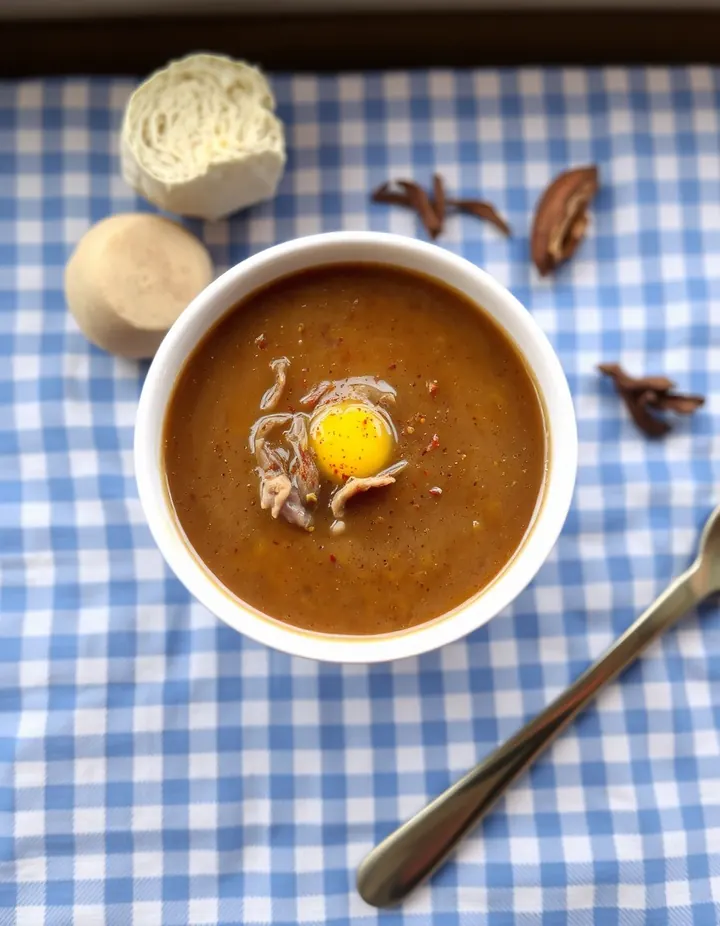 Pheasant Soup25 recipes
 Tomato Soup526 recipes
 Brown Bread461 recipes
The free Flavor Lab newsletter: one surprising pairing a week and the molecular reason it works, in 60 seconds. No spam, unsubscribe anytime.
Prefer an account? Create a free account to save pairings and unlock the full chemistry.