Why it works: Parsley and lemon match in chemistry and in kitchens. They rank in the top 1% of all ingredient pairs, and cooks put them together in 14,037 recipes. Both carry beta-phellandrene, which smells minty, terpene. The science ↓
Forcemeat Balls, Baked
Ingredients
Directions
The book says “a hot oven”. The 400°F (200°C) in the steps is the modern equivalent, not the book's own figure.
Mix the forcemeat
In a basin, combine the panada, chopped beef suet, chopped parsley, lemon juice, egg yolks, and chopped ham.
Mix all ingredients well until combined.
Shape and bake
Form the mixture into small balls.
Bake in a hot oven at 400°F (200°C) until brown.
Transcribed from a scanned cookbook and modernised for today's kitchens. Where the book gave no heat or time, or said "a moderate oven", the temperatures and times here may be modern equivalents rather than the book's own figures.
Explore the science
The flavor team
The pairs that carry this dish. Each one is judged two ways: how much their aromas overlap, and how often cooks already put them together.
-
Parsley + lemontop 1% of all pairsSmell alikestrongCooked together14,037 recipes
Shared aroma: beta-phellandrene (minty, terpene).
-
Beef + hamtop 15% of all pairsSmell alikemoderateCooked together1,729 recipes
Shared aroma: 2-acetyl-1-pyrroline (popcorn, roasted).
-
Beef + parsleytop 16% of all pairsSmell alikemoderateCooked together5,866 recipes
Shared aroma: 2,4-decadienal (seaweed).
-
Egg + hamtop 17% of all pairsSmell alikemoderateCooked together4,526 recipes
Shared aroma: 2,4-decadienal (seaweed).
-
Lemon + eggtop 19% of all pairsSmell alikelowCooked together44,316 recipes
Shared aroma: (e,e)-2,4-decadienal (fatty, deep fried).
Lemon and egg barely smell alike, yet cooks put them together in 44,316 recipes: they work on texture and structure more than aroma.
Ranks compare each pair with 20,000 random ingredient pairs on CompKitchen. How we score pairs
What each ingredient does
- Panada
- Adds bulk and moisture and helps the mixture hold together.
- Beef suet
- Adds fat that keeps the balls moist and tender as they cook.
- Egg yolks
- Bind the mixture and set when baked, giving the balls structure.
- Chopped ham
- Adds savoury, salty flavour to the balls.
- Lemon juice
- Adds acidity that brightens the rich fat and meat flavours.
The step that matters
Bake until brown, without overbaking. Egg yolks set as they heat, so the balls need enough time to firm up. Baking too long drives off moisture and leaves them dry, while the surface browns through the Maillard reaction, so watch the colour as well as the clock.
“What each ingredient does” and “The step that matters” were written by Claude from this recipe’s own method and reviewed in samples by CompKitchen.
You might also like
 Lemon Sauce236 recipes
 Roast Beef211 recipes
 Beef Loaf175 recipes
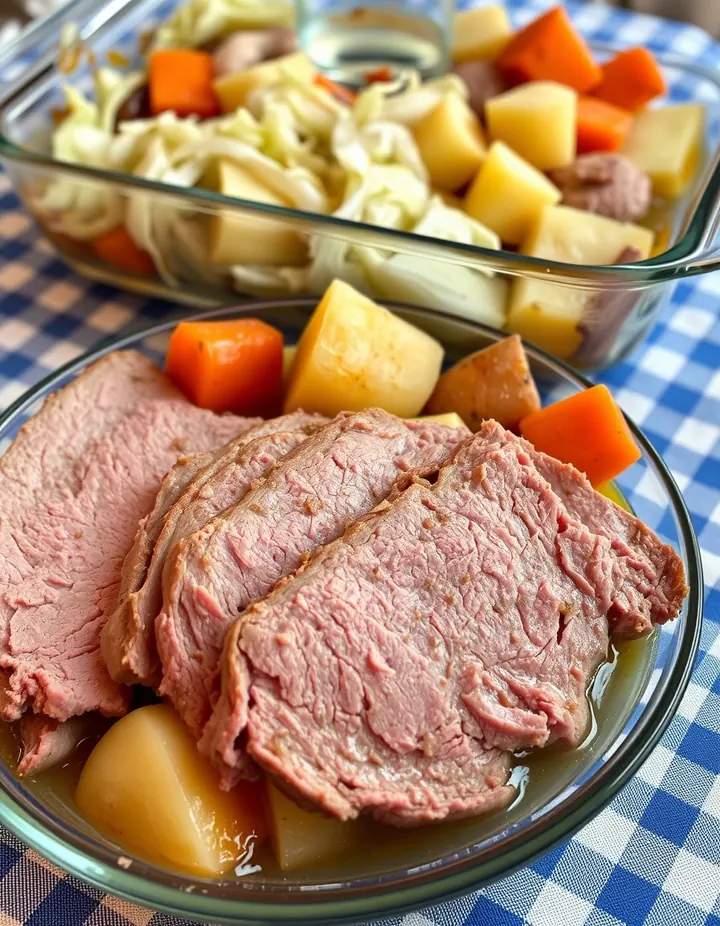 Corned Beef87 recipes
The free Flavor Lab newsletter: one surprising pairing a week and the molecular reason it works, in 60 seconds. No spam, unsubscribe anytime.
Prefer an account? Create a free account to save pairings and unlock the full chemistry.