Why it works: Carrot and parsley match in chemistry and in kitchens. They rank in the top 1% of all ingredient pairs, and cooks put them together in 8,053 recipes. Both carry 2,4-decadienal, which smells seaweed. The science ↓
Necks of Mutton
Ingredients
Directions
The book gives no oven temperature. The 350°F (175°C) in the steps was added when the recipe was transcribed, as a starting point.
Prepare
Trim and remove the upper part of the fillet from the necks of mutton without loosening it from the bones.
Lard the necks closely and marinate in a cold marinade for at least 24 hours.
Braise
Place the necks in a braising pan with chopped carrot, onion, celery, parsley, cloves, and mace.
Moisten the necks with sherry or Madeira and stock.
Cover the pan with buttered paper.
Bring to a boil on the stove.
Cover and braise on moderate heat for about 2 hours, basting frequently.
Glaze and serve
Transfer the necks to a small baking dish with some of the cooking liquid.
Place the dish in the oven at 350°F (175°C) for 2 minutes to dry the larding.
Glaze the necks.
Serve garnished with fried potatoes and Poivrade sauce.
Transcribed from a scanned cookbook and modernised for today's kitchens. Where the book gave no heat or time, or said "a moderate oven", the temperatures and times here may be modern equivalents rather than the book's own figures.
Explore the science
The flavor team
The pairs that carry this dish. Each one is judged two ways: how much their aromas overlap, and how often cooks already put them together.
-
Carrot + parsleytop 1% of all pairsSmell alikestrongCooked together8,053 recipes
Shared aroma: 2,4-decadienal (seaweed).
-
Carrot + celerytop 1% of all pairsSmell alikestrongCooked together10,173 recipes
Shared aroma: myristicin (spice, warm).
-
Celery + parsleytop 1% of all pairsSmell alikestrongCooked together6,810 recipes
Shared aroma: 4'-methylacetophenone (bitter almond).
-
Carrot + clovetop 5% of all pairsSmell alikestrongCooked together5,873 recipes
Shared aroma: cuminaldehyde (Spicy, cumin).
-
Carrot + oniontop 6% of all pairsSmell alikemoderateCooked together21,601 recipes
Shared aroma: 2-isopropyl-3-methoxypyrazine (earthy, pea).
Ranks compare each pair with 20,000 random ingredient pairs on CompKitchen. How we score pairs
What each ingredient does
- Mutton necks
- Provide the main meat that becomes tender during long, slow braising.
- Sherry or madeira
- Adds acidity and aromatic depth to the braising liquid.
- Stock
- Supplies moisture and savory flavour to the braising liquid.
- Carrot, onion and celery
- Build aromatic flavour base that infuses the braising liquid.
The step that matters
Braise gently with frequent basting. Moderate heat and a covered pan let connective tissue break down slowly into gelatin, keeping the meat tender. Boiling hard would toughen the surface and dry the meat, so the liquid must stay at a gentle simmer and be spooned over the necks regularly.
Swap the mace
How well each one fits the dish's main ingredients (mutton, butter, carrot, onion, celery, parsley, clove):
- Thymefits better
- Marjoramfits better
- Cuminfits better
- Macethe original
Fit is the average pairing score against mutton, butter, carrot, onion, celery, parsley, clove. Candidates are from the same food group and used in at least 100 recipes.
“What each ingredient does” and “The step that matters” were written by Claude from this recipe’s own method and reviewed in samples by CompKitchen.
You might also like
 Mutton Broth292 recipes
 Potato Croquettes255 recipes
 Carrot Soup134 recipes
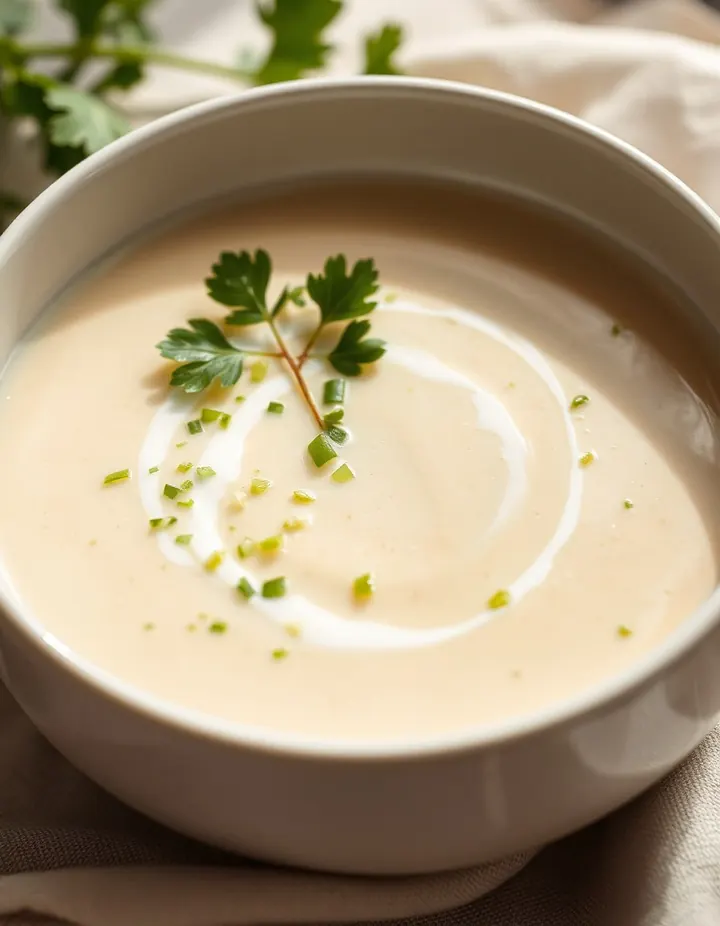 Cream of Celery Soup113 recipes
The free Flavor Lab newsletter: one surprising pairing a week and the molecular reason it works, in 60 seconds. No spam, unsubscribe anytime.
Prefer an account? Create a free account to save pairings and unlock the full chemistry.