Why it works: Turkey and pheasant share more aroma than cooks usually use. They rank in the top 5% of all ingredient pairs, and cooks put them together in 33 recipes. Both carry decanal, which smells soap, orange peel. The science ↓
Cold Raised Pies
Ingredients
Directions
The book gives no oven temperature. The 350°F (175°C) in the steps was added when the recipe was transcribed, as a starting point.
Prepare
Boil the ham and tongues.
Trim the boiled ham and tongues.
Season the inside of the game and poultry.
Garnish the inside of the game and poultry.
Prepare highly-seasoned aspic jelly with the carcasses of the game and poultry, adding the calves' feet and vegetables.
Clarify the aspic when done.
Make 16 pounds of hot-water paste.
Build the pie
Use the hot-water paste to raise a pie large enough to hold the game and poultry.
Line the inside of the pie with thin layers of fat bacon.
Spread a coating of force-meat over the bacon.
Place the goose at the bottom of the pie.
Surround the goose with small birds.
Fill the cavities around the goose with force-meat.
Add the turkey to the pie.
Add the pheasants to the pie with slices of boiled ham in between.
Reserve woodcocks and widgeons for the top of the pie.
Fill remaining cavities with force-meat and truffles.
Cover the filled cavities with bacon.
Brush the bacon with melted butter.
Cover the pie and decorate it.
Bake and serve
Bake the pie in a moderately heated oven at 350°F (175°C) for about 6 hours.
After baking, pour the reduced aspic into the pie.
Seal the hole with paste.
Let the pie cool in the larder.
Transcribed from a scanned cookbook and modernised for today's kitchens. Where the book gave no heat or time, or said "a moderate oven", the temperatures and times here may be modern equivalents rather than the book's own figures.
Explore the science
The flavor team
The pairs that carry this dish. Each one is judged two ways: how much their aromas overlap, and how often cooks already put them together.
-
Turkey + pheasanttop 5% of all pairsSmell alikestrongCooked together33 recipes
Shared aroma: decanal (soap, orange peel).
-
Truffle + buttertop 11% of all pairsSmell alikemoderateCooked together2,209 recipes
Shared aroma: nonanal (fat, citrus).
-
Ham + truffletop 12% of all pairsSmell alikemoderateCooked together516 recipes
Shared aroma: 1-octen-3-one (mushroom, metallic).
-
Meat + turkeytop 13% of all pairsSmell alikelowCooked together540 recipes
Shared aroma: 1-octen-3-ol (mushroom, earthy).
-
Ham + meattop 13% of all pairsSmell alikemoderateCooked together1,095 recipes
Shared aroma: 1-octen-3-one (mushroom, metallic).
Ranks compare each pair with 20,000 random ingredient pairs on CompKitchen. How we score pairs
What each ingredient does
- Hot-water paste
- Forms a sturdy, moldable crust that holds the filling during long baking and cooling.
- Force-meat of fat livers
- Fills the gaps around the birds, adding richness and moisture as it cooks.
- Fat bacon
- Lines the crust and covers the filling, adding fat that bastes the meats and keeps them moist.
- Calves' feet
- Provide natural gelatin that sets the aspic, which later fills the baked pie.
- Goose
- Forms the rich, fatty base of the pie's layered filling.
- Truffles
- Add a strong, earthy aroma to the stuffing.
The step that matters
Baking the pie for about 6 hours at 350°F. A large, dense pie needs long, moderate heat so the centre cooks through without the crust over-browning. Pouring the aspic only after baking lets it set into a clear jelly as the pie cools.
“What each ingredient does” and “The step that matters” were written by Claude from this recipe’s own method and reviewed in samples by CompKitchen.
You might also like
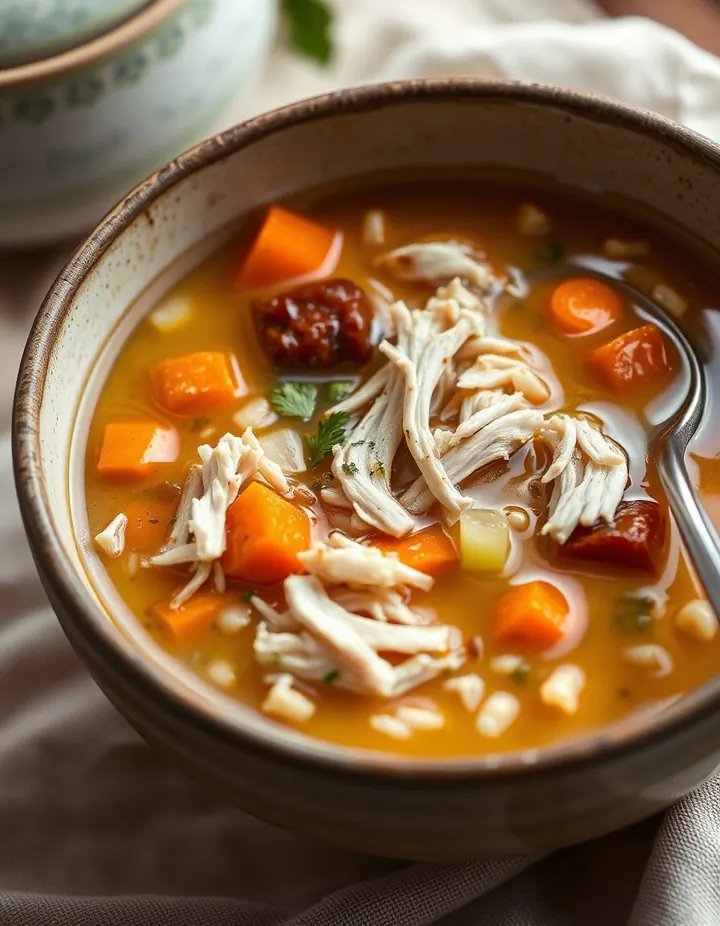 Turkey Soup71 recipes
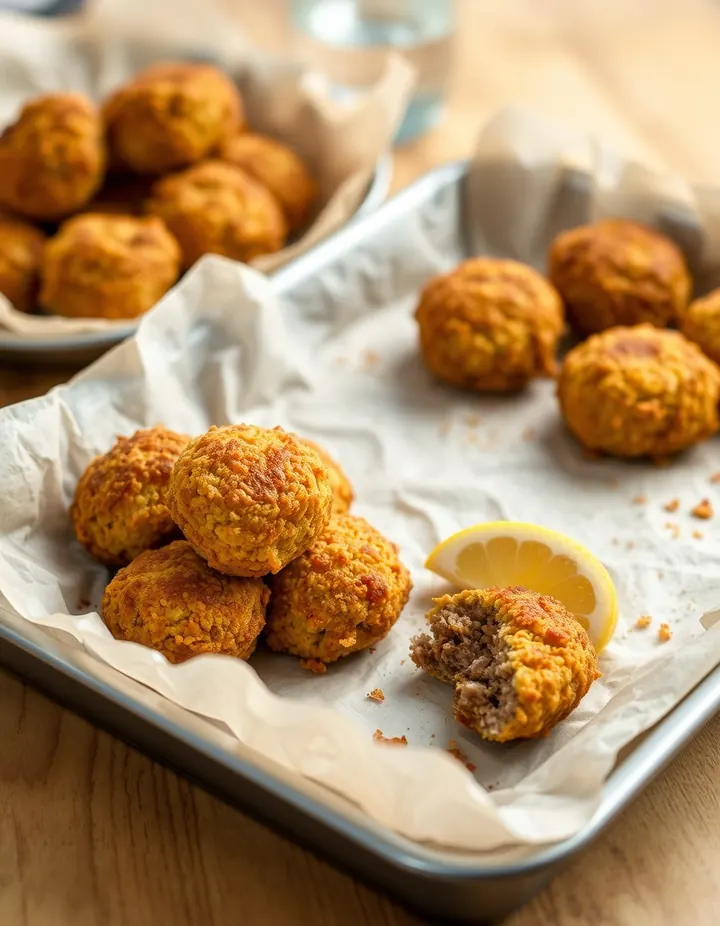 Meat Croquettes52 recipes
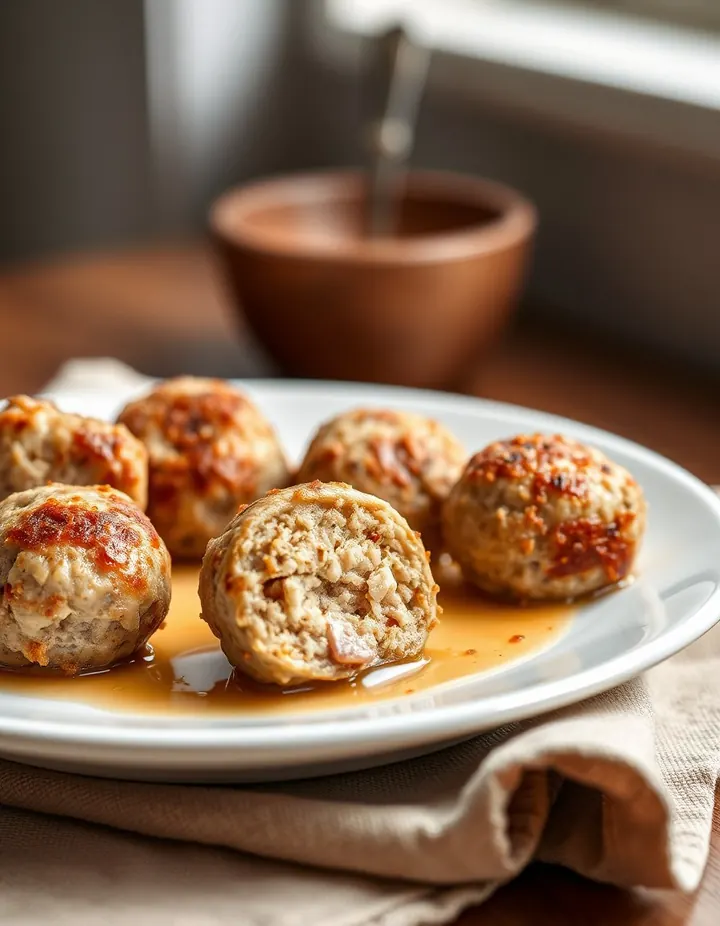 Meatballs37 recipes
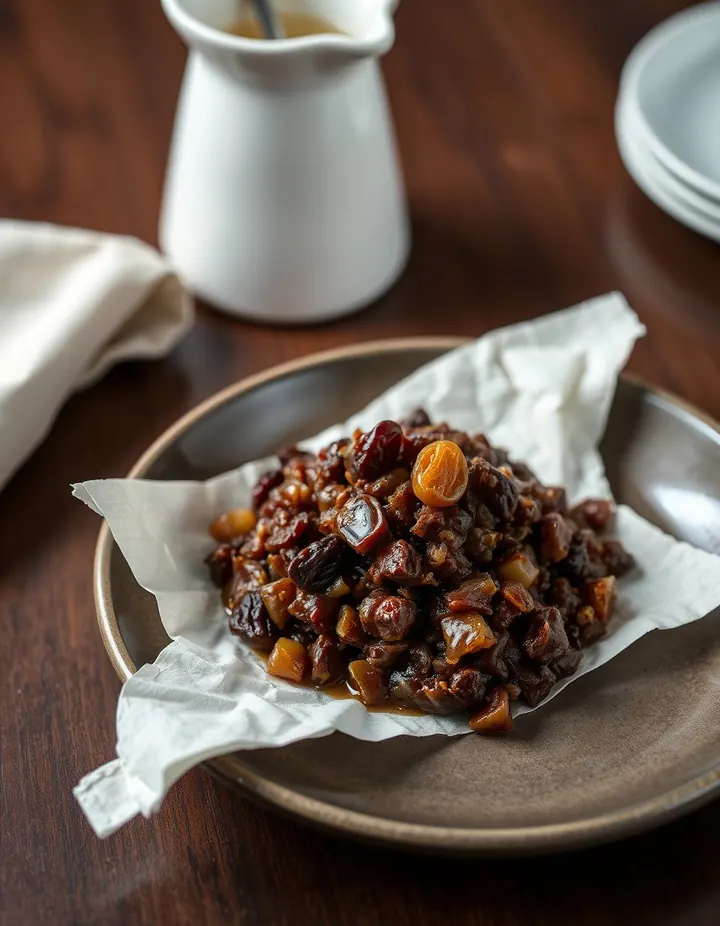 Mince Meat37 recipes
The free Flavor Lab newsletter: one surprising pairing a week and the molecular reason it works, in 60 seconds. No spam, unsubscribe anytime.
Prefer an account? Create a free account to save pairings and unlock the full chemistry.