Why it works: Tarragon and chervil match in chemistry and in kitchens. They rank in the top 1% of all ingredient pairs, and cooks put them together in 824 recipes. Both carry estragole, which smells anise, licorice. The science ↓
Dauphine Soup
Ingredients
Directions
Make the paste
In a bowl, mix the strong consomme of fowl gradually with the eggs and yolks until well combined.
Stir in the chopped parsley.
Shape the peas
Prepare two funnel-shaped papers with a ¼ inch hole at the tip.
Fill each paper with the paste and close the large end tightly.
Force the paste out onto a buttered stewpan lid in the shape of large peas.
Prepare boiling consomme in a stewpan.
Shake the lid to drop the paste peas into the boiling consomme.
Let them boil gently for 5 minutes, then strain them on a sieve.
Finish and serve
Add the strained peas to 3 quarts of strong bright consomme and boil gently for another 5 minutes.
Add tarragon and chervil, and boil briefly before serving.
Serve with grated Parmesan cheese on the side.
Transcribed from a scanned cookbook and modernised for today's kitchens. Where the book gave no heat or time, or said "a moderate oven", the temperatures and times here may be modern equivalents rather than the book's own figures.
Explore the science
The flavor team
The pairs that carry this dish. Each one is judged two ways: how much their aromas overlap, and how often cooks already put them together.
-
Tarragon + cherviltop 1% of all pairsSmell alikestrongCooked together824 recipes
Shared aroma: estragole (anise, licorice).
-
Parsley + tarragontop 1% of all pairsSmell alikestrongCooked together1,563 recipes
Shared aroma: estragole (anise, licorice).
-
Parsley + cherviltop 1% of all pairsSmell alikestrongCooked together774 recipes
Shared aroma: estragole (anise, licorice).
-
Egg + parmesan cheesetop 18% of all pairsSmell alikemoderateCooked together3,368 recipes
Shared aroma: 1-octen-3-ol (mushroom, earthy).
-
Egg + parsleytop 21% of all pairsSmell alikemoderateCooked together18,765 recipes
Shared aroma: 2,4-decadienal (seaweed).
Ranks compare each pair with 20,000 random ingredient pairs on CompKitchen. How we score pairs
What each ingredient does
- Eggs
- Set the paste so the pea shapes hold together when boiled.
- Egg yolks
- Add richness and help the paste bind into a smooth, firm mixture.
- Strong consomme of fowl
- Supplies the liquid and savoury flavour for the paste and the soup.
The step that matters
Shaping and dropping the paste peas into boiling consomme. The paste must be firm enough to hold its shape when forced out. If it is too loose, the peas spread or break apart in the hot liquid, so the cook should keep the consomme at a gentle boil rather than a rolling one.
Swap the parsley
How well each one fits the dish's main ingredients (egg, tarragon, chervil, parmesan cheese):
- Capersfits better
- Parsleythe original
- Dillfits less well
- Basilfits less well
Fit is the average pairing score against egg, tarragon, chervil, parmesan cheese. Candidates are from the same food group and used in at least 100 recipes.
“What each ingredient does” and “The step that matters” were written by Claude from this recipe’s own method and reviewed in samples by CompKitchen.
You might also like
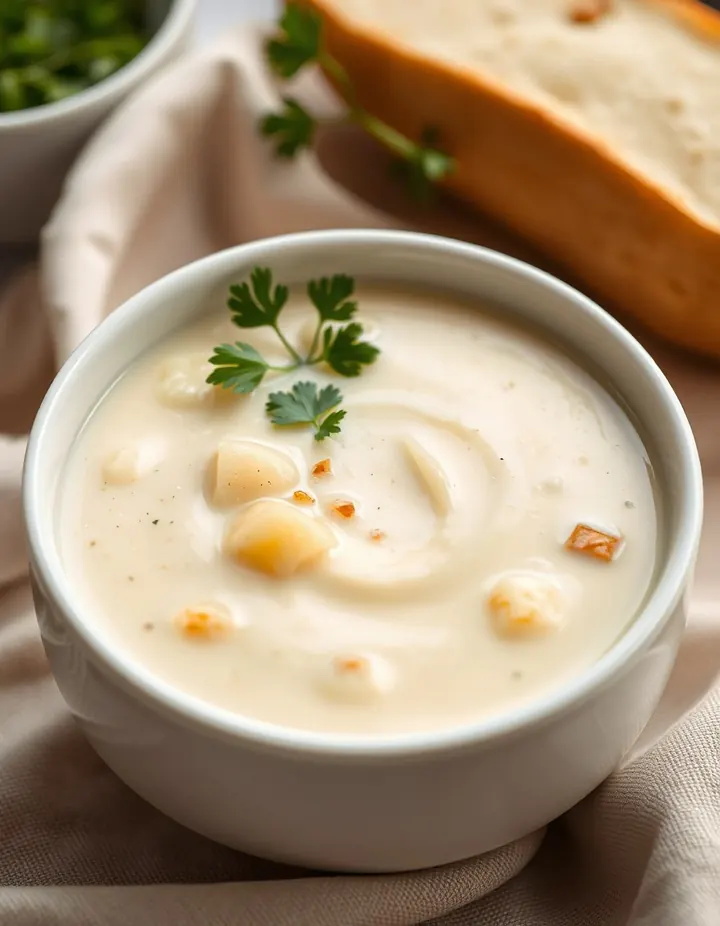 Indian Spiced Potato Soup with Tofu and Spinach448 recipes
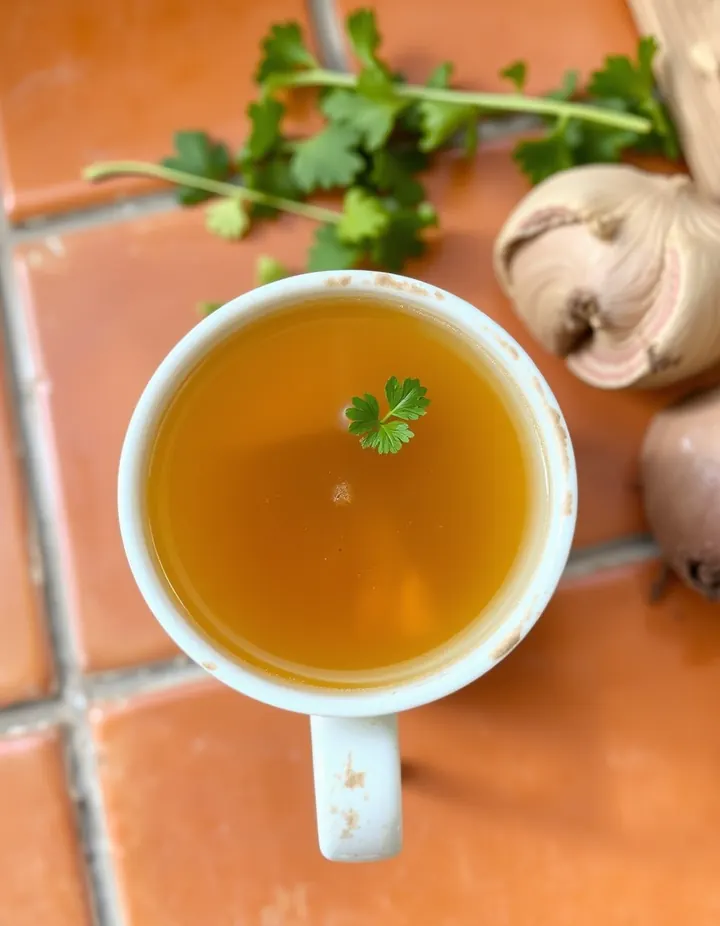 Clear Carrot and Bottle Gourd Soup65 recipes
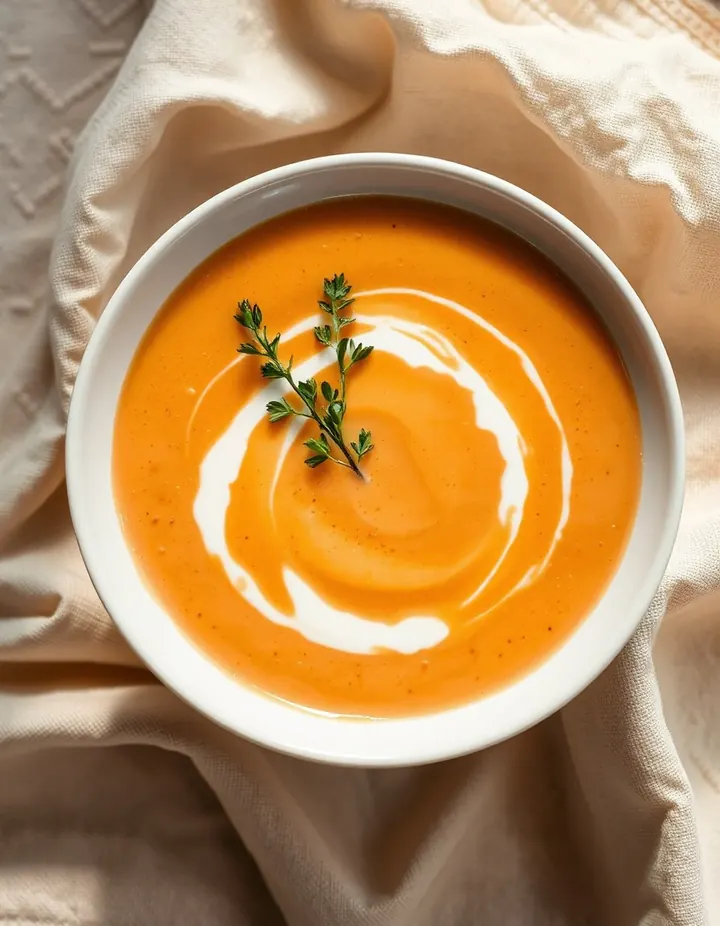 Mock Bisque Soup51 recipes
 Cream of Asparagus Soup42 recipes
The free Flavor Lab newsletter: one surprising pairing a week and the molecular reason it works, in 60 seconds. No spam, unsubscribe anytime.
Prefer an account? Create a free account to save pairings and unlock the full chemistry.