Why it works: Butter and cream are a kitchen classic. They rank in the top 8% of all ingredient pairs, and cooks put them together in 41,516 recipes. Both carry delta-dodecalactone, which smells sweet, creamy. The science ↓
Partridges Sautes
Ingredients
Directions
Prepare the forcemeat
Cut the legs off the partridges and remove the meat.
Chop the meat with an equal quantity of veal or chicken and pound it in a mortar.
Mix in ⅓ cup panada and a little butter until smooth, then season with salt and nutmeg.
Incorporate the beaten yolks of 2 or 3 eggs and pass the mixture through a fine sieve into a basin.
Add 2 or 3 tablespoons of thick cream and fill a border mold with the mixture.
Stand the mold in a bain‑marie.
Make the sauce
In a saucepan, brown the bones and backs of the partridges with bacon, ham, sweet herbs, and peppercorns over a quick fire.
Pour in enough white wine and gravy to make the sauce and boil for 20 minutes.
Reduce ½ cup béchamel sauce with truffle trimmings, strain in the liquor from the bones, and keep hot.
Cook and finish the partridge
Divide each breast of partridge into 3 or 4 pieces and place them in a frying pan with butter, sweet herbs, and peppercorns.
Fry the breasts and fillets of partridge over a quick fire, turning to brown evenly.
When nearly done, add the diced truffles and 1 teacup of Madeira, then move the pan to the side of the fire.
Transcribed from a scanned cookbook and modernised for today's kitchens. Where the book gave no heat or time, or said "a moderate oven", the temperatures and times here may be modern equivalents rather than the book's own figures.
Explore the science
The flavor team
The pairs that carry this dish. Each one is judged two ways: how much their aromas overlap, and how often cooks already put them together.
-
Butter + creamtop 8% of all pairsSmell alikemoderateCooked together41,516 recipes
Shared aroma: delta-dodecalactone (sweet, creamy).
-
Butter + white winetop 9% of all pairsSmell alikemoderateCooked together5,083 recipes
Shared aroma: ethyl octanoate (fruity, wine).
-
Cream + saucetop 9% of all pairsSmell alikemoderateCooked together4,787 recipes
Shared aroma: ethanol (alcoholic, ethereal).
-
Nutmeg + creamtop 13% of all pairsSmell alikemoderateCooked together7,920 recipes
Shared aroma: acetic acid (sour, vinegar).
-
Butter + saucetop 15% of all pairsSmell alikelowCooked together15,338 recipes
Shared aroma: ethanol (alcoholic, ethereal).
Butter and sauce barely smell alike, yet cooks put them together in 15,338 recipes: they work on texture and structure more than aroma.
Ranks compare each pair with 20,000 random ingredient pairs on CompKitchen. How we score pairs
What each ingredient does
- Partridges
- Provide the main meat for both the forcemeat and the sautéed breasts and fillets.
- Eggs
- Bind the forcemeat so it sets firm when the mold is cooked.
- Panada
- Adds body and a soft, smooth texture to the forcemeat.
- Thick cream
- Adds moisture and richness, keeping the forcemeat tender.
- Truffles
- Add a deep, earthy aroma to the finished dish.
- Madeira
- Adds sweetness and depth to the truffle finish in the pan.
The step that matters
Fry the partridge over a quick fire. Lean game meat dries out quickly, so the breasts and fillets should brown hard and fast, then be finished gently to keep them juicy inside.
Swap the nutmeg
How well each one fits the dish's main ingredients (veal, butter, egg, cream, ham, white wine, sauce):
- Tarragonfits about as well
- Nutmegthe original
- Capersfits about as well
- Parsleyfits about as well
Fit is the average pairing score against veal, butter, egg, cream, ham, white wine, sauce. Candidates are from the same food group and used in at least 100 recipes.
“What each ingredient does” and “The step that matters” were written by Claude from this recipe’s own method and reviewed in samples by CompKitchen.
You might also like
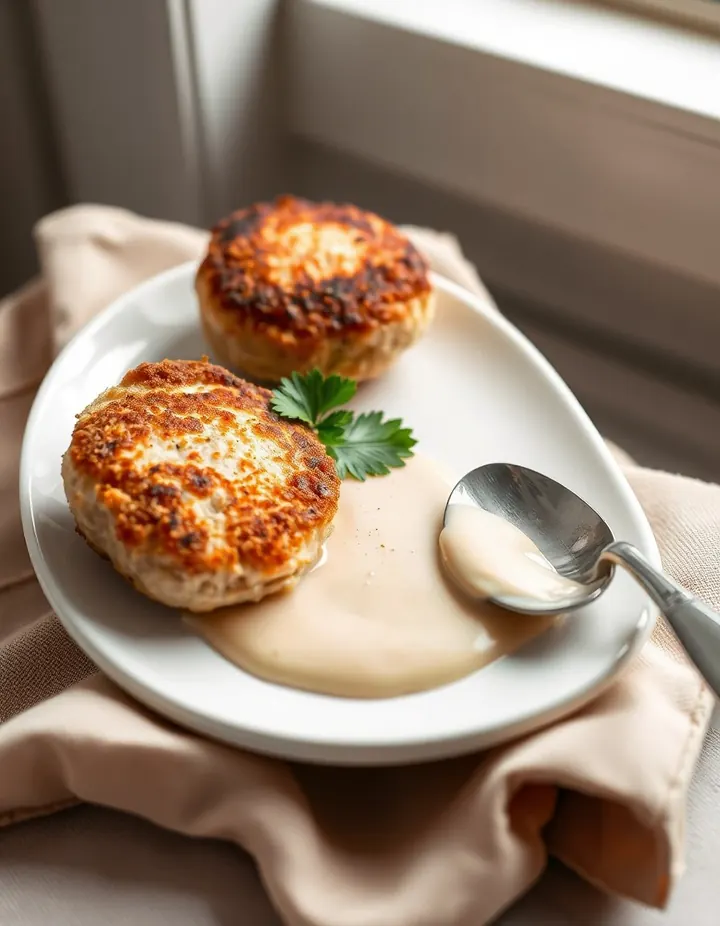 Veal Patties50 recipes
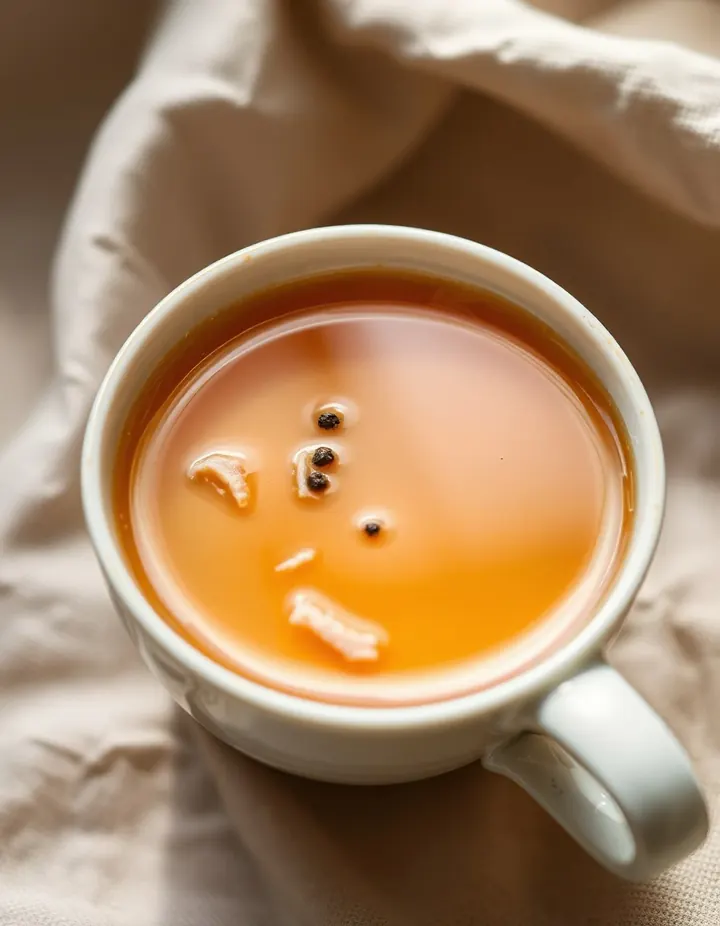 Beef, Mutton, or Veal Broth6 recipes
 Tomato Soup526 recipes
 Brown Bread461 recipes
The free Flavor Lab newsletter: one surprising pairing a week and the molecular reason it works, in 60 seconds. No spam, unsubscribe anytime.
Prefer an account? Create a free account to save pairings and unlock the full chemistry.