Why it works: Meat and flour are a kitchen classic. They rank in the top 28% of all ingredient pairs, and cooks put them together in 5,529 recipes. Both carry isobutyraldehyde, which smells malty, green. The science ↓
Roasting Meat
Ingredients
Directions
The book gives no oven temperature. The 400°F (200°C) in the steps was added when the recipe was transcribed, as a starting point.
Roast the meat
Preheat your oven to 400°F (200°C).
Roast the meat for 15 minutes per pound, salting it only after it is more than half done.
Pour off excess dripping for pastry use.
When nearly done, sprinkle a little flour on the meat and move it closer to the fire to brown.
Ensure the meat is a fine pale brown without scorching.
Make the gravy
Once done, pour off the dripping but leave pure gravy.
Rinse the dripping pan with boiling water or broth and strain it into a dish for gravy.
Transcribed from a scanned cookbook and modernised for today's kitchens. Where the book gave no heat or time, or said "a moderate oven", the temperatures and times here may be modern equivalents rather than the book's own figures.
Explore the science
The flavor team
The pairs that carry this dish. Each one is judged two ways: how much their aromas overlap, and how often cooks already put them together.
-
Meat + flourtop 28% of all pairsSmell alikelowCooked together5,529 recipes
Shared aroma: isobutyraldehyde (malty, green).
Ranks compare each pair with 20,000 random ingredient pairs on CompKitchen. How we score pairs
What each ingredient does
- Meat
- Forms the main body of the dish, cooking through as it roasts.
- Flour
- Dusted on the meat near the end to help it take on a pale brown surface.
- Boiling water or broth
- Loosens the browned residue in the pan to make the gravy.
The step that matters
Salting after the meat is more than half done. Salt added early can draw out moisture and affect the surface, so the record times salting for later in the roast.
“What each ingredient does” and “The step that matters” were written by Claude from this recipe’s own method and reviewed in samples by CompKitchen.
You might also like
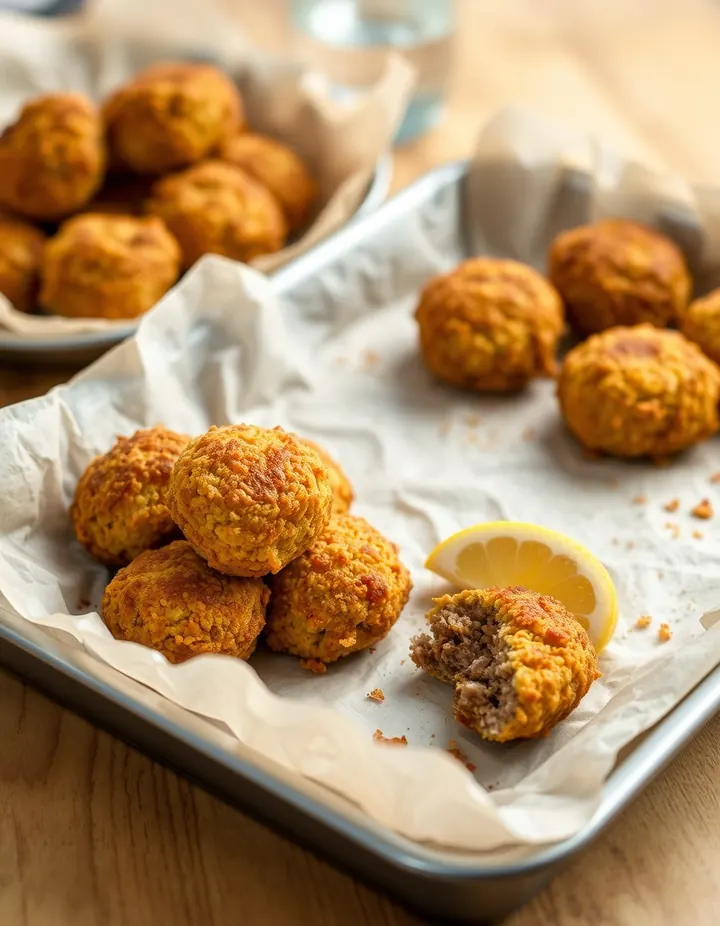 Meat Croquettes52 recipes
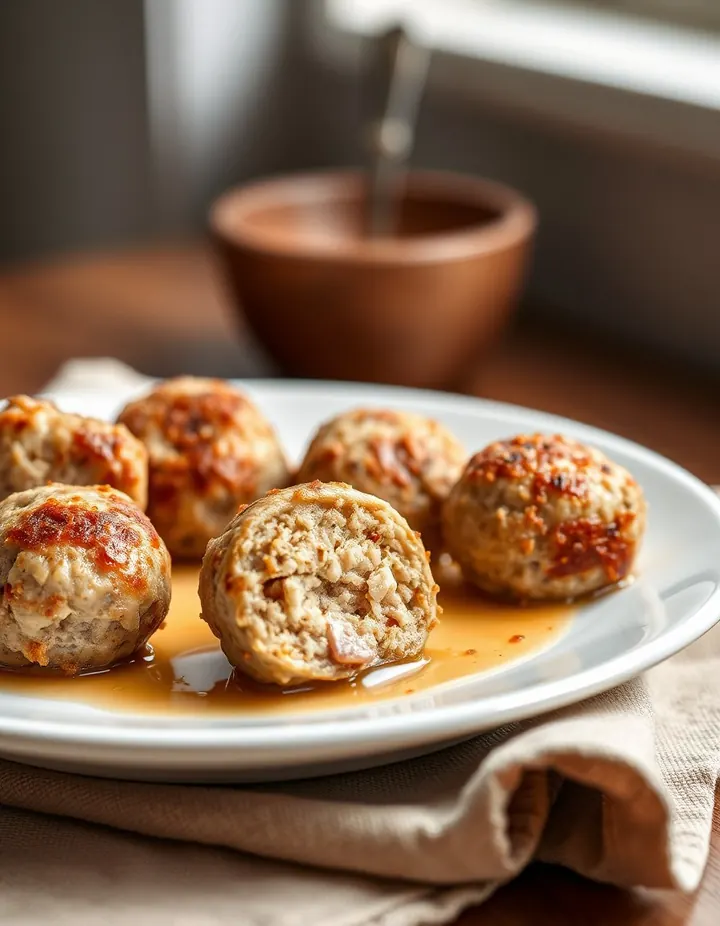 Meatballs37 recipes
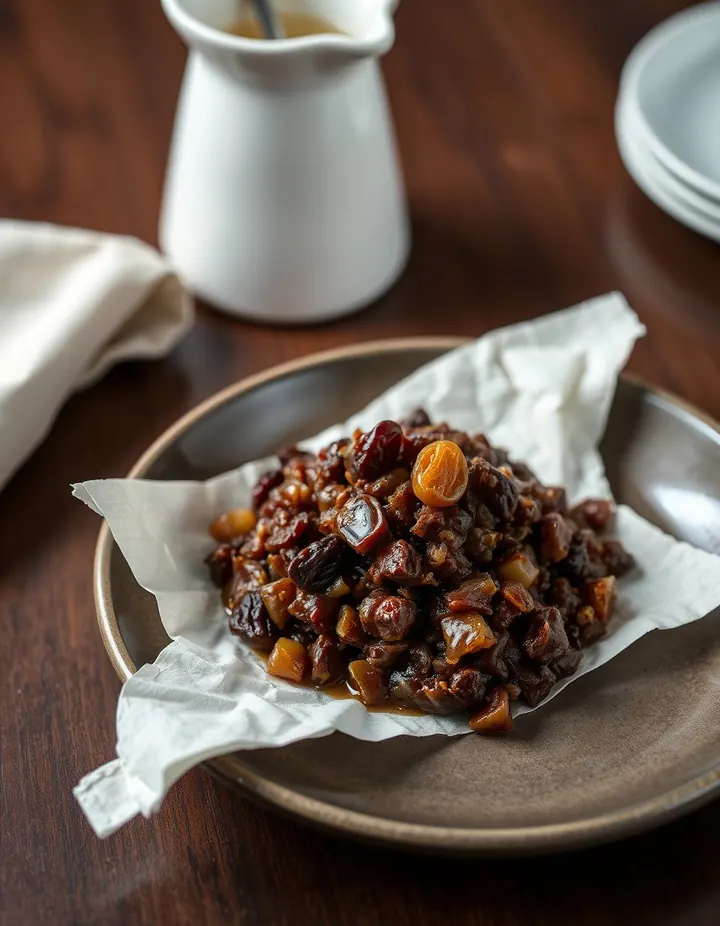 Mince Meat37 recipes
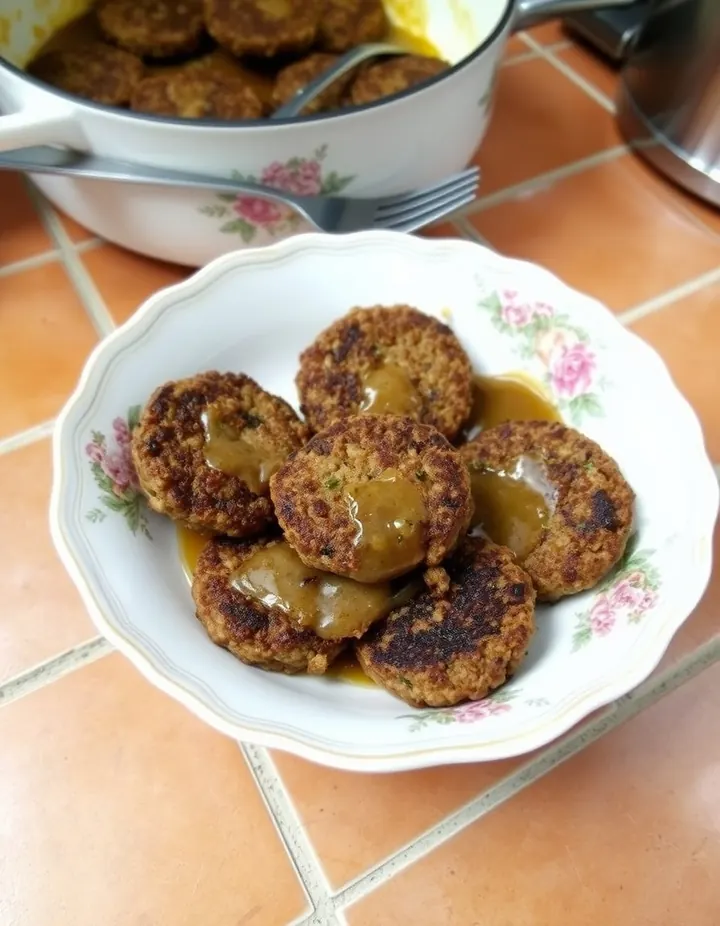 Meat Cakes35 recipes
The free Flavor Lab newsletter: one surprising pairing a week and the molecular reason it works, in 60 seconds. No spam, unsubscribe anytime.
Prefer an account? Create a free account to save pairings and unlock the full chemistry.