Why it works: Butter and flour are a kitchen classic. They rank in the top 12% of all ingredient pairs, and cooks put them together in 124,287 recipes. Both carry isobutyraldehyde, which smells malty, green. The science ↓
Mock Turtle Soup
Ingredients
Directions
Prepare the head
Remove the brains from the calf's head.
Wash the head well.
Soak the head in cold water for 1 hour.
Place the head in a stew-pan with 6 quarts of cold water.
Bring to a boil, skimming off any scum.
Simmer for 1.5 hours.
Make the stock
Remove the head and cut it into 1 to 1.5-inch pieces, including the tongue.
Store the pieces in a deep pan and cover them with some of the cooking liquid to prevent drying.
Add the bones and trimmings from the head to the stew-pan.
Add 4 pounds of knuckle of veal to the stew-pan.
Boil gently, covered, for 4 to 5 hours.
Strain the soup into an earthenware pot.
Let the soup cool.
Refrigerate overnight.
Remove the layer of fat from the top of the clear jelly the next day.
Place the clear jelly in a stew-pan.
Make the thickening
Peel the onions.
Slice the onions into pieces.
Fry the sliced onions in 2 ounces of butter until light brown.
Add 2 tablespoons of chopped sage.
Stir in 6 ounces of flour.
Allow the mixture to brown slightly.
Transcribed from a scanned cookbook and modernised for today's kitchens. Where the book gave no heat or time, or said "a moderate oven", the temperatures and times here may be modern equivalents rather than the book's own figures.
Explore the science
The flavor team
The pairs that carry this dish. Each one is judged two ways: how much their aromas overlap, and how often cooks already put them together.
-
Butter + flourtop 12% of all pairsSmell alikelowCooked together124,287 recipes
Shared aroma: isobutyraldehyde (malty, green).
-
Onion + sagetop 12% of all pairsSmell alikemoderateCooked together3,628 recipes
Shared aroma: coumarin (sweet, hay).
-
Sage + flourtop 13% of all pairsSmell alikemoderateCooked together2,115 recipes
Shared aroma: isobutyraldehyde (malty, green).
-
Veal + sagetop 14% of all pairsSmell alikelowCooked together670 recipes
Shared aroma: 3-hexenal (apple, fruity).
-
Onion + buttertop 15% of all pairsSmell alikemoderateCooked together42,912 recipes
Shared aroma: decanal (soap, orange peel).
Butter and flour barely smell alike, yet cooks put them together in 124,287 recipes: they work on texture and structure more than aroma.
Ranks compare each pair with 20,000 random ingredient pairs on CompKitchen. How we score pairs
What each ingredient does
- Calf's head
- Provides body and gelatin, giving the soup a rich, jellied texture when cooled.
- Knuckle of veal
- Adds gelatin and deep meaty flavour to the stock as it simmers for hours.
- Onions
- Build savoury sweetness and aroma as they soften and brown in the butter.
- Butter
- Carries the onion flavour and provides fat for browning the flour mixture.
- Flour
- Thickens the soup as it cooks with the fat and onions.
- Green sage leaves
- Adds a herbal, aromatic note that cuts through the richness of the stock.
The step that matters
Stirring in the flour. Flour added to hot fat must be stirred constantly, or it clumps and can scorch before it browns evenly. Cooking it briefly lets the raw starch taste fade and gives the thickening a nutty colour and flavour.
Swap the onion
How well each one fits the dish's main ingredients (veal, butter, sage, flour):
- Shallotfits better
- Leekfits better
- Chivefits better
- Onionthe original
Fit is the average pairing score against veal, butter, sage, flour. Candidates are from the same food group and used in at least 100 recipes.
“What each ingredient does” and “The step that matters” were written by Claude from this recipe’s own method and reviewed in samples by CompKitchen.
You might also like
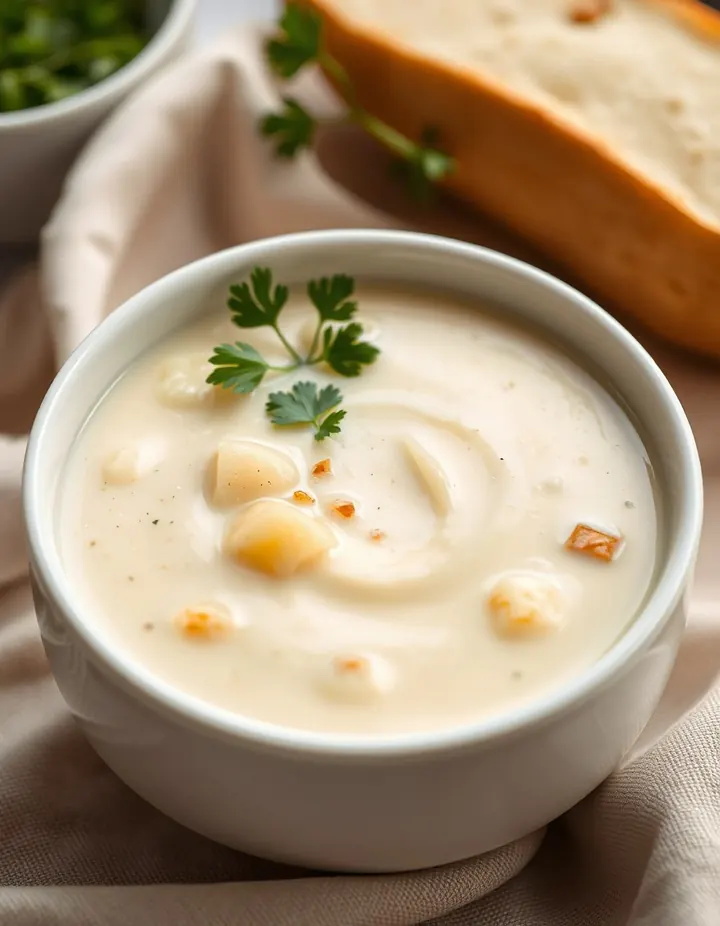 Indian Spiced Potato Soup with Tofu and Spinach448 recipes
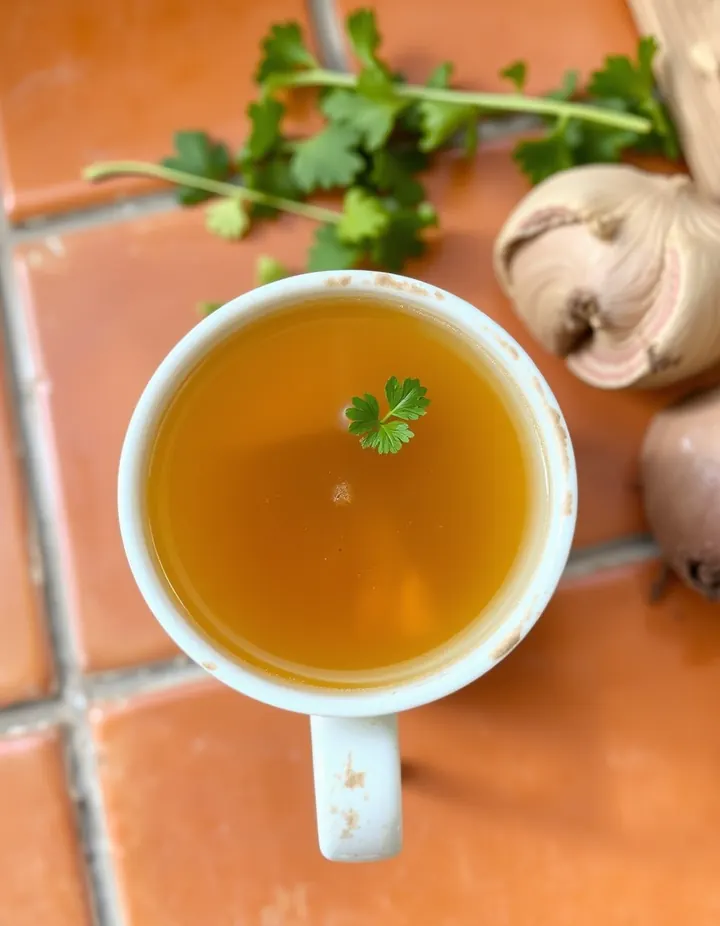 Clear Carrot and Bottle Gourd Soup65 recipes
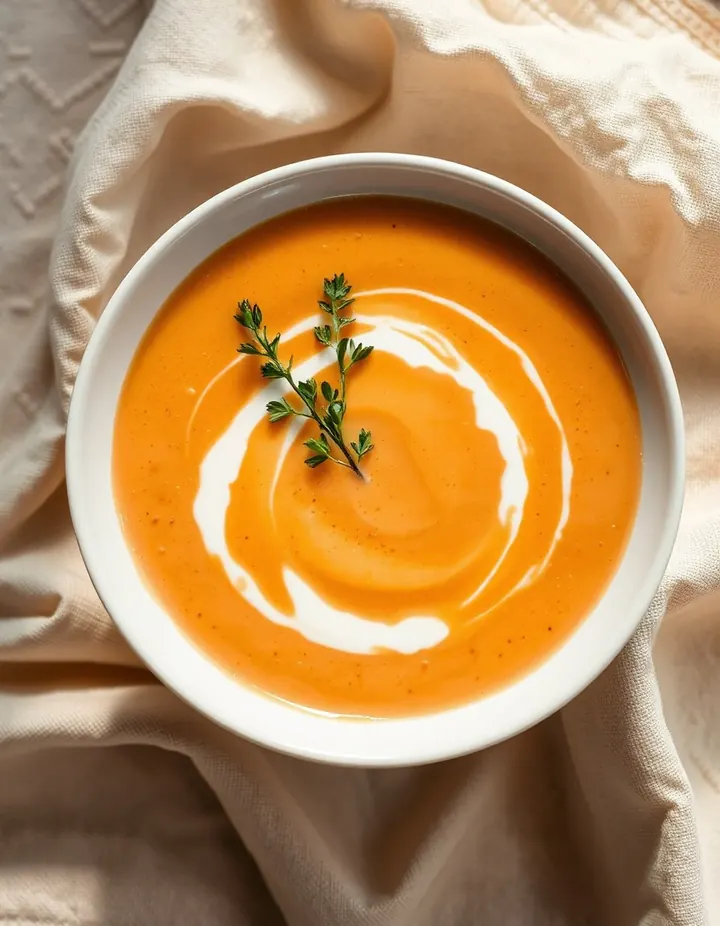 Mock Bisque Soup51 recipes
 Cream of Asparagus Soup42 recipes
The free Flavor Lab newsletter: one surprising pairing a week and the molecular reason it works, in 60 seconds. No spam, unsubscribe anytime.
Prefer an account? Create a free account to save pairings and unlock the full chemistry.