Why it works: Pheasant and pepper work together. They rank in the top 20% of all ingredient pairs, and cooks put them together in 462 recipes. Both carry sabinene, which smells woody, terpenic. The science ↓
Pheasants and Partridges
Ingredients
Directions
Pick and singe the bird. Cut a slit in the back of the neck and remove the crop without breaking it.
Cut off the vent and draw out the insides. Wipe clean and season with a little pepper, salt, and butter.
Truss the bird by cutting off the pinion at the first joint. Break the backbone and press the legs close to the body.
Turn the bird on its breast and skewer through the pinion, leg, body, and leg on the other side, securing the head at the end of the skewer.
Lay a bard of fat bacon over the breast and tie it on with packthread.
Transcribed from a scanned cookbook and modernised for today's kitchens. Where the book gave no heat or time, or said "a moderate oven", the temperatures and times here may be modern equivalents rather than the book's own figures.
Explore the science
The flavor team
The pairs that carry this dish. Each one is judged two ways: how much their aromas overlap, and how often cooks already put them together.
-
Pheasant + peppertop 20% of all pairsSmell alikemoderateCooked together462 recipes
Shared aroma: sabinene (woody, terpenic).
-
Pheasant + buttertop 20% of all pairsSmell alikemoderateCooked together511 recipes
Shared aroma: decanal (soap, orange peel).
-
Pepper + buttertop 21% of all pairsSmell alikemoderateCooked together85,593 recipes
Shared aroma: trans-2-nonenal (cardboard, fatty).
Ranks compare each pair with 20,000 random ingredient pairs on CompKitchen. How we score pairs
More roasted pheasant recipes
You might also like
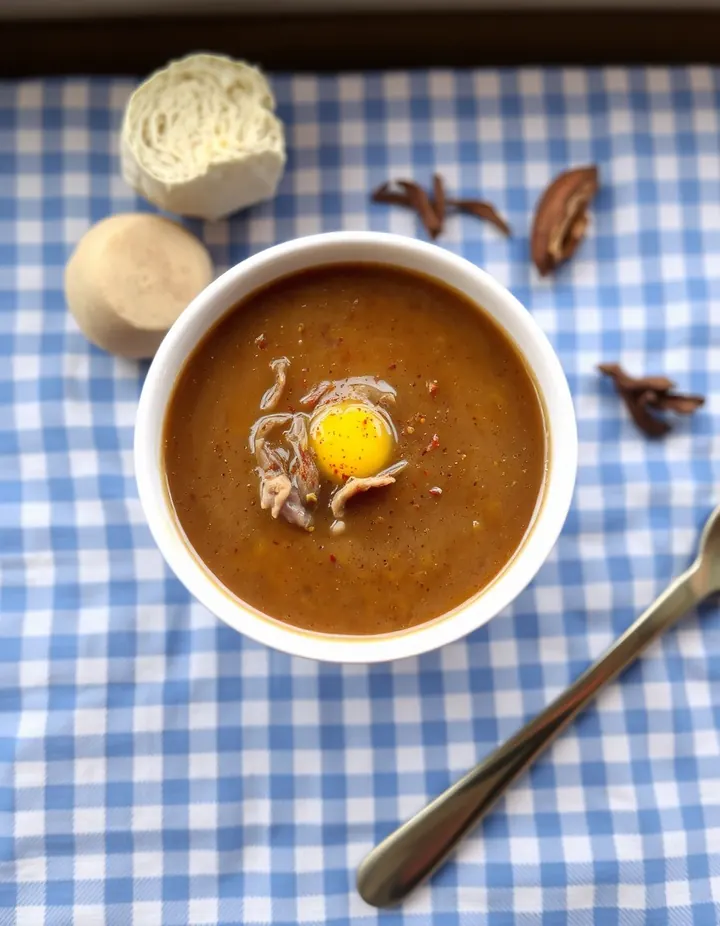 Pheasant Soup25 recipes
 Tomato Soup526 recipes
 Brown Bread461 recipes
 Mutton Broth292 recipes
The free Flavor Lab newsletter: one surprising pairing a week and the molecular reason it works, in 60 seconds. No spam, unsubscribe anytime.
Prefer an account? Create a free account to save pairings and unlock the full chemistry.