Why it works: Pepper and lemon match in chemistry and in kitchens. They rank in the top 3% of all ingredient pairs, and cooks put them together in 27,047 recipes. Both carry trans-2-nonenal, which smells cardboard, fatty. The science ↓
Hare Pie
Ingredients
Directions
The book gives no oven temperature. The 350°F (175°C) in the steps was added when the recipe was transcribed, as a starting point.
Prepare the hare
Cut the hare into pieces and parboil for a few minutes to cleanse and reduce the strong taste.
Stew the pieces in broth or water just enough to cover them, with the onion, sweet herbs, and allspice for 30 minutes if young, or 1 hour if old.
Remove the loins, legs, and shoulders, leaving the rest to stew until all goodness is extracted.
Assemble and bake
Once cooled, place the best pieces in a pie dish, season with pepper, salt, and cayenne.
Pour in 1 cup of the stewing liquid and cover with meat pie paste.
Bake at 350°F (175°C) for about 1.5 hours.
Before it's done, strain the liquid from the inferior pieces, thicken it with flour and butter, and add port wine and lemon juice.
Finish and serve
Boil the mixture, strain it through a sieve, and pour it into the pie while hot. Serve immediately.
Transcribed from a scanned cookbook and modernised for today's kitchens. Where the book gave no heat or time, or said "a moderate oven", the temperatures and times here may be modern equivalents rather than the book's own figures.
Explore the science
The flavor team
The pairs that carry this dish. Each one is judged two ways: how much their aromas overlap, and how often cooks already put them together.
-
Pepper + lemontop 3% of all pairsSmell alikestrongCooked together27,047 recipes
Shared aroma: trans-2-nonenal (cardboard, fatty).
-
Allspice + peppertop 5% of all pairsSmell alikestrongCooked together6,395 recipes
Shared aroma: estragole (anise, licorice).
-
Allspice + lemontop 6% of all pairsSmell alikestrongCooked together2,083 recipes
Shared aroma: beta-phellandrene (minty, terpene).
-
Onion + peppertop 11% of all pairsSmell alikemoderateCooked together68,474 recipes
Shared aroma: 2-isopropyl-3-methoxypyrazine (earthy, pea).
-
Flour + buttertop 12% of all pairsSmell alikelowCooked together124,287 recipes
Shared aroma: isobutyraldehyde (malty, green).
Flour and butter barely smell alike, yet cooks put them together in 124,287 recipes: they work on texture and structure more than aroma.
Ranks compare each pair with 20,000 random ingredient pairs on CompKitchen. How we score pairs
What each ingredient does
- Hare
- Provides the main meat, whose rich stock flavour comes from long stewing.
- Flour
- Thickens the strained stewing liquid into a smooth, spoonable sauce.
- Butter
- Enriches the thickened sauce with fat, adding smoothness and mouthfeel.
- Port wine
- Adds sweetness and depth of flavour to the sauce.
- Lemon juice
- Adds acidity that brightens the rich, gamey sauce.
The step that matters
Boiling and thickening the sauce before pouring it into the pie. Flour only thickens properly when it is cooked in boiling liquid, which swells its starch granules. Pouring in a thin, unboiled sauce leaves the filling runny, so boiling it fully before straining matters.
Swap the onion
How well each one fits the dish's main ingredients (allspice, pepper, meat, flour, butter, port wine, lemon):
- Shallotfits better
- Capsicumfits better
- Mustardfits better
- Onionthe original
Fit is the average pairing score against allspice, pepper, meat, flour, butter, port wine, lemon. Candidates are from the same food group and used in at least 100 recipes.
“What each ingredient does” and “The step that matters” were written by Claude from this recipe’s own method and reviewed in samples by CompKitchen.
You might also like
 Lemon Sauce236 recipes
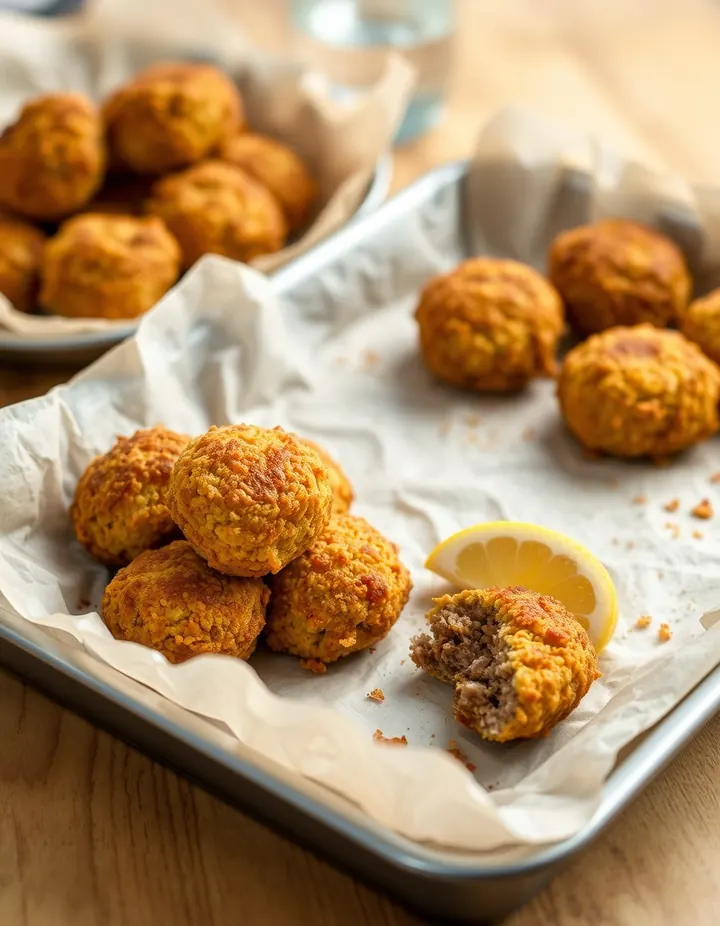 Meat Croquettes52 recipes
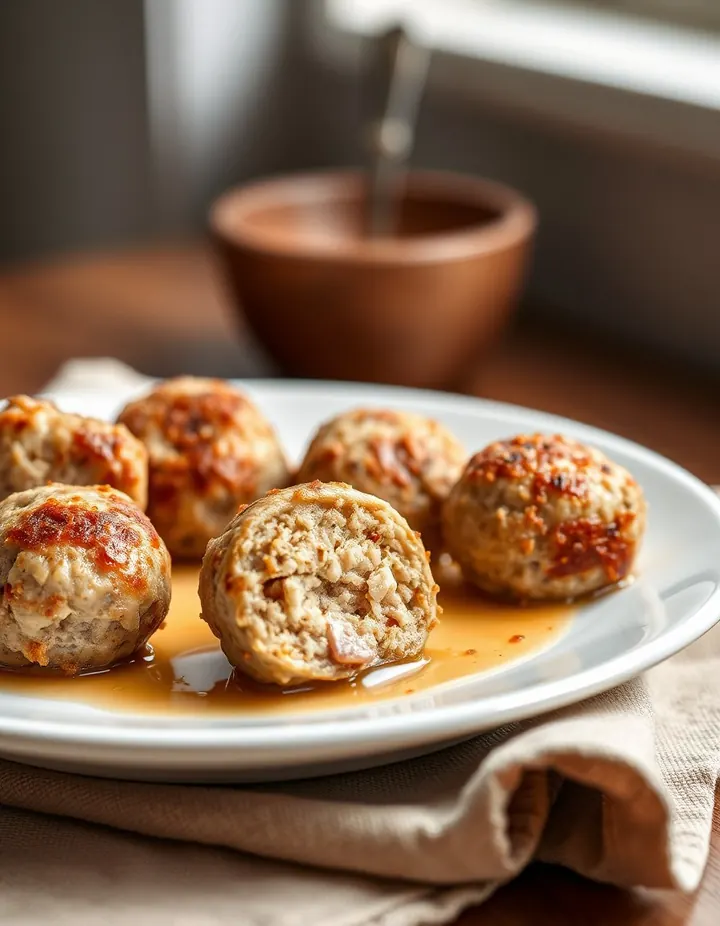 Meatballs37 recipes
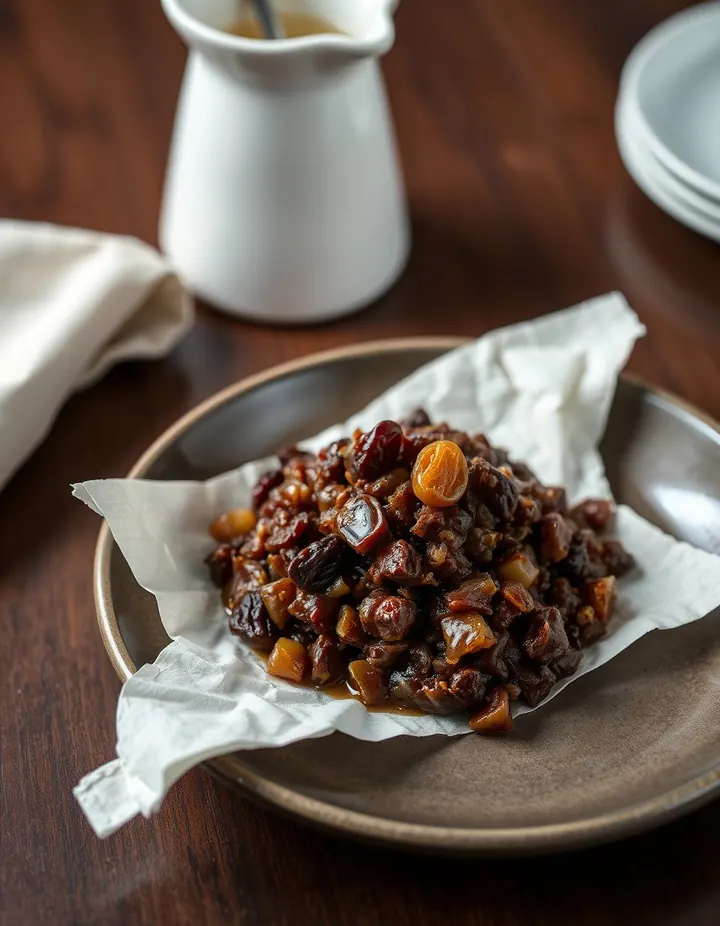 Mince Meat37 recipes
The free Flavor Lab newsletter: one surprising pairing a week and the molecular reason it works, in 60 seconds. No spam, unsubscribe anytime.
Prefer an account? Create a free account to save pairings and unlock the full chemistry.