Why it works: Clove and nutmeg match in chemistry and in kitchens. They rank in the top 1% of all ingredient pairs, and cooks put them together in 8,686 recipes. Both carry estragole, which smells anise, licorice. The science ↓
Lemon Pickle
Ingredients
Directions
The book says “a slow oven”. The 300°F (150°C) in the steps is the modern equivalent, not the book's own figure.
Prepare the lemons
Pare the lemons thinly, ensuring no white is visible, and cut off both ends.
Rub the lemons with as much salt as they can hold, inside and out.
Cover the lemons with salt and let them sit for 3 to 4 days.
Dry the lemons in a 300°F (150°C) oven until moisture is gone.
Prepare the garlic and horseradish
Dry 12 cloves of garlic and a large handful of scraped horseradish until hard but not burned.
Make the pickling liquid
In a pot, boil the vinegar, mace, cloves, nutmeg, and cayenne pepper together.
Once cooled, stir in the mustard flour and pour over the dried lemons, garlic, and horseradish.
Steep and use
Shake the mixture daily for two weeks.
When using the lemons, shred them small and shake the liquid before adding to sauces.
Transcribed from a scanned cookbook and modernised for today's kitchens. Where the book gave no heat or time, or said "a moderate oven", the temperatures and times here may be modern equivalents rather than the book's own figures.
Explore the science
The flavor team
The pairs that carry this dish. Each one is judged two ways: how much their aromas overlap, and how often cooks already put them together.
-
Clove + nutmegtop 1% of all pairsSmell alikestrongCooked together8,686 recipes
Shared aroma: estragole (anise, licorice).
-
Lemon + peppertop 3% of all pairsSmell alikestrongCooked together27,047 recipes
Shared aroma: trans-2-nonenal (cardboard, fatty).
-
Mace + nutmegtop 4% of all pairsSmell alikemoderateCooked together6,557 recipes
Shared aroma: myristicin (spice, warm).
-
Clove + peppertop 5% of all pairsSmell alikestrongCooked together17,451 recipes
Shared aroma: ethyl octanoate (fruity, wine).
-
Garlic + horseradishtop 5% of all pairsSmell alikestrongCooked together719 recipes
Shared aroma: coumarin (sweet, hay).
Ranks compare each pair with 20,000 random ingredient pairs on CompKitchen. How we score pairs
What each ingredient does
- Lemons
- Provide the main body and sour citrus flavor of the pickle.
- Coarse sea salt
- Draws moisture out of the lemons and firms their peel before drying.
- Vinegar
- Acidic liquid that preserves the lemons and carries the flavors of the spices.
- Garlic
- Adds pungent aroma that mellows and deepens as it dries and steeps.
- Horseradish
- Contributes sharp, pungent heat that is volatile and fades somewhat with drying.
- Mustard flour
- Adds pungency and sharpness to the liquid and helps emulsify its flavors.
The step that matters
Drying the lemons in the oven. Drying must remove moisture until the lemons are firm, but too much heat can scorch the peel and make it bitter. Low heat slowly concentrates flavor while keeping the lemons pliable enough to shred later.
Swap the mace
How well each one fits the dish's main ingredients (lemon, clove, garlic, horseradish, vinegar, nutmeg, pepper):
- Allspicefits better
- Marjoramfits better
- Parsleyfits better
- Macethe original
Fit is the average pairing score against lemon, clove, garlic, horseradish, vinegar, nutmeg, pepper. Candidates are from the same food group and used in at least 100 recipes.
“What each ingredient does” and “The step that matters” were written by Claude from this recipe’s own method and reviewed in samples by CompKitchen.
You might also like
 Lemon Sauce236 recipes
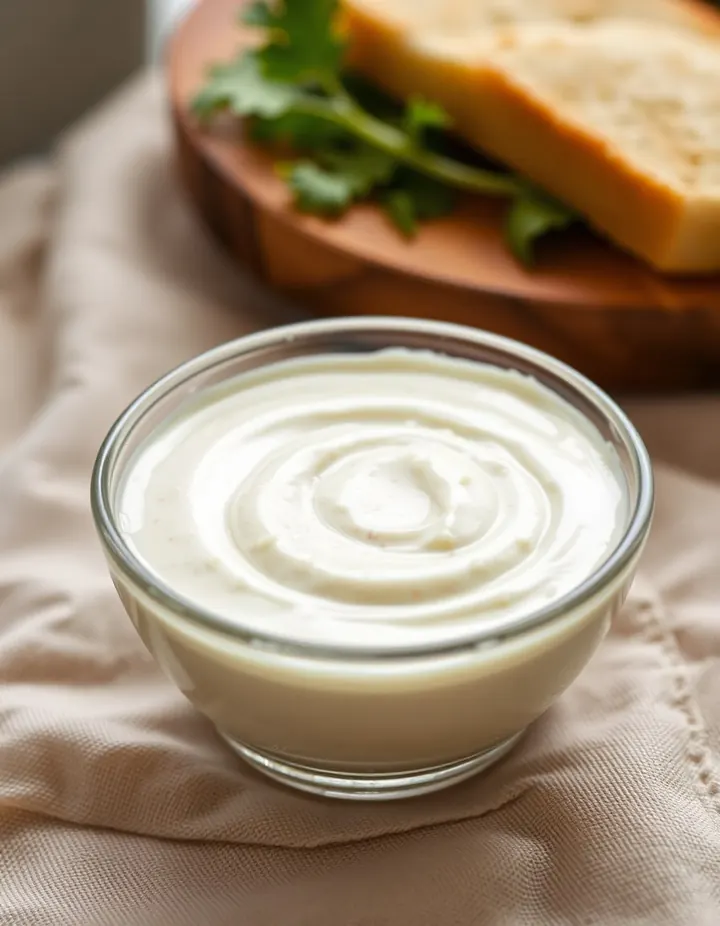 Horseradish Sauce17 recipes
 Tomato Soup526 recipes
 Brown Bread461 recipes
The free Flavor Lab newsletter: one surprising pairing a week and the molecular reason it works, in 60 seconds. No spam, unsubscribe anytime.
Prefer an account? Create a free account to save pairings and unlock the full chemistry.