Why it works: Pepper and cabbage are a kitchen classic. They rank in the top 5% of all ingredient pairs, and cooks put them together in 4,081 recipes. Both carry 2-isopropyl-3-methoxypyrazine, which smells earthy, pea. The science ↓
French Beans, to Keep All the Year
Ingredients
Directions
Preserve the beans
Gather young beans on a fine day.
Layer coarse sea salt and beans in a stone jar until full, finishing with salt on top.
Cover with a coarse cloth, place a board and weight on top to keep out air, and store in a dry cellar.
Prepare and cook
When ready to use, wash beans and soak in salt water for 24 hours, changing the water often.
Boil beans without adding salt, preferably with the white heart of a small cabbage.
Drain and chop the cabbage, then combine with beans in a saucepan.
Add butter rolled in flour, a pinch of pepper, and good gravy; let stew for 10 minutes before serving.
Transcribed from a scanned cookbook and modernised for today's kitchens. Where the book gave no heat or time, or said "a moderate oven", the temperatures and times here may be modern equivalents rather than the book's own figures.
Explore the science
The flavor team
The pairs that carry this dish. Each one is judged two ways: how much their aromas overlap, and how often cooks already put them together.
-
Pepper + cabbagetop 5% of all pairsSmell alikemoderateCooked together4,081 recipes
Shared aroma: 2-isopropyl-3-methoxypyrazine (earthy, pea).
-
Beans + cabbagetop 8% of all pairsSmell alikestrongCooked together290 recipes
Shared aroma: 2-isopropyl-3-methoxypyrazine (earthy, pea).
-
Beans + peppertop 11% of all pairsSmell alikemoderateCooked together4,733 recipes
Shared aroma: 2-isopropyl-3-methoxypyrazine (earthy, pea).
-
Beans + flourtop 11% of all pairsSmell alikemoderateCooked together2,080 recipes
Shared aroma: isobutyraldehyde (malty, green).
-
Butter + flourtop 12% of all pairsSmell alikelowCooked together124,287 recipes
Shared aroma: isobutyraldehyde (malty, green).
Butter and flour barely smell alike, yet cooks put them together in 124,287 recipes: they work on texture and structure more than aroma.
Ranks compare each pair with 20,000 random ingredient pairs on CompKitchen. How we score pairs
What each ingredient does
- Young french beans
- Form the main body of the dish, becoming tender when preserved, soaked and stewed.
- Coarse sea salt
- Preserves the beans by drawing out moisture and keeping out spoilage during storage.
- Butter
- Adds richness and fat, giving the stew a smooth, rounded texture.
- Flour
- Thickens the butter and the cooking liquid so the stew becomes lightly body-rich.
- Good gravy
- Supplies liquid and savoury flavour that the beans absorb during stewing.
The step that matters
Soaking the preserved beans. Salted beans are very salty, so soaking for 24 hours in changing water draws out excess salt. Skipping or shortening this leaves the dish too salty, since salt is what preserves them.
Swap the cabbage
How well each one fits the dish's main ingredients (beans, butter, flour, pepper):
- Okrafits better
- Sweet potatofits better
- Chivefits better
- Cabbagethe original
Fit is the average pairing score against beans, butter, flour, pepper. Candidates are from the same food group and used in at least 100 recipes.
“What each ingredient does” and “The step that matters” were written by Claude from this recipe’s own method and reviewed in samples by CompKitchen.
You might also like
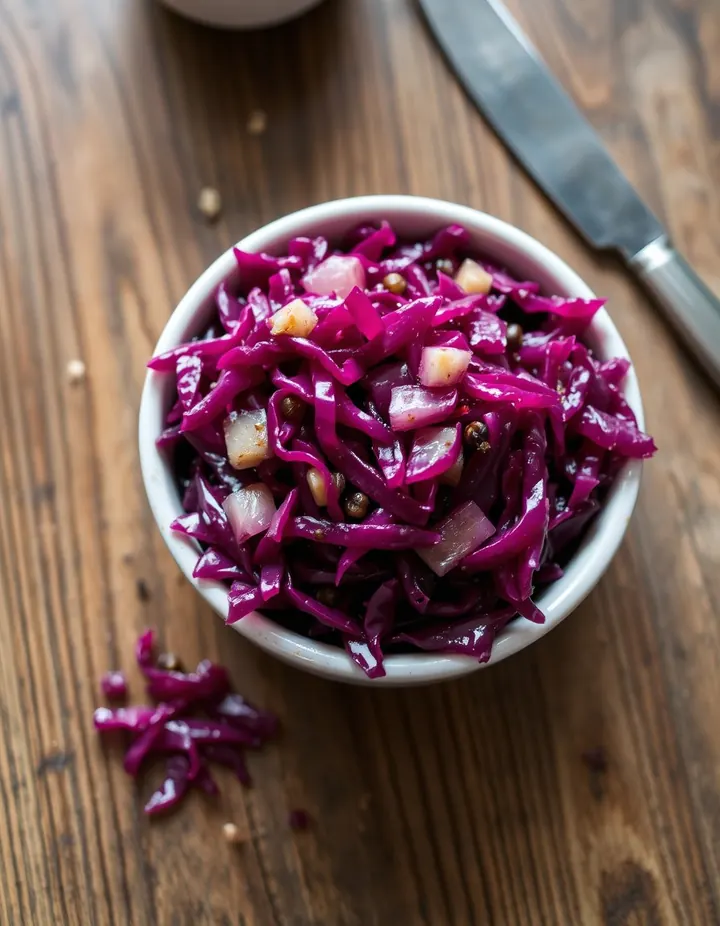 Red Cabbage65 recipes
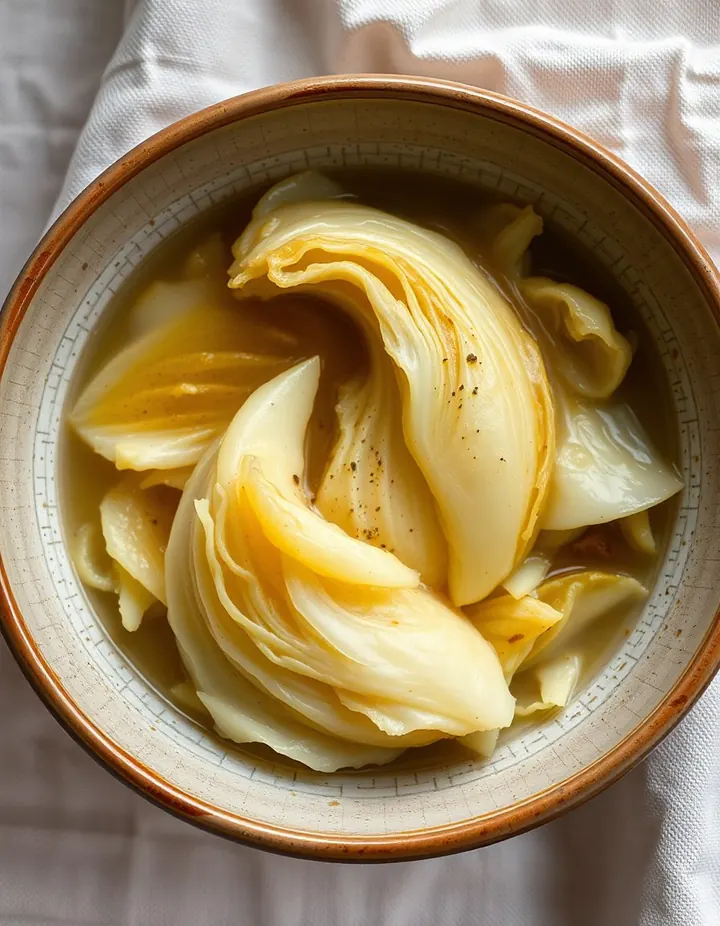 Stewed Cabbage58 recipes
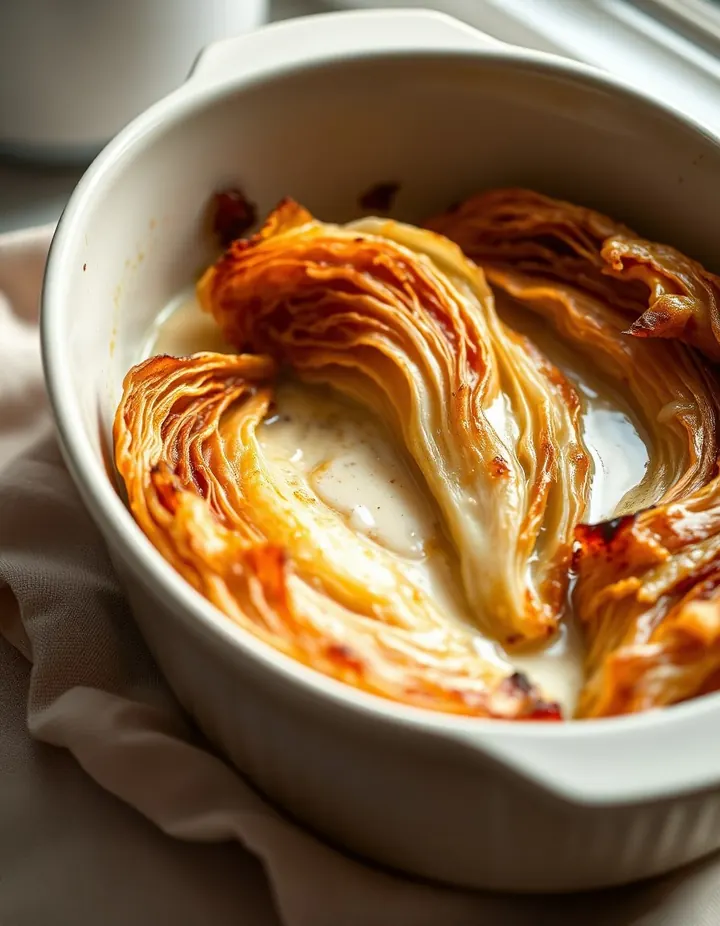 Baked Cabbage51 recipes
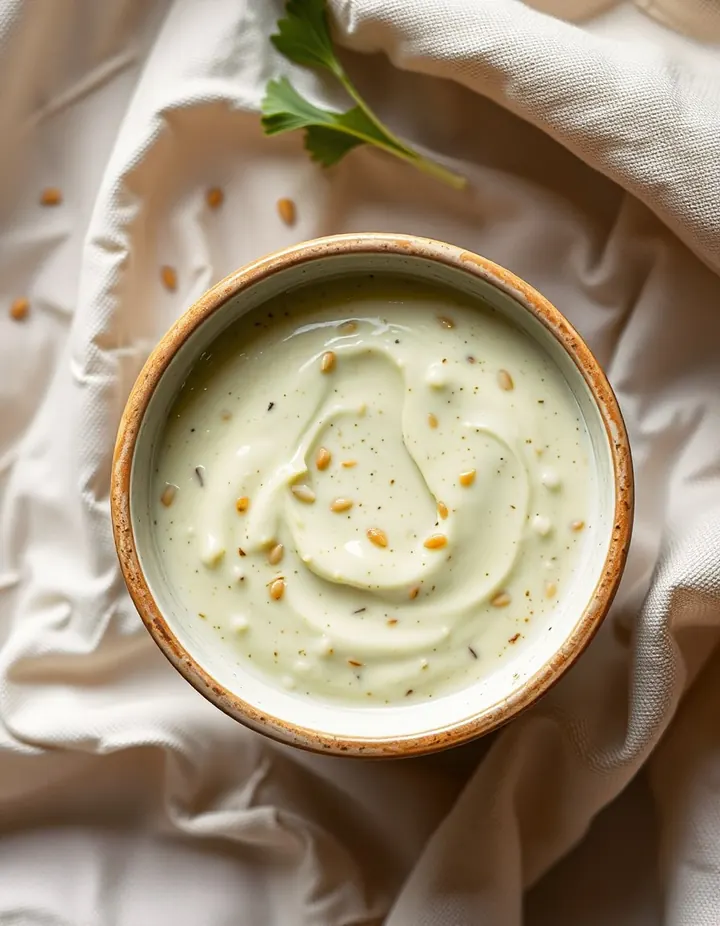 Cabbage Dressing19 recipes
The free Flavor Lab newsletter: one surprising pairing a week and the molecular reason it works, in 60 seconds. No spam, unsubscribe anytime.
Prefer an account? Create a free account to save pairings and unlock the full chemistry.