Why it works: Ginger and clove match in chemistry and in kitchens. They rank in the top 1% of all ingredient pairs, and cooks put them together in 6,038 recipes. Both carry estragole, which smells anise, licorice. The science ↓
Pontac Catsup for Fisii
Ingredients
Directions
The book says “a cool oven”. The 300°F (150°C) in the steps is the modern equivalent, not the book's own figure.
Make the elderberry vinegar
Pour ¾ pint of boiling vinegar over 1 pint of elderberries and let it stand in a 300 °F (150 °C) oven overnight.
Strain the liquid without pressure and boil it for 5 minutes with salt, ginger, mace, peppercorns, cloves, and shallots.
Bottle the mixture with the spices when it is completely cool.
Make the tomato base
Cut ½ peck of tomatoes into quarters and sprinkle with ½ pound of salt.
The next day, drain the tomatoes through a fine sieve into a saucepan and boil for 1 hour with capsicums and shallots.
Add the pulped tomatoes and boil the whole mixture for an additional 30 minutes.
Bottle and seal
Fill warm, clean bottles with the hot catsup, cork them, and seal the necks with melted resin or cement.
Transcribed from a scanned cookbook and modernised for today's kitchens. Where the book gave no heat or time, or said "a moderate oven", the temperatures and times here may be modern equivalents rather than the book's own figures.
Explore the science
The flavor team
The pairs that carry this dish. Each one is judged two ways: how much their aromas overlap, and how often cooks already put them together.
-
Ginger + clovetop 1% of all pairsSmell alikestrongCooked together6,038 recipes
Shared aroma: estragole (anise, licorice).
-
Tomato + capsicumtop 1% of all pairsSmell alikestrongCooked together10,520 recipes
Shared aroma: 2-isopropyl-3-methoxypyrazine (earthy, pea).
-
Clove + shallottop 5% of all pairsSmell alikestrongCooked together1,677 recipes
Shared aroma: eucalyptol (eucalyptus, herbal).
-
Mace + clovetop 6% of all pairsSmell alikelowCooked together8,400 recipes
Shared aroma: methyleugenol (clove, spice).
-
Shallot + capsicumtop 7% of all pairsSmell alikemoderateCooked together1,984 recipes
Shared aroma: 2,4-decadienal (seaweed).
Ranks compare each pair with 20,000 random ingredient pairs on CompKitchen. How we score pairs
What each ingredient does
- Elderberries
- Provide the main fruity flavour and colour of the catsup.
- Salt
- Draws moisture out of the tomatoes and seasons the catsup.
- Tomatoes
- Form the bulk of the pulp and give the catsup its body.
- Vinegar
- Adds acidity that sharpens flavour and helps preserve the catsup.
- Shallots
- Add savoury depth to the spiced liquid and the boiled mixture.
The step that matters
Draining the salted tomatoes through a fine sieve. Salting draws out water, and draining it off before boiling keeps the catsup from becoming watery. Letting the tomatoes rest overnight gives the salt time to work through the pulp, so the final catsup is thicker and more concentrated.
Swap the mace
How well each one fits the dish's main ingredients (vinegar, ginger, clove, shallot, tomato, capsicum):
- Cuminfits better
- Allspicefits better
- Turmericfits better
- Macethe original
Fit is the average pairing score against vinegar, ginger, clove, shallot, tomato, capsicum. Candidates are from the same food group and used in at least 100 recipes.
“What each ingredient does” and “The step that matters” were written by Claude from this recipe’s own method and reviewed in samples by CompKitchen.
You might also like
 Tomato Soup526 recipes
 Cream of Tomato Soup107 recipes
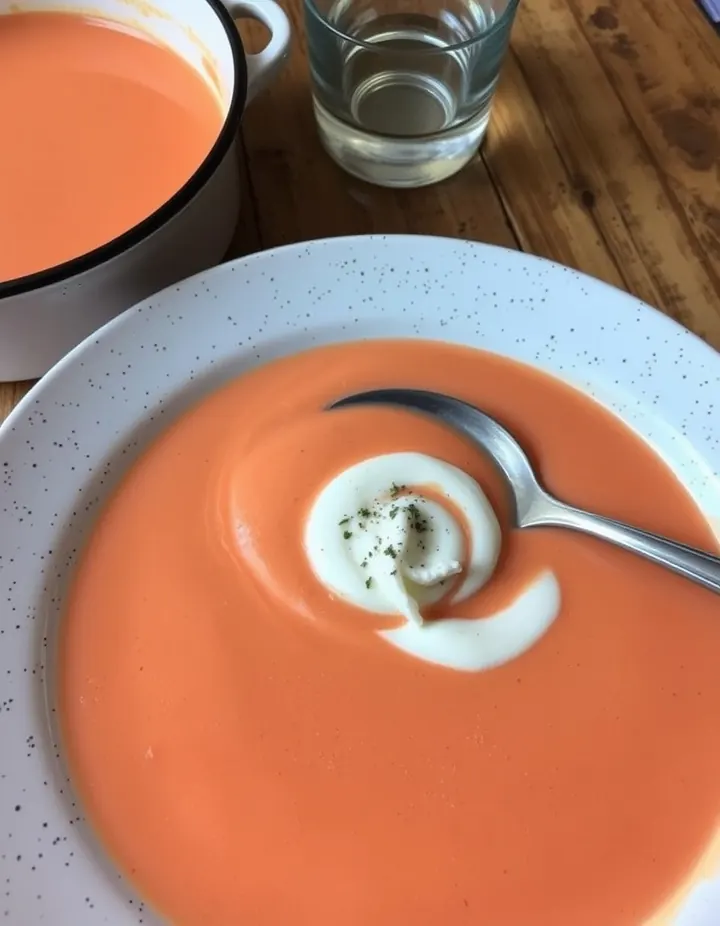 Tomato Bisque61 recipes
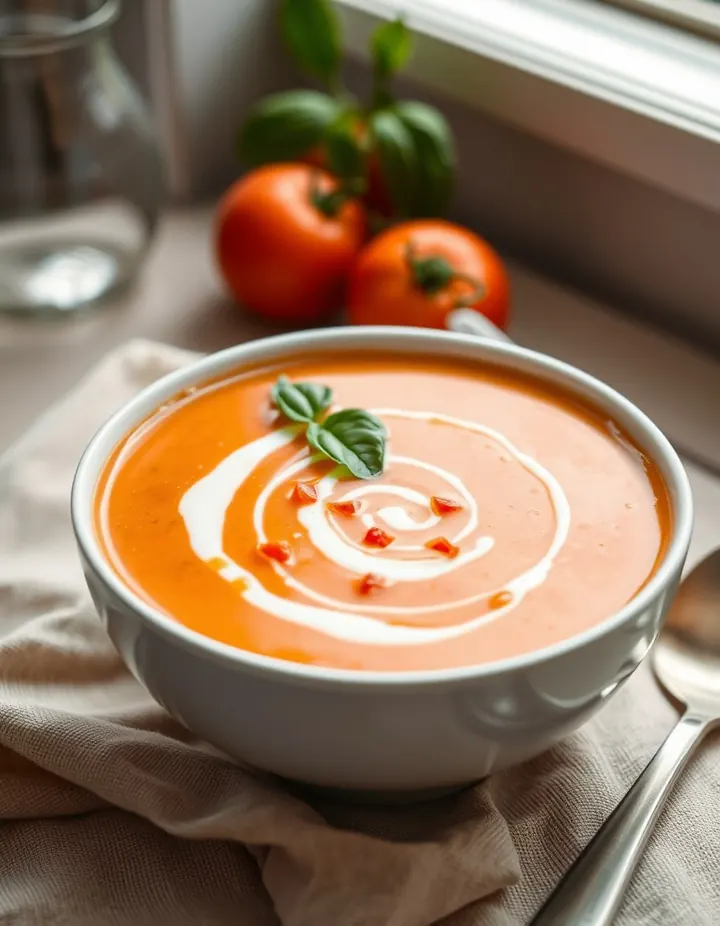 Cream Tomato Soup28 recipes
The free Flavor Lab newsletter: one surprising pairing a week and the molecular reason it works, in 60 seconds. No spam, unsubscribe anytime.
Prefer an account? Create a free account to save pairings and unlock the full chemistry.