Why it works: Chive and shallot match in chemistry and in kitchens. They rank in the top 1% of all ingredient pairs, and cooks put them together in 450 recipes. Both carry 1-octen-3-ol, which smells mushroom, earthy. The science ↓
Lievre Farci, Etouffe
Ingredients
Directions
The book gives no oven temperature. The 350°F (175°C) in the steps was added when the recipe was transcribed, as a starting point.
Prepare the stuffing
Prepare the hare by removing the innards, washing, and drying it.
Cut out some flesh from the hare, clean and chop the liver and heart.
Chop the cooked poultry or game, mushrooms, shallots, and hare flesh.
In a bowl, combine the chopped ingredients with breadcrumbs, aromatic seasoning, parsley, and chives.
Moisten the mixture with the egg.
Stuff the mixture into the hare and truss it securely.
Lard the breast and sides of the hare with strips of larding bacon.
Braise the hare
Slice the lean bacon, carrot, and onion.
Place the sliced bacon, carrot, and onion in a sauté pan with cloves and bouquet garni.
Add the hare to the pan, moisten with wine and stock, cover with buttered paper, and braise in a 350°F (175°C) oven for two hours, basting occasionally.
In the last half-hour, add the heated brown sauce.
Finish and serve
Remove the hare, take out the skewers and string, and place it on a hot dish.
Strain the sauce into a saucepan, skim off the fat, season with pepper and salt, and simmer for a few minutes.
Pour the sauce over the hare or serve it separately in a sauceboat.
Transcribed from a scanned cookbook and modernised for today's kitchens. Where the book gave no heat or time, or said "a moderate oven", the temperatures and times here may be modern equivalents rather than the book's own figures.
Explore the science
The flavor team
The pairs that carry this dish. Each one is judged two ways: how much their aromas overlap, and how often cooks already put them together.
-
Chive + shallottop 1% of all pairsSmell alikestrongCooked together450 recipes
Shared aroma: 1-octen-3-ol (mushroom, earthy).
-
Parsley + carrottop 1% of all pairsSmell alikestrongCooked together8,053 recipes
Shared aroma: 2,4-decadienal (seaweed).
-
Parsley + shallottop 1% of all pairsSmell alikestrongCooked together3,737 recipes
Shared aroma: 2,4-decadienal (seaweed).
-
Parsley + chivetop 3% of all pairsSmell alikestrongCooked together2,150 recipes
Shared aroma: coumarin (sweet, hay).
-
Chive + oniontop 3% of all pairsSmell alikestrongCooked together1,907 recipes
Shared aroma: decanal (soap, orange peel).
Ranks compare each pair with 20,000 random ingredient pairs on CompKitchen. How we score pairs
What each ingredient does
- Hare
- Forms the main body of the dish, and its lean flesh becomes tender through slow braising.
- Egg
- Binds the stuffing so it holds together when sliced and served.
- Breadcrumbs
- Absorb moisture and help give the stuffing a light, cohesive texture.
- Mushrooms
- Add savoury, earthy flavour and moisture to the stuffing.
- Red wine
- Adds acidity and depth of flavour to the braising liquid.
- Lean bacon
- Releases fat and savoury flavour into the pan as the hare braises.
The step that matters
Braise gently and baste with the lid-style paper in place. Slow, moist heat breaks down the connective tissue in the lean hare; if the oven runs too hot or the liquid dries out, the meat toughens and dries before it becomes tender.
Swap the onion
How well each one fits the dish's main ingredients (mushroom, egg, parsley, chive, carrot, clove, shallot):
- Leekfits better
- Welsh onionfits better
- Spinachfits better
- Onionthe original
Fit is the average pairing score against mushroom, egg, parsley, chive, carrot, clove, shallot. Candidates are from the same food group and used in at least 100 recipes.
“What each ingredient does” and “The step that matters” were written by Claude from this recipe’s own method and reviewed in samples by CompKitchen.
You might also like
 Carrot Soup134 recipes
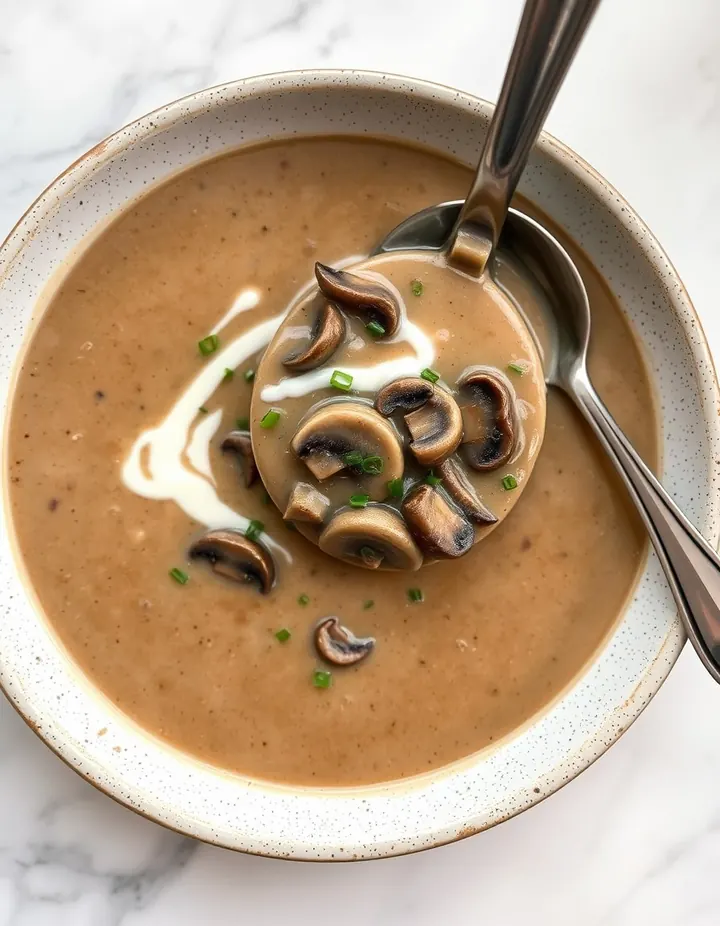 Mushroom Soup60 recipes
 Tomato Soup526 recipes
 Brown Bread461 recipes
The free Flavor Lab newsletter: one surprising pairing a week and the molecular reason it works, in 60 seconds. No spam, unsubscribe anytime.
Prefer an account? Create a free account to save pairings and unlock the full chemistry.