Why it works: Pepper and lemon match in chemistry and in kitchens. They rank in the top 3% of all ingredient pairs, and cooks put them together in 27,047 recipes. Both carry trans-2-nonenal, which smells cardboard, fatty. The science ↓
Rabbit Pie
Ingredients
Directions
The book gives no oven temperature. The 400°F (200°C) in the steps was added when the recipe was transcribed, as a starting point.
Prepare the rabbit and eggs
Boil the eggs for 20 minutes, cool them in cold water, then shell and slice them.
Soak the rabbit in tepid water to draw out the blood.
Remove the heart, liver, and fat, then cut the rabbit into joints.
Dry the rabbit on a towel and remove the skin from the back.
Use the side bone, head, and liver to make the stock.
Assemble the pie
Layer a few pieces of rabbit in the pie dish.
Sprinkle with salt, pepper, and herbs.
Add some ham and egg slices.
Repeat with remaining rabbit, ham, seasoning, and egg.
Pour in the stock.
Make and finish the crust
Mix flour, butter, lemon juice, and a pinch of salt for the crust.
Add enough cold water to form a stiff paste.
Roll out the dough, fold it in thirds, and roll out three times.
Roll the dough larger than the pie dish.
Cut a band of dough for the rim.
Brush the dish with egg.
Place the band and cover with the rolled dough, pressing lightly.
Cut the edges with a knife.
Make a hole in the center.
Brush around the hole with egg.
Use leftover dough to decorate the pie.
Brush the entire surface with egg.
Bake
Bake at 400°F (200°C) for 1.5 hours, starting with the first 15 minutes at a very hot temperature.
Transcribed from a scanned cookbook and modernised for today's kitchens. Where the book gave no heat or time, or said "a moderate oven", the temperatures and times here may be modern equivalents rather than the book's own figures.
Explore the science
The flavor team
The pairs that carry this dish. Each one is judged two ways: how much their aromas overlap, and how often cooks already put them together.
-
Pepper + lemontop 3% of all pairsSmell alikestrongCooked together27,047 recipes
Shared aroma: trans-2-nonenal (cardboard, fatty).
-
Flour + buttertop 12% of all pairsSmell alikelowCooked together124,287 recipes
Shared aroma: isobutyraldehyde (malty, green).
-
Rabbit + flourtop 13% of all pairsSmell alikemoderateCooked together1,067 recipes
Shared aroma: acetaldehyde (pungent, ethereal).
-
Rabbit + hamtop 13% of all pairsSmell alikemoderateCooked together273 recipes
Shared aroma: decanal (soap, orange peel).
-
Rabbit + lemontop 15% of all pairsSmell alikemoderateCooked together626 recipes
Shared aroma: decanal (soap, orange peel).
Flour and butter barely smell alike, yet cooks put them together in 124,287 recipes: they work on texture and structure more than aroma.
Ranks compare each pair with 20,000 random ingredient pairs on CompKitchen. How we score pairs
What each ingredient does
- Rabbit
- Forms the main meat filling, becoming tender and juicy as it cooks slowly under the crust.
- Eggs
- Add richness and body to the filling, and the egg brush gives the crust a golden browned surface.
- Hungarian flour
- Forms the structure of the pastry, which holds its shape around the filling.
- Butter
- Adds fat that makes the crust short and flaky as it bakes.
- Ham
- Adds salty, savoury flavour between the layers of rabbit and egg.
- Stock
- Adds moisture and savoury depth to the filling, keeping the meat from drying out.
The step that matters
Start the bake at a very hot temperature. The first 15 minutes at high heat set and brown the pastry quickly, helping it hold its shape before the filling cooks through at a lower heat.
“What each ingredient does” and “The step that matters” were written by Claude from this recipe’s own method and reviewed in samples by CompKitchen.
You might also like
 Lemon Sauce236 recipes
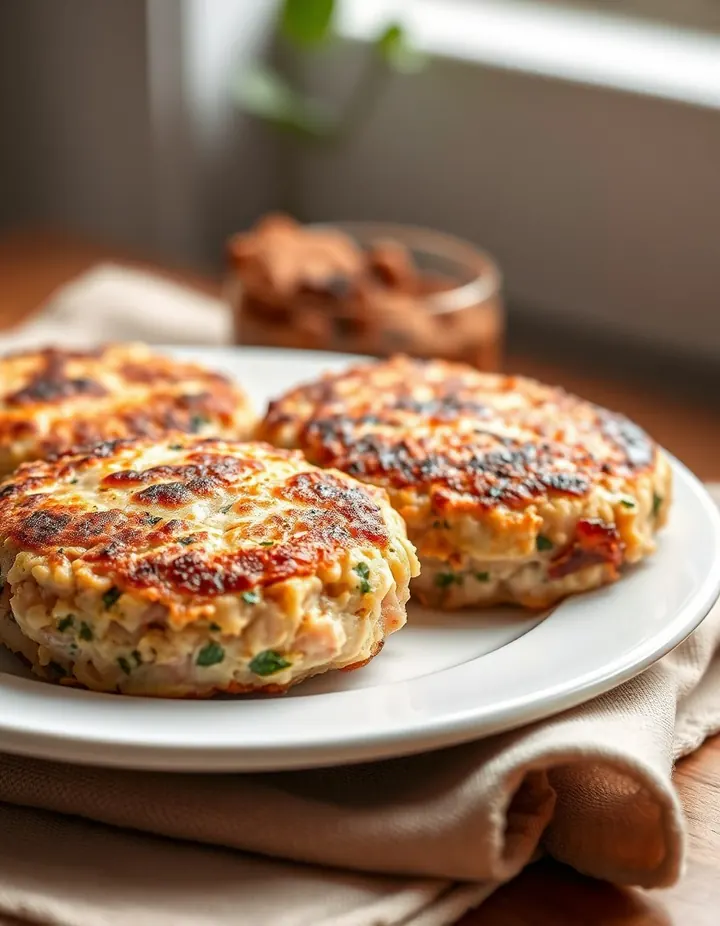 Rabbit Patties6 recipes
 Tomato Soup526 recipes
 Brown Bread461 recipes
The free Flavor Lab newsletter: one surprising pairing a week and the molecular reason it works, in 60 seconds. No spam, unsubscribe anytime.
Prefer an account? Create a free account to save pairings and unlock the full chemistry.