Why it works: Turbot and whiting share more aroma than cooks usually use. They rank in the top 1% of all ingredient pairs, and cooks put them together in 33 recipes. Both carry ethanol, which smells alcoholic, ethereal. The science ↓
Pau Pi Ettes De Turbot Au Vin Blanc
Ingredients
Directions
The book gives no oven temperature. The 400°F (200°C) in the steps was added when the recipe was transcribed, as a starting point.
Prepare the fish
Remove the fillets from the bones of the turbot and trim off the skin.
Flatten each fillet with a wet rolling pin and cut into even-sized pieces.
Season the fillets with pepper and coarse sea salt.
Chop the shallot, parsley, and mushrooms finely and mix with the forcemeat.
Spread the mixture on one side of each fillet and roll them up neatly.
Butter some strips of white paper and wrap each fillet in the paper.
Cook the fish
Arrange the fillets upright in a deep sauté pan with 3 oz melted butter.
Cover the pan and cook in a 400°F (200°C) oven for a few minutes.
Add the wine and stock, then finish cooking in the oven until done, basting occasionally.
Once cooked, remove the fillets, drain, and take off the paper bands.
Arrange the fillets in a pyramidal form and keep warm.
Make the sauce and serve
Combine the white sauce with the fish liquor.
Reduce the sauce.
Strain the sauce.
Finish the sauce with the cream and lemon juice.
Pour the sauce over the fish and serve hot.
Transcribed from a scanned cookbook and modernised for today's kitchens. Where the book gave no heat or time, or said "a moderate oven", the temperatures and times here may be modern equivalents rather than the book's own figures.
Explore the science
The flavor team
The pairs that carry this dish. Each one is judged two ways: how much their aromas overlap, and how often cooks already put them together.
-
Turbot + whitingtop 1% of all pairsSmell alikestrongCooked together33 recipes
Shared aroma: ethanol (alcoholic, ethereal).
-
Parsley + lemontop 1% of all pairsSmell alikestrongCooked together14,037 recipes
Shared aroma: beta-phellandrene (minty, terpene).
-
Shallot + parsleytop 1% of all pairsSmell alikestrongCooked together3,737 recipes
Shared aroma: 2,4-decadienal (seaweed).
-
Shallot + mushroomtop 4% of all pairsSmell alikemoderateCooked together1,982 recipes
Shared aroma: 2,4-decadienal (seaweed).
-
Shallot + lemontop 6% of all pairsSmell alikestrongCooked together2,523 recipes
Shared aroma: eucalyptol (eucalyptus, herbal).
Ranks compare each pair with 20,000 random ingredient pairs on CompKitchen. How we score pairs
What each ingredient does
- Turbot
- Forms the main body of the dish, cooked as delicate, flaky fillets.
- Whiting forcemeat
- Binds the chopped stuffing and keeps the rolled fillets moist as they cook.
- Butter
- Adds richness and moisture, helping the fish cook gently without drying out.
- Double cream
- Enriches the sauce, giving it body and a smooth, rounded texture.
- Lemon juice
- Adds acidity that brightens the rich butter and cream sauce.
- Chablis
- Adds acidity and aroma to the cooking liquid, flavouring the fish and sauce.
The step that matters
Finish the sauce with the cream and lemon juice. Adding cream and acid to a boiling sauce can cause it to split or curdle. Stir them in off the heat or at a gentle simmer, and taste before serving.
“What each ingredient does” and “The step that matters” were written by Claude from this recipe’s own method and reviewed in samples by CompKitchen.
More turbot in white wine recipes
You might also like
 Lemon Sauce236 recipes
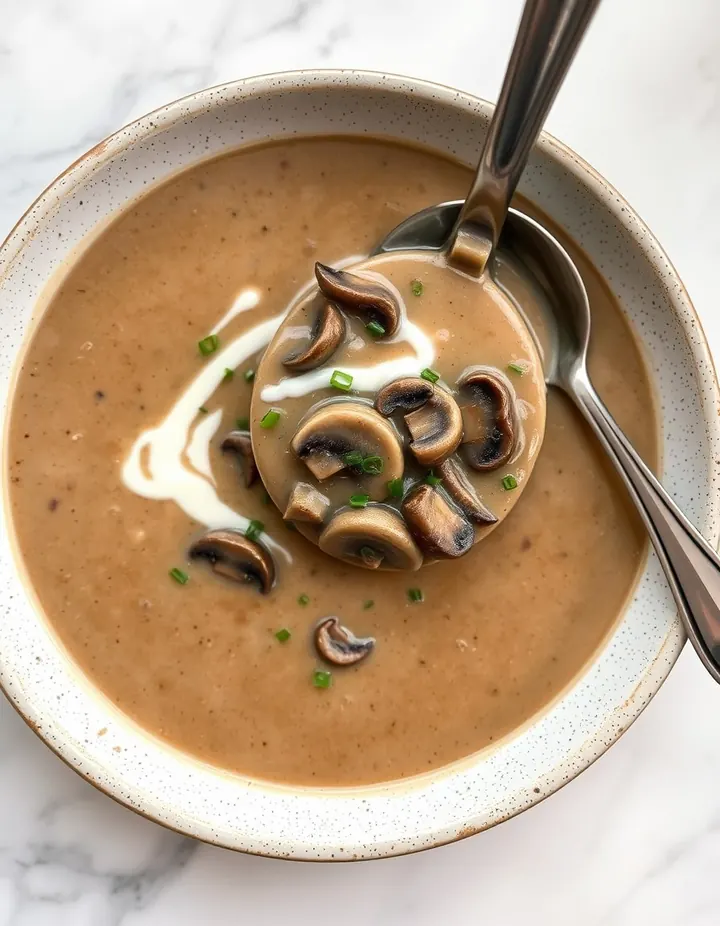 Mushroom Soup60 recipes
 Tomato Soup526 recipes
 Brown Bread461 recipes
The free Flavor Lab newsletter: one surprising pairing a week and the molecular reason it works, in 60 seconds. No spam, unsubscribe anytime.
Prefer an account? Create a free account to save pairings and unlock the full chemistry.