Why it works: Lemon and pepper match in chemistry and in kitchens. They rank in the top 3% of all ingredient pairs, and cooks put them together in 27,047 recipes. Both carry trans-2-nonenal, which smells cardboard, fatty. The science ↓
Artichokes with Brown Sauce
Ingredients
Directions
The book says “a moderate oven”. The 350°F in the steps is the modern equivalent, not the book's own figure.
Prepare the artichokes
Boil the Jerusalem artichokes until tender.
Let the artichokes cool.
Cut the artichokes as desired.
Coat the artichokes in beaten egg.
Coat the coated artichokes in fine crumbs or crushed vermicelli.
Fry the coated artichokes in hot oil until golden brown and crisp.
Make the sauce and finish
In a saucepan, melt the butter, add lemon juice, salt, pepper, and nutmeg, and sweat the artichokes for 20 minutes.
Drain the artichokes.
Place them in a moderate oven (350°F/175°C) for a few minutes.
Add white stock and light wine to the pan, thickening with flour, and bring to a boil.
Place the artichokes in the sauce, ensuring it comes halfway up, cover, and serve in 10 minutes with sauce around them.
Transcribed from a scanned cookbook and modernised for today's kitchens. Where the book gave no heat or time, or said "a moderate oven", the temperatures and times here may be modern equivalents rather than the book's own figures.
Explore the science
The flavor team
The pairs that carry this dish. Each one is judged two ways: how much their aromas overlap, and how often cooks already put them together.
-
Lemon + peppertop 3% of all pairsSmell alikestrongCooked together27,047 recipes
Shared aroma: trans-2-nonenal (cardboard, fatty).
-
Jerusalem artichoke + nutmegtop 4% of all pairsSmell alikestrongCooked together48 recipes
Shared aroma: coumarin (sweet, hay).
-
Lemon + nutmegtop 5% of all pairsSmell alikestrongCooked together11,318 recipes
Shared aroma: beta-phellandrene (minty, terpene).
-
Jerusalem artichoke + flourtop 6% of all pairsSmell alikestrongCooked together116 recipes
Shared aroma: isobutyraldehyde (malty, green).
-
Jerusalem artichoke + lemontop 6% of all pairsSmell alikestrongCooked together72 recipes
Shared aroma: coumarin (sweet, hay).
Ranks compare each pair with 20,000 random ingredient pairs on CompKitchen. How we score pairs
What each ingredient does
- Jerusalem artichokes
- Provide the main body of the dish, becoming tender when boiled and then crisp when fried.
- Fresh butter
- Adds richness and fat, carrying the flavour of the lemon and seasonings into the artichokes.
- Flour
- Thickens the stock and wine into a smooth sauce by swelling with liquid when heated.
- Beaten egg
- Acts as a binder so the crumbs or vermicelli stick to the artichokes and brown when fried.
- White stock
- Forms the liquid base of the brown sauce, adding savoury depth and moisture.
- Light wine
- Adds acidity and aroma to the sauce, lifting its flavour along with the lemon juice.
The step that matters
Frying the coated artichokes. Coated pieces can burn on the outside before the artichoke is heated through, or absorb excess oil if the oil is not hot enough. Hot oil sets the crumb coating quickly for a golden, crisp crust.
Swap the jerusalem artichoke
How well each one fits the dish's main ingredients (butter, lemon, pepper, nutmeg, wine, flour, egg):
- Shallotfits better
- Spinachfits better
- Arrowrootfits about as well
- Jerusalem artichokethe original
Fit is the average pairing score against butter, lemon, pepper, nutmeg, wine, flour, egg. Candidates are from the same food group and used in at least 100 recipes.
“What each ingredient does” and “The step that matters” were written by Claude from this recipe’s own method and reviewed in samples by CompKitchen.
You might also like
 Lemon Sauce236 recipes
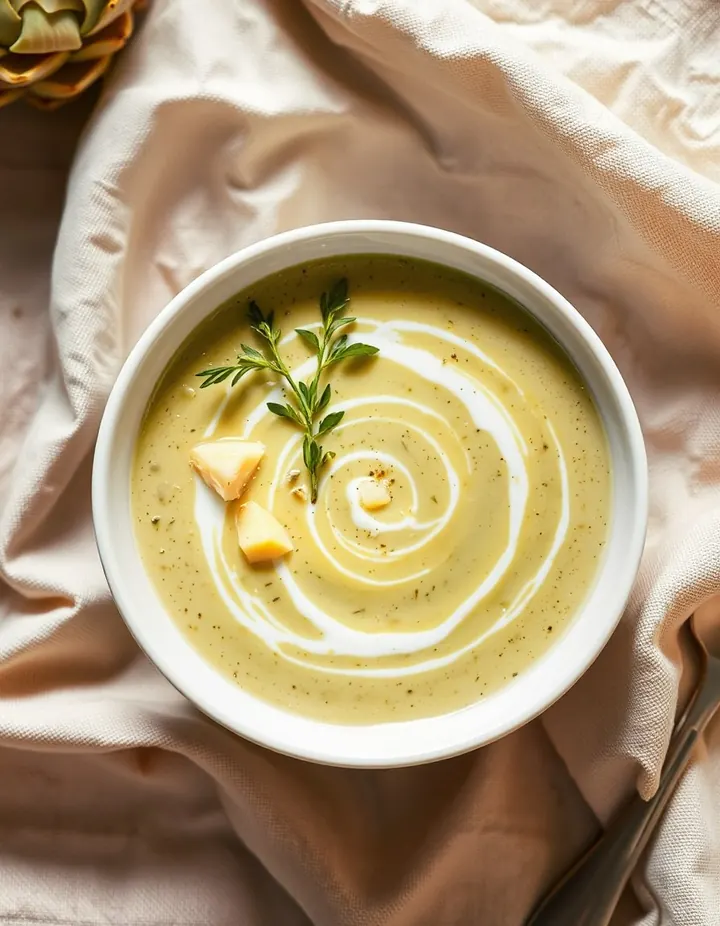 Artichoke Soup55 recipes
 Tomato Soup526 recipes
 Brown Bread461 recipes
The free Flavor Lab newsletter: one surprising pairing a week and the molecular reason it works, in 60 seconds. No spam, unsubscribe anytime.
Prefer an account? Create a free account to save pairings and unlock the full chemistry.