Why it works: Carrot and celery match in chemistry and in kitchens. They rank in the top 1% of all ingredient pairs, and cooks put them together in 10,173 recipes. Both carry myristicin, which smells spice, warm. The science ↓
Chaud-froid De Caneton
Ingredients
Directions
Prepare the duckling
Roast the duckling carefully, avoiding overcooking.
Let the duckling cool.
Remove the meat from the breast, wings, thighs, and legs, keeping it as whole as possible.
Cut the meat into neat fillets, removing all skin.
Make the broth
Crush the carcass, skin, and bones on a chopping board.
Sprinkle the carcass with marsala and place it in a stewpan with butter, onion, carrot, celery, and seasoning mixture.
Fry the mixture for 7-8 minutes.
Moisten the mixture with warm broth and add mushroom ketchup.
Extract the flavor as described for giblet broth.
Strain and skim the broth.
Make the sauce and coat
Make a brown sauce with a roux of butter and flour, adding dissolved gelatine.
Bring the sauce to a boil, skim, and pass it through a sieve into a bowl.
When the sauce is almost set, dip the fillets in it using a skewer.
Lay the coated pieces on a dish over ice.
Assemble and serve
Once the sauce is set, detach the fillets and arrange them in a dome shape on an entrée dish.
Garnish with meat jelly or broken aspic and keep cold until serving.
Transcribed from a scanned cookbook and modernised for today's kitchens. Where the book gave no heat or time, or said "a moderate oven", the temperatures and times here may be modern equivalents rather than the book's own figures.
Explore the science
The flavor team
The pairs that carry this dish. Each one is judged two ways: how much their aromas overlap, and how often cooks already put them together.
-
Carrot + celerytop 1% of all pairsSmell alikestrongCooked together10,173 recipes
Shared aroma: myristicin (spice, warm).
-
Onion + carrottop 6% of all pairsSmell alikemoderateCooked together21,601 recipes
Shared aroma: 2-isopropyl-3-methoxypyrazine (earthy, pea).
-
Butter + mushroomtop 7% of all pairsSmell alikemoderateCooked together12,525 recipes
Shared aroma: trans-2-decenal (waxy, orange).
-
Onion + celerytop 7% of all pairsSmell alikemoderateCooked together18,518 recipes
Shared aroma: guaiacol (smoky, sweet).
-
Carrot + mushroomtop 10% of all pairsSmell alikemoderateCooked together2,796 recipes
Shared aroma: 2-nonenal (fatty, green).
Ranks compare each pair with 20,000 random ingredient pairs on CompKitchen. How we score pairs
What each ingredient does
- Duckling
- Provides the meat for the fillets and the carcass for flavoring the broth.
- Flour
- Thickens the butter into a roux that gives the brown sauce body.
- Dissolved gelatine
- Sets the sauce so it firmly coats the fillets and holds its shape when cold.
- Marsala
- Adds aromatic depth and sweetness to the broth made from the carcass.
- Butter
- Adds fat and richness to the roux and the initial frying of the vegetables.
The step that matters
Dipping the fillets while the sauce is almost set. If the sauce is too warm, the coating runs off; if it has set fully, it will not adhere smoothly. Gelatine sets as it cools, so timing the dip controls the thickness of the glossy coat.
Swap the onion
How well each one fits the dish's main ingredients (butter, carrot, celery, mushroom, ketchup, flour):
- Turnipfits better
- Leekfits better
- Shallotfits better
- Onionthe original
Fit is the average pairing score against butter, carrot, celery, mushroom, ketchup, flour. Candidates are from the same food group and used in at least 100 recipes.
“What each ingredient does” and “The step that matters” were written by Claude from this recipe’s own method and reviewed in samples by CompKitchen.
You might also like
 Carrot Soup134 recipes
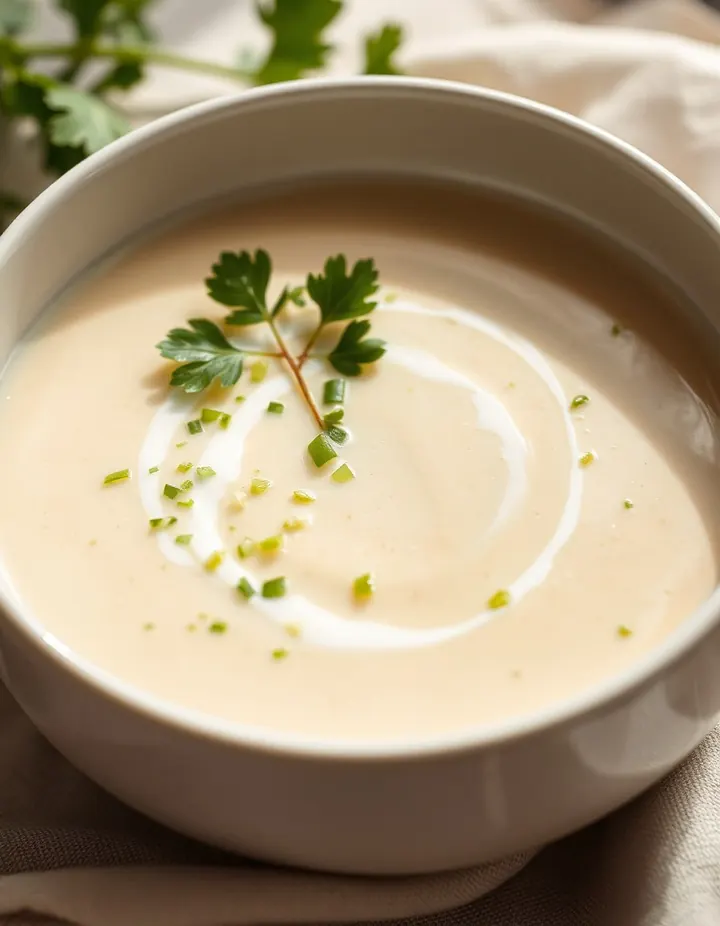 Cream of Celery Soup113 recipes
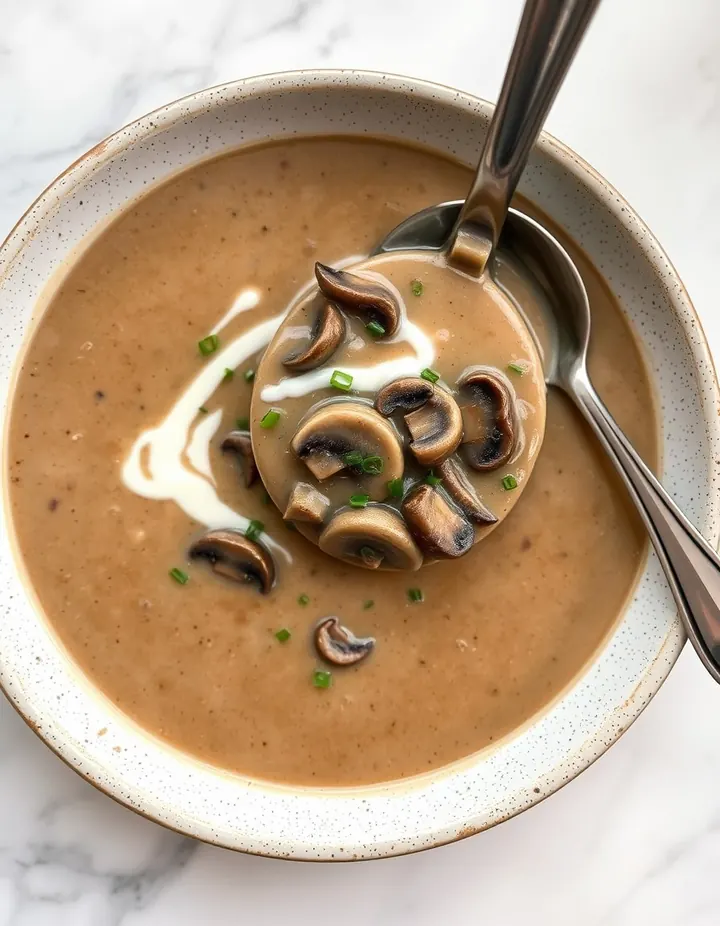 Mushroom Soup60 recipes
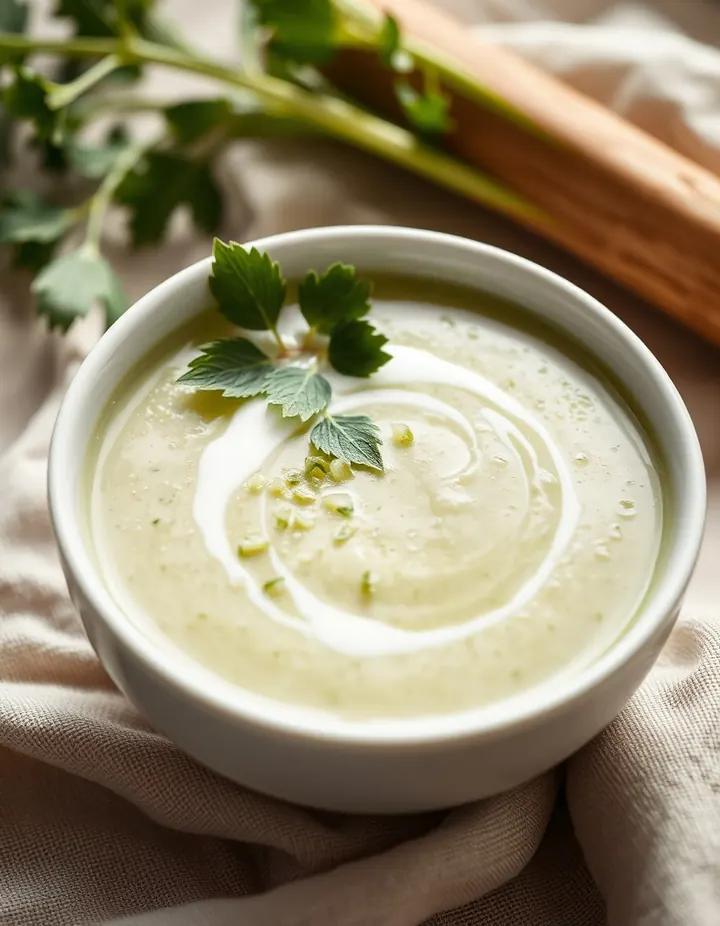 Celery Stew25 recipes
The free Flavor Lab newsletter: one surprising pairing a week and the molecular reason it works, in 60 seconds. No spam, unsubscribe anytime.
Prefer an account? Create a free account to save pairings and unlock the full chemistry.