Why it works: Butter and white wine are a kitchen classic. They rank in the top 9% of all ingredient pairs, and cooks put them together in 5,083 recipes. Both carry ethyl octanoate, which smells fruity, wine. The science ↓
Puree of Chestnuts
Ingredients
Directions
Prepare the chestnuts
Peel the chestnuts and pour lightly salted boiling water over them to remove the inner skin.
Cook the chestnuts
In a saucepan, melt the butter and toss the chestnuts over the heat for a few minutes.
Moisten the chestnuts with white wine and broth, then cover and cook until tender.
Make the puree and serve
Remove the chestnuts and pound them through a colander, then rub through a fine sieve.
Keep the puree warm in a saucepan, adding butter and meat glaze before serving.
If serving as a vegetable, garnish the puree with sausages chipolata.
Transcribed from a scanned cookbook and modernised for today's kitchens. Where the book gave no heat or time, or said "a moderate oven", the temperatures and times here may be modern equivalents rather than the book's own figures.
Explore the science
The flavor team
The pairs that carry this dish. Each one is judged two ways: how much their aromas overlap, and how often cooks already put them together.
-
Butter + white winetop 9% of all pairsSmell alikemoderateCooked together5,083 recipes
Shared aroma: ethyl octanoate (fruity, wine).
-
Butter + meattop 16% of all pairsSmell alikemoderateCooked together7,594 recipes
Shared aroma: guaiacol (smoky, sweet).
-
Chestnut + white winetop 18% of all pairsSmell alikemoderateCooked together121 recipes
Shared aroma: ethyl pentanoate (yeast, fruit).
-
Chestnut + meattop 19% of all pairsSmell alikelowCooked together164 recipes
Shared aroma: guaiacol (smoky, sweet).
-
Chestnut + buttertop 21% of all pairsSmell alikemoderateCooked together965 recipes
Shared aroma: ethyl octanoate (fruity, wine).
Ranks compare each pair with 20,000 random ingredient pairs on CompKitchen. How we score pairs
What each ingredient does
- Chestnuts
- Form the main body of the puree, giving it starch, bulk and a soft, floury texture when cooked.
- Butter
- Adds fat and richness, giving the puree a smooth, silky mouthfeel.
- White wine
- Adds acidity and aromatic flavour as it cooks down with the chestnuts.
- Broth
- Supplies moisture and savoury flavour while the chestnuts cook until tender.
- Meat glaze
- Adds concentrated savoury depth and a richer, browned meaty flavour to the puree.
The step that matters
Rubbing the chestnuts through a fine sieve. Pounding and sieving breaks down the cooked starch and fibres. If the chestnuts are undercooked or the puree is left coarse, it stays grainy instead of smooth.
Swap the chestnut
How well each one fits the dish's main ingredients (butter, white wine, meat):
- Peasfits better
- Almondfits better
- Walnutfits better
- Chestnutthe original
Fit is the average pairing score against butter, white wine, meat. Candidates are from the same food group and used in at least 100 recipes.
“What each ingredient does” and “The step that matters” were written by Claude from this recipe’s own method and reviewed in samples by CompKitchen.
You might also like
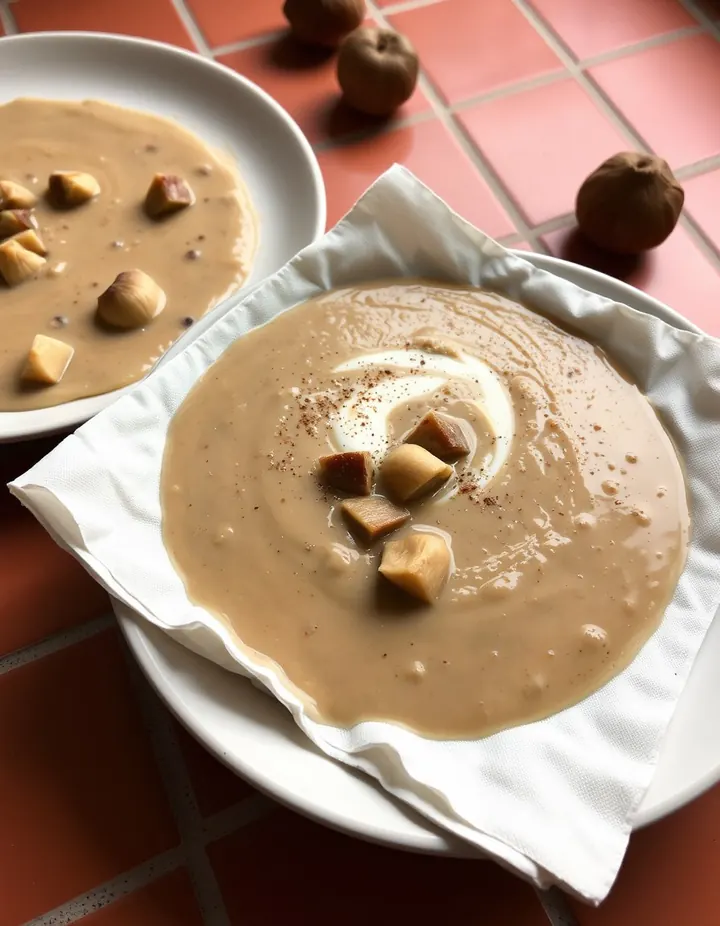 Chestnut Soup52 recipes
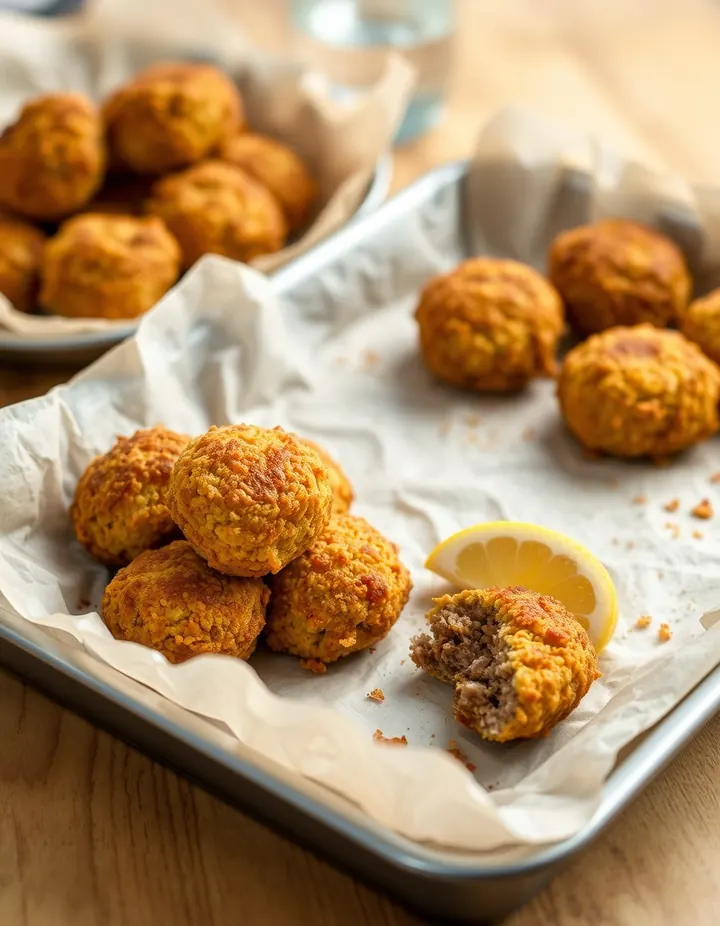 Meat Croquettes52 recipes
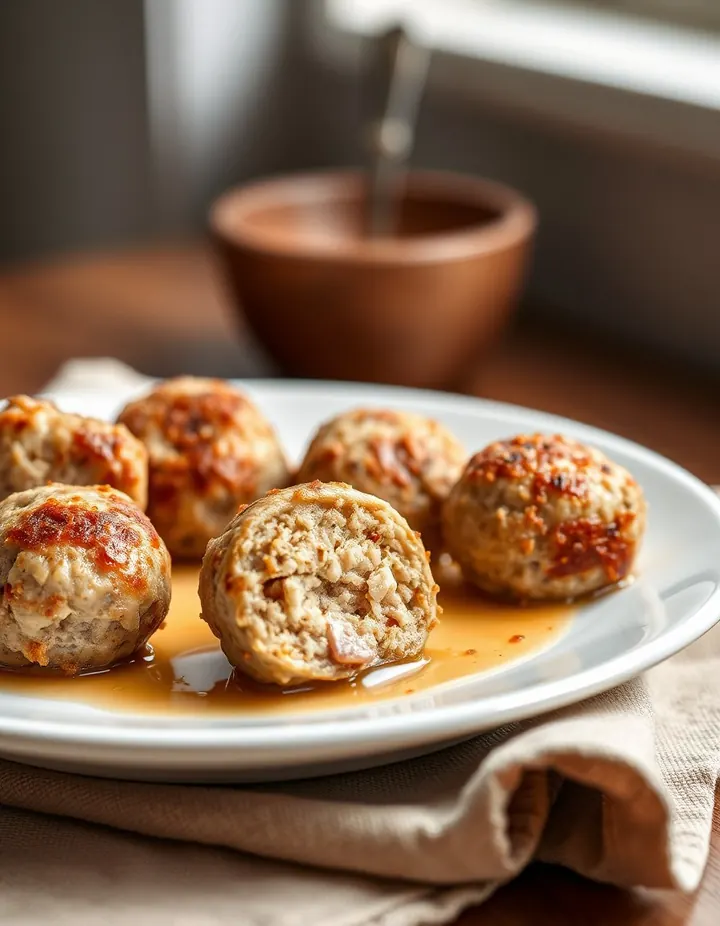 Meatballs37 recipes
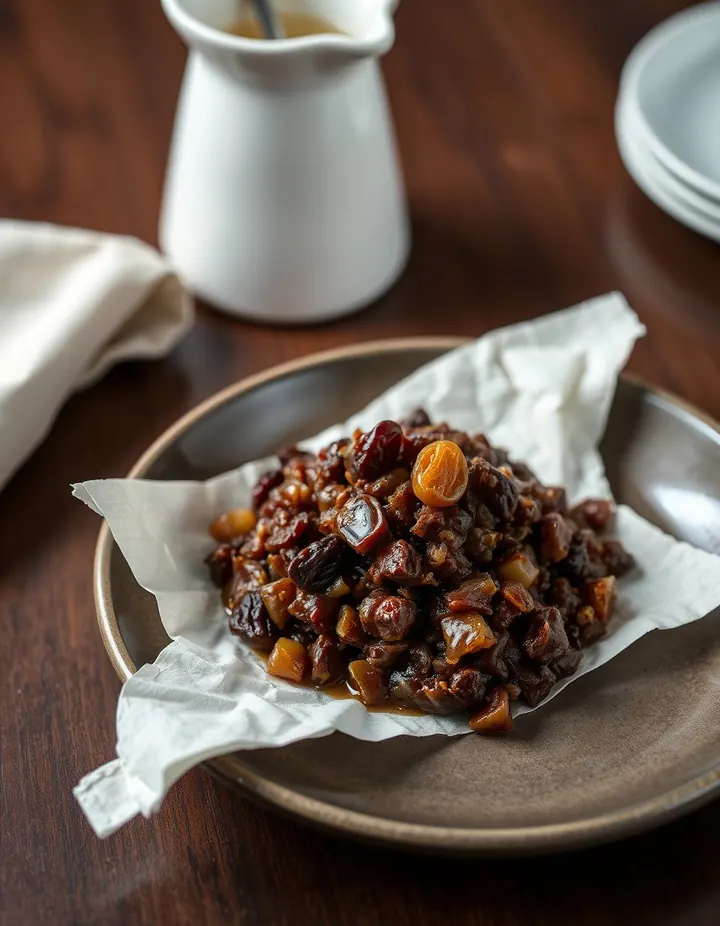 Mince Meat37 recipes
The free Flavor Lab newsletter: one surprising pairing a week and the molecular reason it works, in 60 seconds. No spam, unsubscribe anytime.
Prefer an account? Create a free account to save pairings and unlock the full chemistry.