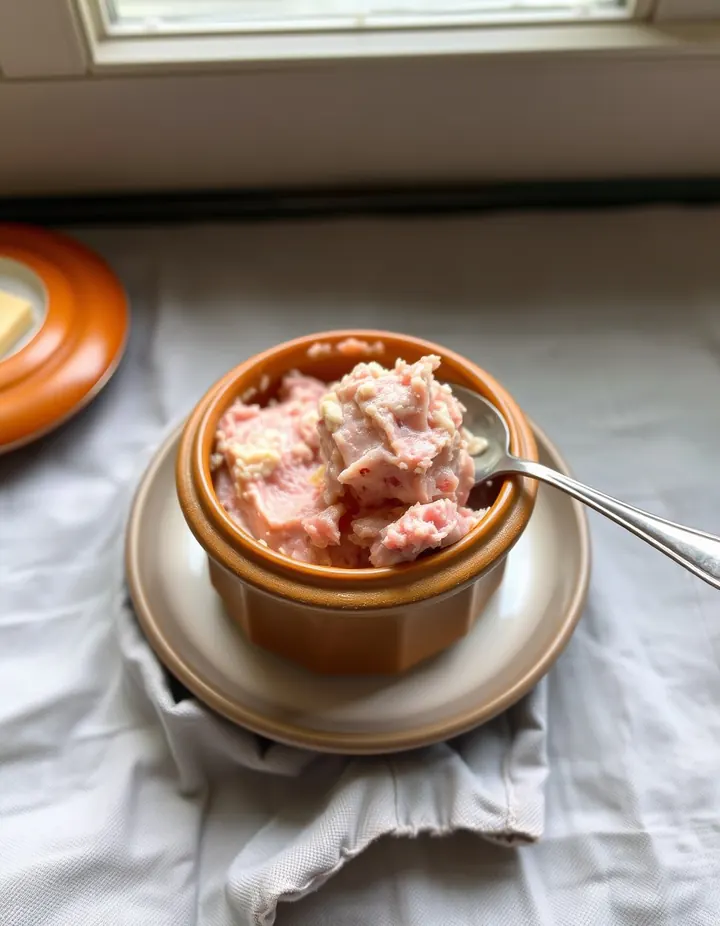
Why it works: Mace and nutmeg are a kitchen classic. They rank in the top 4% of all ingredient pairs, and cooks put them together in 6,557 recipes. Both carry myristicin, which smells spice, warm. The science ↓
Potted Ham
Ingredients
Directions
The book gives no oven temperature. The 400°F (200°C) in the steps was added when the recipe was transcribed, as a starting point.
Prepare the ham
Soak the ham for 12 hours.
Wipe the ham dry.
Trim the ham.
Wrap the ham in coarse paste.
Bake the wrapped ham at 400°F (200°C) until tender.
Remove the crust and rind from the ham.
Let the ham cool completely.
Weigh the ham after removing skin and fiber.
Mince the ham finely.
Make the potted ham
Pound the minced ham in a mortar with 8 ounces of butter. Add the butter gradually.
Add mace, nutmeg, and cayenne to the mixture. Mix well.
Continue to pound the mixture. Turn the mixture to ensure even seasoning.
Press the mixture into small pots. Pour clarified butter on top.
Store
Store the potted ham in a cool, dry place; it will keep for up to two weeks.
Transcribed from a scanned cookbook and modernised for today's kitchens. Where the book gave no heat or time, or said "a moderate oven", the temperatures and times here may be modern equivalents rather than the book's own figures.
Photo for illustrative purposes only · Contact us to use it
Explore the science
The flavor team
The pairs that carry this dish. Each one is judged two ways: how much their aromas overlap, and how often cooks already put them together.
-
Mace + nutmegtop 4% of all pairsSmell alikemoderateCooked together6,557 recipes
Shared aroma: myristicin (spice, warm).
-
Nutmeg + peppertop 7% of all pairsSmell alikestrongCooked together13,015 recipes
Shared aroma: 4'-methylacetophenone (bitter almond).
-
Ham + vealtop 15% of all pairsSmell alikelowCooked together3,264 recipes
Shared aroma: 2,4-decadienal (seaweed).
-
Mace + peppertop 16% of all pairsSmell alikelowCooked together12,257 recipes
Shared aroma: myristicin (spice, warm).
-
Butter + nutmegtop 16% of all pairsSmell alikemoderateCooked together24,377 recipes
Shared aroma: eucalyptol (eucalyptus, herbal).
Mace and pepper barely smell alike, yet cooks put them together in 12,257 recipes: they work on texture and structure more than aroma.
Ranks compare each pair with 20,000 random ingredient pairs on CompKitchen. How we score pairs
What each ingredient does
- Ham
- Forms the main body of the potted meat, providing its flavour and texture.
- Fresh butter
- Adds richness and moisture, helping the pounded mixture spread smoothly and stay tender.
- Cold roast veal
- Adds a mild meaty body that softens the texture of the mixture.
- Mace
- Contributes a warm, aromatic spice flavour to the mixture.
- Nutmeg
- Contributes a warm, aromatic spice flavour that complements the ham.
The step that matters
Let the ham cool completely before mincing and pounding. Warm meat melts the butter, so the mixture turns greasy and separates instead of forming a smooth, spreadable paste. Cooling firms the fat and keeps the emulsion stable.
Swap the mace
How well each one fits the dish's main ingredients (ham, veal, butter, nutmeg, pepper):
- Parsleyfits better
- Clovefits better
- Marjoramfits better
- Macethe original
Fit is the average pairing score against ham, veal, butter, nutmeg, pepper. Candidates are from the same food group and used in at least 100 recipes.
“What each ingredient does” and “The step that matters” were written by Claude from this recipe’s own method and reviewed in samples by CompKitchen.
You might also like
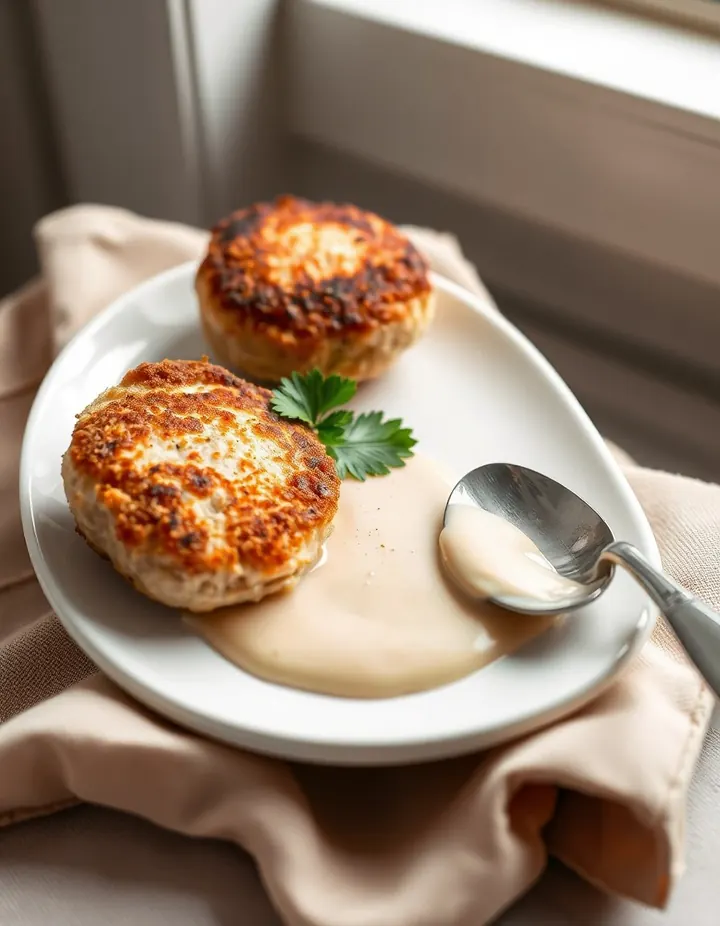 Veal Patties50 recipes
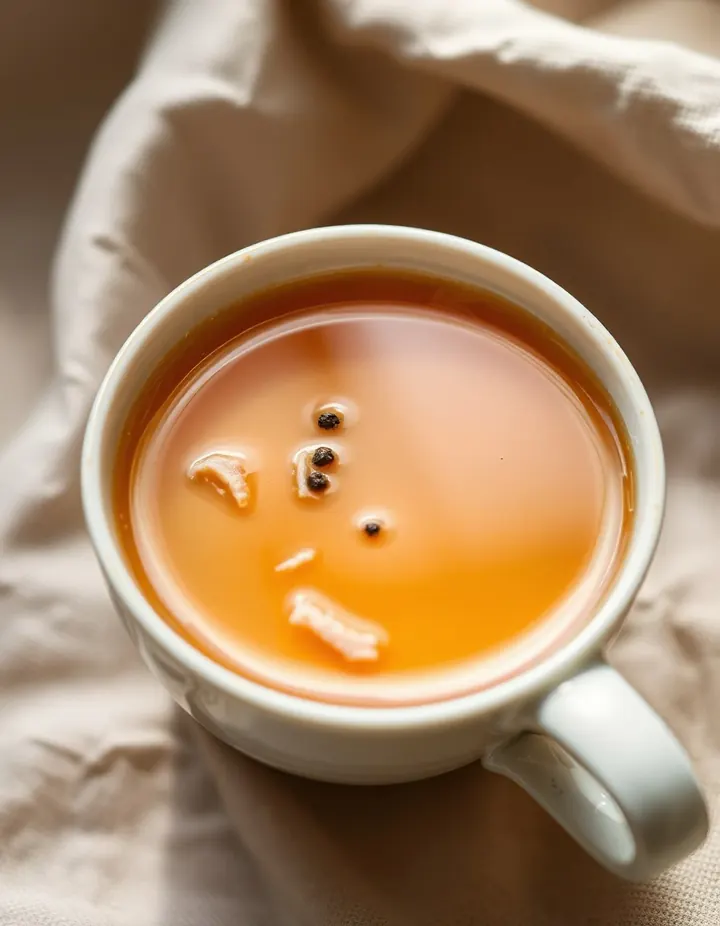 Beef, Mutton, or Veal Broth6 recipes
 Tomato Soup526 recipes
 Brown Bread461 recipes
The free Flavor Lab newsletter: one surprising pairing a week and the molecular reason it works, in 60 seconds. No spam, unsubscribe anytime.
Prefer an account? Create a free account to save pairings and unlock the full chemistry.