Why it works: Mace and nutmeg are a kitchen classic. They rank in the top 4% of all ingredient pairs, and cooks put them together in 6,557 recipes. Both carry myristicin, which smells spice, warm. The science ↓
A Good Common English Game Pie
Ingredients
Directions
The book gives no oven temperature. The 400°F (200°C) in the steps was added when the recipe was transcribed, as a starting point.
Prepare the meat
Remove the flesh from the upper side of the neck of venison and trim it to fit the dish.
Rub the venison with coarse sea salt, cayenne, pounded mace, and nutmeg.
Cut the hare into joints.
Bone the back and thighs of the hare.
Fill the hare joints with forcemeat No. 1 mixed with butter, minced eschalots, and chopped liver.
Assemble the pie
Line the dish with a rich short crust.
Place the venison in the center of the crust.
Arrange the hare around the venison.
Fill any gaps with more forcemeat.
Add a few spoons of well-jellied gravy.
Cover the pie securely.
Decorate if desired.
Make the jelly and bake
To make jelly, boil 2 pounds of shin of beef in 1 quart of water until reduced by half.
Season the jelly with ham, peppercorns, cloves, mace, and salt.
Bake for 2 hours at 400°F (200°C).
Transcribed from a scanned cookbook and modernised for today's kitchens. Where the book gave no heat or time, or said "a moderate oven", the temperatures and times here may be modern equivalents rather than the book's own figures.
Explore the science
The flavor team
The pairs that carry this dish. Each one is judged two ways: how much their aromas overlap, and how often cooks already put them together.
-
Mace + nutmegtop 4% of all pairsSmell alikemoderateCooked together6,557 recipes
Shared aroma: myristicin (spice, warm).
-
Pepper + nutmegtop 7% of all pairsSmell alikestrongCooked together13,015 recipes
Shared aroma: 4'-methylacetophenone (bitter almond).
-
Nutmeg + flourtop 8% of all pairsSmell alikemoderateCooked together18,623 recipes
Shared aroma: isobutyraldehyde (malty, green).
-
Pepper + beeftop 10% of all pairsSmell alikemoderateCooked together18,971 recipes
Shared aroma: 2-isopropyl-3-methoxypyrazine (earthy, pea).
-
Butter + flourtop 12% of all pairsSmell alikelowCooked together124,287 recipes
Shared aroma: isobutyraldehyde (malty, green).
Butter and flour barely smell alike, yet cooks put them together in 124,287 recipes: they work on texture and structure more than aroma.
Ranks compare each pair with 20,000 random ingredient pairs on CompKitchen. How we score pairs
What each ingredient does
- Venison
- Forms the main meaty centre of the pie and carries the spiced rub into the filling.
- Hare
- Provides rich, gamey meat whose joints are filled and set around the venison.
- Forcemeat
- Binds the filling and keeps the lean game meat moist during baking.
- Butter
- Adds fat that enriches the forcemeat and keeps the filling moist and tender.
- Rich short crust (in the method)
- Flour and butter form a sturdy, tender case that holds the filling and browns in the oven.
- Well-jellied gravy
- Sets into a jelly that fills gaps and keeps the pie moist as it cools.
The step that matters
Cover the pie securely. A tight seal keeps steam and juices inside so the lean game stays moist; a gap lets the juices escape and the meat dry out during the long bake.
Swap the mace
How well each one fits the dish's main ingredients (venison, pepper, nutmeg, butter, liver, flour, beef):
- Parsleyfits better
- Sagefits better
- Marjoramfits better
- Macethe original
Fit is the average pairing score against venison, pepper, nutmeg, butter, liver, flour, beef. Candidates are from the same food group and used in at least 100 recipes.
“What each ingredient does” and “The step that matters” were written by Claude from this recipe’s own method and reviewed in samples by CompKitchen.
You might also like
 Roast Beef211 recipes
 Beef Loaf175 recipes
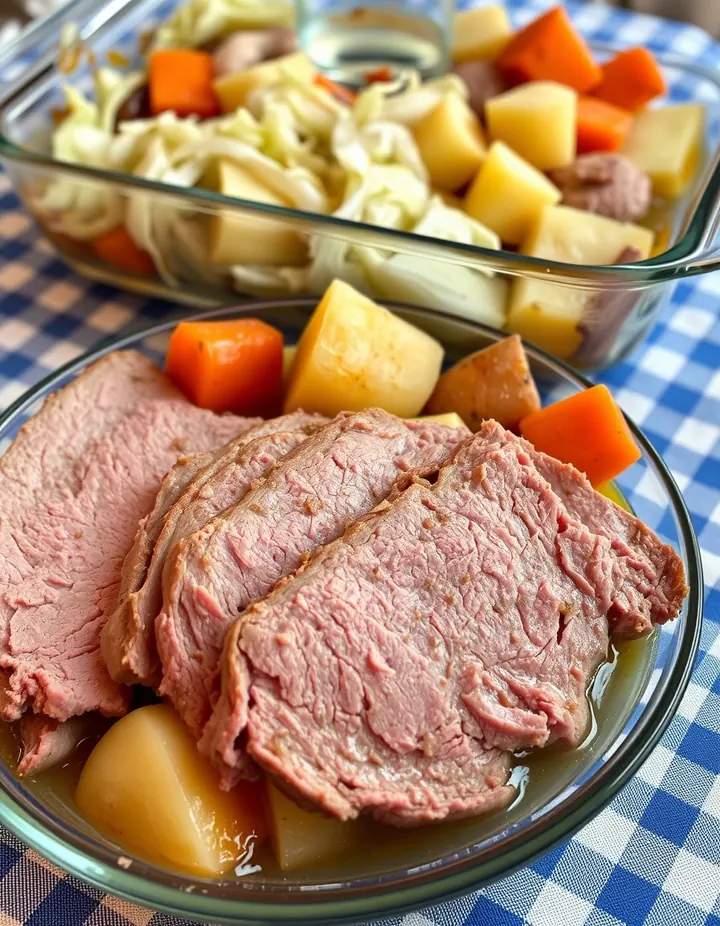 Corned Beef87 recipes
 Beef Broth67 recipes
The free Flavor Lab newsletter: one surprising pairing a week and the molecular reason it works, in 60 seconds. No spam, unsubscribe anytime.
Prefer an account? Create a free account to save pairings and unlock the full chemistry.