Why it works: Marjoram and thyme match in chemistry and in kitchens. They rank in the top 1% of all ingredient pairs, and cooks put them together in 2,225 recipes. Both carry terpineol, which smells pine, woody. The science ↓
Bombarded Veal
Ingredients
Directions
The book gives no oven temperature. The 400°F (200°C) in the steps was added when the recipe was transcribed, as a starting point.
Prepare the forcemeat
Remove the bone from the fillet of veal.
Make a forcemeat by mixing the bread crumb, minced bacon, anchovy, marjoram, lemon peel, thyme, parsley, salt, cayenne pepper, nutmeg, egg, and cream.
Fill the cavity of the fillet with the forcemeat.
Make cuts around the fillet about 1 inch apart.
Fill the cuts with forcemeat, boiled spinach, and a mixture of bread crumbs, chopped oysters, and beef marrow.
Wrap the fillet in caul fat.
Bake
Place the wrapped fillet in a deep pot with 1 pint of water.
Cover with a coarse paste to prevent unpleasant flavors from the oven.
Bake in a 400°F (200°C) oven until cooked through.
Skim off the fat from the cooking liquid.
Make the sauce and serve
Transfer the skimmed fat to a saucepan.
Add mushroom ketchup, lemon pickle, artichoke quarters, browning sauce, morels, and truffles to the saucepan.
Thicken the sauce with butter rolled in flour.
Bring the sauce to a gentle boil.
Serve the veal on a dish.
Pour the sauce over the veal.
Transcribed from a scanned cookbook and modernised for today's kitchens. Where the book gave no heat or time, or said "a moderate oven", the temperatures and times here may be modern equivalents rather than the book's own figures.
Explore the science
The flavor team
The pairs that carry this dish. Each one is judged two ways: how much their aromas overlap, and how often cooks already put them together.
-
Marjoram + thymetop 1% of all pairsSmell alikestrongCooked together2,225 recipes
Shared aroma: terpineol (pine, woody).
-
Thyme + parsleytop 1% of all pairsSmell alikestrongCooked together9,057 recipes
Shared aroma: cuminaldehyde (Spicy, cumin).
-
Marjoram + parsleytop 1% of all pairsSmell alikestrongCooked together1,979 recipes
Shared aroma: cuminaldehyde (Spicy, cumin).
-
Lemon + parsleytop 1% of all pairsSmell alikestrongCooked together14,037 recipes
Shared aroma: beta-phellandrene (minty, terpene).
-
Marjoram + lemontop 1% of all pairsSmell alikestrongCooked together957 recipes
Shared aroma: beta-phellandrene (minty, terpene).
Ranks compare each pair with 20,000 random ingredient pairs on CompKitchen. How we score pairs
What each ingredient does
- Veal fillet
- Forms the main body of the dish, cooked whole around its stuffing.
- Egg
- Binds the forcemeat so it holds together when sliced and cooked.
- Bread crumbs
- Absorb moisture and give the forcemeat a soft, cohesive body.
- Fat bacon
- Adds fat and richness, keeping the forcemeat moist during baking.
- Butter and flour
- Flour roux-style thickens the sauce, giving it body and a smooth texture.
- Beef marrow
- Adds fat and richness to the stuffing, contributing a rounded, savoury flavour.
The step that matters
Bake the wrapped fillet until cooked through. The stuffed, wrapped fillet is thick and dense, so heat must reach the centre evenly. Cooking it fully in the covered paste and water bath ensures safe doneness while keeping the meat moist.
Swap the nutmeg
How well each one fits the dish's main ingredients (veal, anchovy, marjoram, lemon, thyme, parsley, pepper):
- Sagefits better
- Winter savoryfits better
- Tarragonfits better
- Nutmegthe original
Fit is the average pairing score against veal, anchovy, marjoram, lemon, thyme, parsley, pepper. Candidates are from the same food group and used in at least 100 recipes.
“What each ingredient does” and “The step that matters” were written by Claude from this recipe’s own method and reviewed in samples by CompKitchen.
You might also like
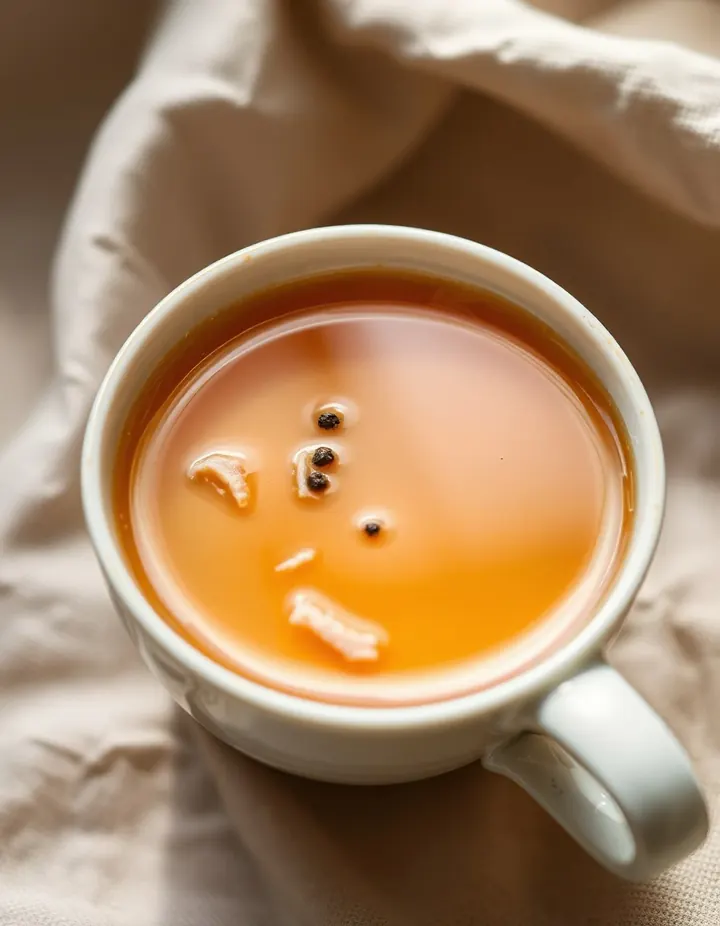 Beef, Mutton, or Veal Broth6 recipes
 Brown Bread461 recipes
 Lemon Sauce236 recipes
 Roast Beef211 recipes
The free Flavor Lab newsletter: one surprising pairing a week and the molecular reason it works, in 60 seconds. No spam, unsubscribe anytime.
Prefer an account? Create a free account to save pairings and unlock the full chemistry.