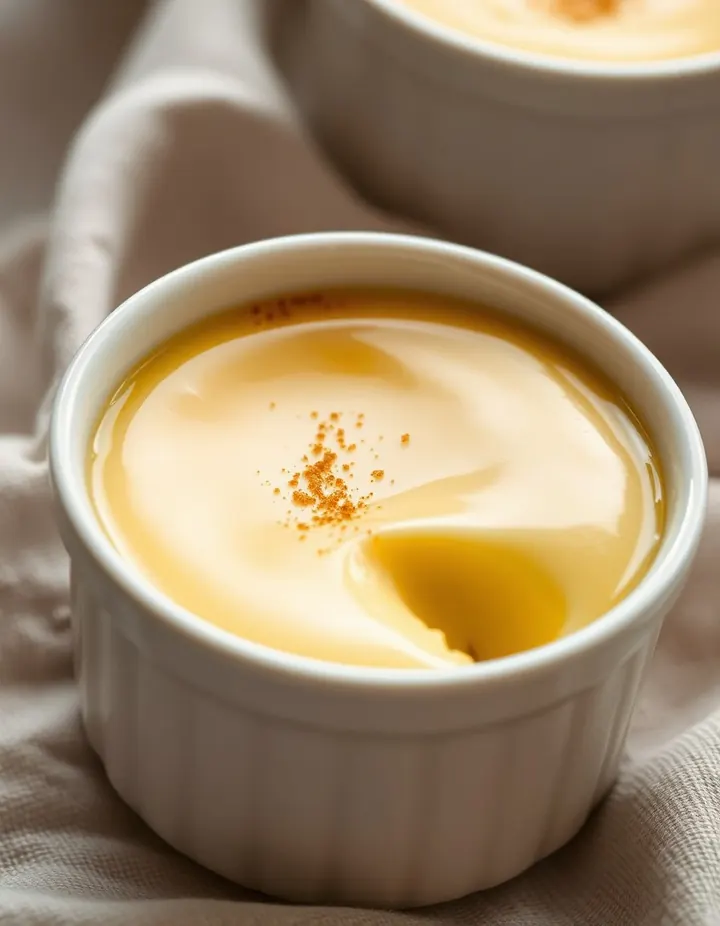
Why it works: Milk and vanilla are a kitchen classic. They rank in the top 5% of all ingredient pairs, and 19,187 recipes mention both. Both carry ethyl caproate, which smells fruity, apple peel. The science ↓
How to Make Custard
Serves 4Ingredients
Directions
Step-by-step directions aren't available for this recipe. See the full recipe at the source →
Photo for illustrative purposes only · Contact us to use it
Explore the science
The flavor team
The pairs that carry this dish. Each one is judged two ways: how much aroma chemistry they share, and how many recipes mention both.
-
Milk + vanillatop 5% of all pairsAroma overlapmoderateMentioned together19,187 recipes
Shared aroma: ethyl caproate (fruity, apple peel).
-
Sugar + vanillatop 8% of all pairsAroma overlaplowMentioned together35,032 recipes
Shared aroma: beta-damascenone (apple, rose).
-
Sugar + creamtop 9% of all pairsAroma overlapmoderateMentioned together43,450 recipes
Shared aroma: 2,3-butanedione (butter, sweet).
-
Cream + vanillatop 15% of all pairsAroma overlaplowMentioned together12,301 recipes
Shared aroma: 2-nonanone (fruity, floral).
-
Cream + milktop 18% of all pairsAroma overlapmoderateMentioned together29,399 recipes
Shared aroma: delta-dodecalactone (sweet, creamy).
Sugar and vanilla share little aroma chemistry, yet 35,032 recipes mention both: they likely work on texture and structure more than aroma.
Ranks compare each pair with 20,000 random ingredient pairs on CompKitchen. How we score pairs
The Sunday pairing: one pairing, the chemistry behind it, and how to cook it. No spam, unsubscribe anytime.
Prefer an account? Create a free account for sign-in; Pro adds the full results and chemistry.