Why it works: Nutmeg and mace are a kitchen classic. They rank in the top 4% of all ingredient pairs, and cooks put them together in 6,557 recipes. Both carry myristicin, which smells spice, warm. The science ↓
Pheasant Pie
Ingredients
Directions
The book gives no oven temperature. The 300°F (150°C) in the steps was added when the recipe was transcribed, as a starting point.
Prepare the forcemeat
Bone the pheasants carefully and prepare the forcemeat by mixing the grated bread, pounded veal, fat bacon, minced beef suet, and grated lean ham in equal quantities.
Season the mixture with truffles, nutmeg, mace, pepper, salt, and garlic, then bind it with the beaten egg yolks.
Assemble the pie
Stuff part of the forcemeat inside the pheasants and fry them for a few minutes.
Place the pheasants in a deep dish lined with slices of fat bacon and some forcemeat at the bottom.
Add the brandy, more forcemeat, and cover with slices of fat bacon.
Bake and serve
If using a dish, cover it with coarse paste and bake for 4 to 5 hours at 300°F (150°C).
When ready to serve, remove the coarse paste and cover with rich puff paste, baking until golden.
Transcribed from a scanned cookbook and modernised for today's kitchens. Where the book gave no heat or time, or said "a moderate oven", the temperatures and times here may be modern equivalents rather than the book's own figures.
Explore the science
The flavor team
The pairs that carry this dish. Each one is judged two ways: how much their aromas overlap, and how often cooks already put them together.
-
Nutmeg + macetop 4% of all pairsSmell alikemoderateCooked together6,557 recipes
Shared aroma: myristicin (spice, warm).
-
Bread + hamtop 7% of all pairsSmell alikemoderateCooked together2,536 recipes
Shared aroma: 2-acetyl-1-pyrroline (popcorn, roasted).
-
Pheasant + beeftop 9% of all pairsSmell alikemoderateCooked together131 recipes
Shared aroma: decanal (soap, orange peel).
-
Veal + truffletop 11% of all pairsSmell alikelowCooked together815 recipes
Shared aroma: 2,4-nonadienal (fatty, green).
-
Veal + beeftop 11% of all pairsSmell alikemoderateCooked together3,784 recipes
Shared aroma: 2,6-nonadienal (cucumber, green).
Ranks compare each pair with 20,000 random ingredient pairs on CompKitchen. How we score pairs
What each ingredient does
- Pheasants
- Provide the main meat, which becomes tender during the long, slow bake.
- Grated bread
- Absorbs liquid and gives the forcemeat a soft, binding body.
- Fat bacon
- Adds fat and moisture, keeping the meat and forcemeat from drying out.
- Beaten egg yolks
- Bind the forcemeat and help it set firm when cooked.
- Minced beef suet
- Adds richness and moisture to the forcemeat.
- Brandy
- Adds aroma and flavour to the pie's filling.
The step that matters
Slow bake for 4 to 5 hours at 300°F (150°C). Long, low heat lets the pheasant and forcemeat cook through gently and become tender. Higher heat would tighten the meat and dry the filling out.
Swap the mace
How well each one fits the dish's main ingredients (pheasant, bread, veal, beef, ham, truffle, nutmeg):
- Thymefits better
- Marjoramfits better
- Clovefits better
- Macethe original
Fit is the average pairing score against pheasant, bread, veal, beef, ham, truffle, nutmeg. Candidates are from the same food group and used in at least 100 recipes.
“What each ingredient does” and “The step that matters” were written by Claude from this recipe’s own method and reviewed in samples by CompKitchen.
You might also like
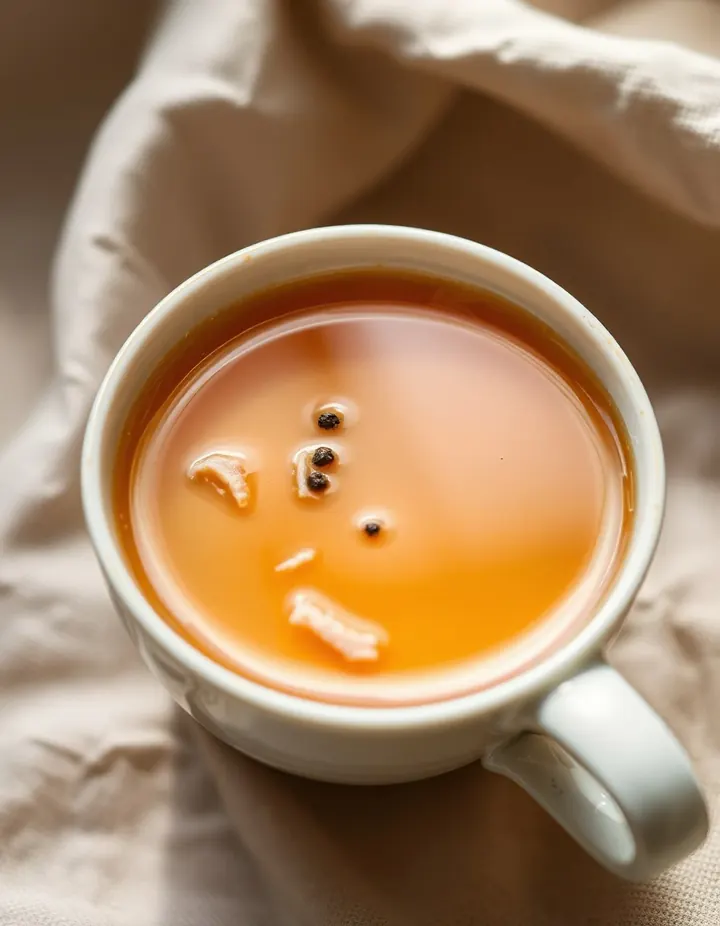 Beef, Mutton, or Veal Broth6 recipes
 Brown Bread461 recipes
 Roast Beef211 recipes
 Beef Loaf175 recipes
The free Flavor Lab newsletter: one surprising pairing a week and the molecular reason it works, in 60 seconds. No spam, unsubscribe anytime.
Prefer an account? Create a free account to save pairings and unlock the full chemistry.