Why it works: Carrot and clove match in chemistry and in kitchens. They rank in the top 5% of all ingredient pairs, and cooks put them together in 5,873 recipes. Both carry cuminaldehyde, which smells Spicy, cumin. The science ↓
Haunch of Venison
Ingredients
Directions
Hang and prepare
Hang the venison in a dry, airy place for 10 days to 3 weeks, rubbing it with a clean cloth daily.
Remove the shank and chine bones, strip off the skin, and trim rough pieces.
Mix 3 pounds of sweet dripping with 4 pounds of flour and 1 quart of bran to form a stiff paste with hot water, then let the paste stand for 1 hour.
Roll the paste out to ½ inch thick and cover the venison evenly with it.
Roast
Roast the venison before a solid fire for 45 minutes, letting it roast gradually and basting frequently with dissolved dripping.
Cook for 13 minutes per pound, including the paste.
Half an hour before serving, split the paste and remove it.
Dredge the haunch with baked flour and baste with butter until done.
Make the gravy and serve
Combine mutton, liver, kidney, and venison trimmings in a stewpan with shallot, carrot, salt, clove, bay leaf, peppercorns, and butter, frying until brown.
Add rum or brandy, black onion, and water, then simmer for 4 hours.
Serve the venison on a hot dish with the fat side up, pouring some gravy over it.
Transcribed from a scanned cookbook and modernised for today's kitchens. Where the book gave no heat or time, or said "a moderate oven", the temperatures and times here may be modern equivalents rather than the book's own figures.
Explore the science
The flavor team
The pairs that carry this dish. Each one is judged two ways: how much their aromas overlap, and how often cooks already put them together.
-
Carrot + clovetop 5% of all pairsSmell alikestrongCooked together5,873 recipes
Shared aroma: cuminaldehyde (Spicy, cumin).
-
Shallot + clovetop 5% of all pairsSmell alikestrongCooked together1,677 recipes
Shared aroma: eucalyptol (eucalyptus, herbal).
-
Flour + shallottop 6% of all pairsSmell alikestrongCooked together2,081 recipes
Shared aroma: isobutyraldehyde (malty, green).
-
Shallot + carrottop 8% of all pairsSmell alikemoderateCooked together803 recipes
Shared aroma: 2,4-decadienal (seaweed).
-
Venison + muttontop 11% of all pairsSmell alikemoderateCooked together279 recipes
Shared aroma: trans-2-nonenal (cardboard, fatty).
Ranks compare each pair with 20,000 random ingredient pairs on CompKitchen. How we score pairs
What each ingredient does
- Venison haunch
- Lean meat that becomes tender and juicy with slow roasting under a protective paste.
- Flour
- Forms the stiff paste crust that shields the meat and holds in moisture during roasting.
- Sweet dripping
- Fat that enriches the paste and carries heat, keeping the surface from drying out.
- Bran
- Adds bulk and texture to the paste so it stays firm while roasting.
- Butter
- Basting fat that promotes golden browning on the exposed meat surface.
- Liver
- Adds richness and depth to the gravy base.
The step that matters
Roasting gradually with frequent basting. Slow, even heat cooks the large joint through without drying the surface. Frequent basting with dripping keeps the meat moist and promotes even browning, while the paste crust protects it.
Swap the clove
How well each one fits the dish's main ingredients (venison, flour, butter, mutton, liver, shallot, carrot):
- Parsleyfits better
- Capersfits better
- Thymefits better
- Clovethe original
Fit is the average pairing score against venison, flour, butter, mutton, liver, shallot, carrot. Candidates are from the same food group and used in at least 100 recipes.
“What each ingredient does” and “The step that matters” were written by Claude from this recipe’s own method and reviewed in samples by CompKitchen.
You might also like
 Mutton Broth292 recipes
 Carrot Soup134 recipes
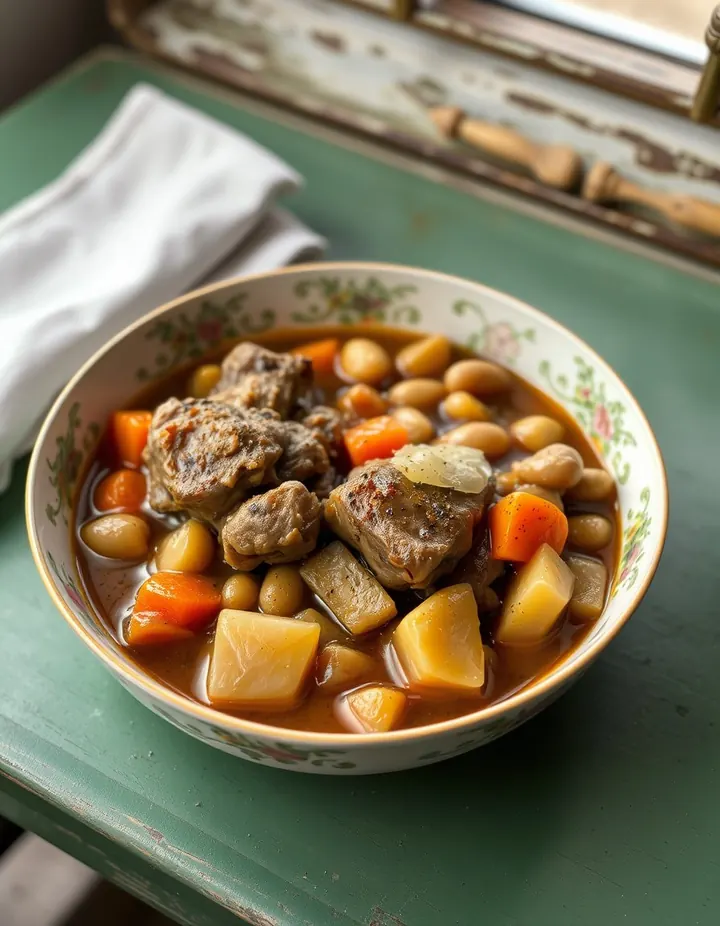 Haricot Mutton59 recipes
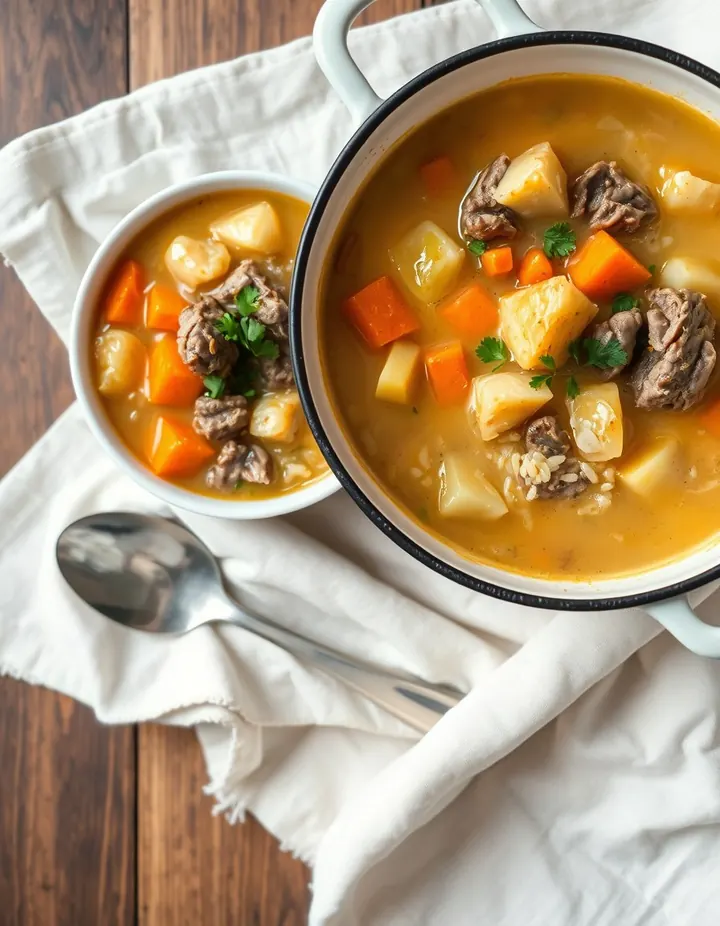 Mutton Soup56 recipes
The free Flavor Lab newsletter: one surprising pairing a week and the molecular reason it works, in 60 seconds. No spam, unsubscribe anytime.
Prefer an account? Create a free account to save pairings and unlock the full chemistry.