Why it works: Beef and pepper are a kitchen classic. They rank in the top 10% of all ingredient pairs, and cooks put them together in 18,971 recipes. Both carry 2-isopropyl-3-methoxypyrazine, which smells earthy, pea. The science ↓
English Sirloin of Beef
Ingredients
Directions
The book gives no oven temperature. The 400°F (200°C) in the steps was added when the recipe was transcribed, as a starting point.
Prepare
Choose a sirloin from a young animal and allow it to ripen for tenderness.
Preheat the oven to 400°F (200°C).
Season the beef generously with coarse sea salt and black pepper.
Roast and serve
Place the beef in the oven and roast until it reaches your desired doneness.
Let the roast rest before carving.
Transcribed from a scanned cookbook and modernised for today's kitchens. Where the book gave no heat or time, or said "a moderate oven", the temperatures and times here may be modern equivalents rather than the book's own figures.
Explore the science
The flavor team
The pairs that carry this dish. Each one is judged two ways: how much their aromas overlap, and how often cooks already put them together.
-
Beef + peppertop 10% of all pairsSmell alikemoderateCooked together18,971 recipes
Shared aroma: 2-isopropyl-3-methoxypyrazine (earthy, pea).
Ranks compare each pair with 20,000 random ingredient pairs on CompKitchen. How we score pairs
What each ingredient does
- Beef sirloin
- Forms the main body of the roast and sets its texture and flavor.
- Coarse sea salt
- Seasons the meat and helps draw out moisture to form a flavorful surface.
- Black pepper
- Adds aromatic heat and seasoning to the outside of the roast.
The step that matters
Let the roast rest before carving. Resting lets muscle fibers relax and redistribute juices, so the meat stays moister when sliced instead of releasing its juices onto the board.
“What each ingredient does” and “The step that matters” were written by Claude from this recipe’s own method and reviewed in samples by CompKitchen.
You might also like
 Roast Beef211 recipes
 Beef Loaf175 recipes
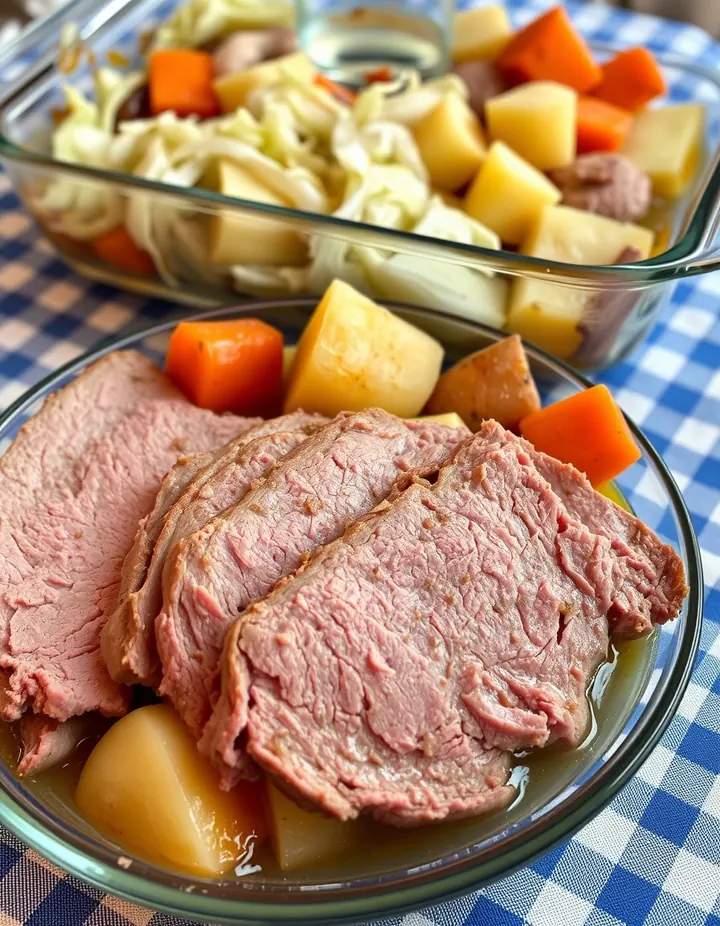 Corned Beef87 recipes
 Beef Broth67 recipes
The free Flavor Lab newsletter: one surprising pairing a week and the molecular reason it works, in 60 seconds. No spam, unsubscribe anytime.
Prefer an account? Create a free account to save pairings and unlock the full chemistry.