Why it works: White wine and chestnut work together. They rank in the top 18% of all ingredient pairs, and cooks put them together in 121 recipes. Both carry ethyl pentanoate, which smells yeast, fruit. The science ↓
Ox-tongue ‘à L’écarlate’, Chestnut-purée
Ingredients
Directions
Prepare
Soak and boil the pickled ox-tongue in water for 2 hours.
Drain and remove the skin.
Braise
Place the tongue in a stewpan with sliced vegetables and aromatics.
Moisten with broth and white wine to half its height.
Cover with paper and cook gently, turning occasionally.
Glaze, sauce and serve
When glazed, serve on a purée of chestnuts.
Pour broth into the cooking stock, boil, skim fat, strain, and reduce to half glaze.
Pour the reduced sauce over the tongue.
Transcribed from a scanned cookbook and modernised for today's kitchens. Where the book gave no heat or time, or said "a moderate oven", the temperatures and times here may be modern equivalents rather than the book's own figures.
Explore the science
The flavor team
The pairs that carry this dish. Each one is judged two ways: how much their aromas overlap, and how often cooks already put them together.
-
White wine + chestnuttop 18% of all pairsSmell alikemoderateCooked together121 recipes
Shared aroma: ethyl pentanoate (yeast, fruit).
Ranks compare each pair with 20,000 random ingredient pairs on CompKitchen. How we score pairs
What each ingredient does
- Pickled ox-tongue
- The meat itself, which softens and becomes tender during long gentle cooking.
- Broth
- Moistens the tongue during braising and, once reduced, forms the glossy sauce.
- White wine
- Adds acidity and aromatic depth to the braising liquid.
- Sliced vegetables
- Flavour base that gives the braising liquid savoury depth.
- Chestnut purée
- Soft, starchy base that the tongue is served on, adding sweetness and body.
The step that matters
Cook gently under paper, turning occasionally. A rapid boil toughens and dries the meat. Slow, covered cooking keeps moisture in and lets the connective tissue break down, so the tongue becomes tender and evenly glazed.
“What each ingredient does” and “The step that matters” were written by Claude from this recipe’s own method and reviewed in samples by CompKitchen.
You might also like
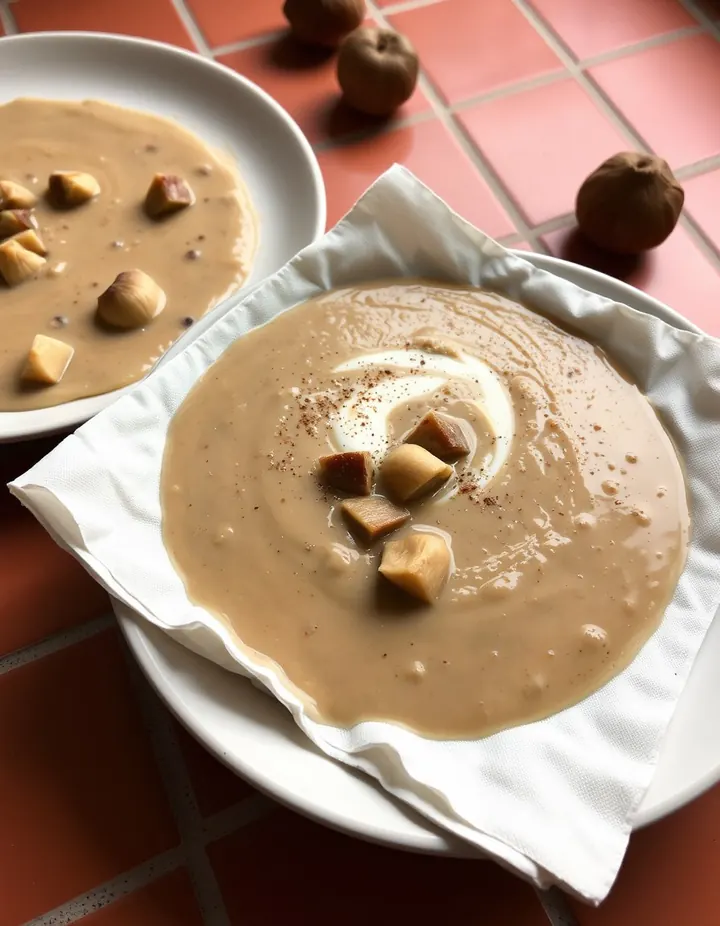 Chestnut Soup52 recipes
 Tomato Soup526 recipes
 Brown Bread461 recipes
 Mutton Broth292 recipes
The free Flavor Lab newsletter: one surprising pairing a week and the molecular reason it works, in 60 seconds. No spam, unsubscribe anytime.
Prefer an account? Create a free account to save pairings and unlock the full chemistry.