Why it works: Flour and butter are a kitchen classic. They rank in the top 12% of all ingredient pairs, and cooks put them together in 124,287 recipes. Both carry isobutyraldehyde, which smells malty, green. The science ↓
Cold Lamb-pie
Ingredients
Directions
The book gives no oven temperature. The 400°F (200°C) in the steps was added when the recipe was transcribed, as a starting point.
Prepare the paste and filling
Prepare short-paste with flour, butter, salt, egg yolks, and enough water; let rest for 1 hour.
Bone lamb necks, trim sinewy parts, and cut into 1-inch squares; place in a bowl.
Add blanched bacon and cooked ham to the lamb; season with salt and spices, and baste with Madeira; let macerate for 1 hour.
Chop meat from lamb shoulders and fresh bacon together until very fine; season with salt and spices, and pound for 5 minutes.
Assemble the pie
Roll out 3 parts of the prepared paste into an oblong square and place on a baking sheet.
Spread a thick layer of force-meat in the center, then layer with lamb, bacon, and ham; cover with another thin layer of force-meat.
Continue layering in a dome-like fashion, then cover with remaining force-meat and fold over the edges of the paste.
Moisten the paste and cover with puff-paste; egg wash and score the top with a knife.
Bake and finish
Bake in a preheated oven at 400°F (200°C) for 1.5 hours, covering with paper after 10 minutes.
After removing from the oven, let cool for 15 minutes, then pour in cold liquid aspic-jelly through the top opening.
Transcribed from a scanned cookbook and modernised for today's kitchens. Where the book gave no heat or time, or said "a moderate oven", the temperatures and times here may be modern equivalents rather than the book's own figures.
Explore the science
The flavor team
The pairs that carry this dish. Each one is judged two ways: how much their aromas overlap, and how often cooks already put them together.
-
Flour + buttertop 12% of all pairsSmell alikelowCooked together124,287 recipes
Shared aroma: isobutyraldehyde (malty, green).
-
Ham + meattop 13% of all pairsSmell alikemoderateCooked together1,095 recipes
Shared aroma: 1-octen-3-one (mushroom, metallic).
-
Lamb + meattop 13% of all pairsSmell alikemoderateCooked together469 recipes
Shared aroma: 2,4-decadienal (seaweed).
-
Lamb + hamtop 15% of all pairsSmell alikemoderateCooked together160 recipes
Shared aroma: gamma-nonanolactone (coconut, sweet).
-
Flour + eggtop 15% of all pairsSmell alikelowCooked together106,462 recipes
Shared aroma: isobutyraldehyde (malty, green).
Flour and butter barely smell alike, yet cooks put them together in 124,287 recipes: they work on texture and structure more than aroma.
Ranks compare each pair with 20,000 random ingredient pairs on CompKitchen. How we score pairs
What each ingredient does
- All-purpose flour
- Forms the structure of the short-paste that holds the filling.
- Butter
- Adds fat that makes the short-paste tender and crumbly.
- Lamb
- Provides the main meat and rich flavor of the filling.
- Lamb shoulder and fresh bacon
- Pounded fine to form a binding force-meat that holds the layers together.
- Madeira
- Adds aromatic sweetness and depth to the meat during maceration.
- Liquid aspic-jelly
- Sets in the cooled pie to add moisture and body to the filling.
The step that matters
Pouring the aspic-jelly after baking. The aspic must be poured cold through the top opening only after the pie has cooled briefly; if it is added while the pie is too hot, it will melt rather than set, and the filling will lose its firm, jellied texture.
“What each ingredient does” and “The step that matters” were written by Claude from this recipe’s own method and reviewed in samples by CompKitchen.
You might also like
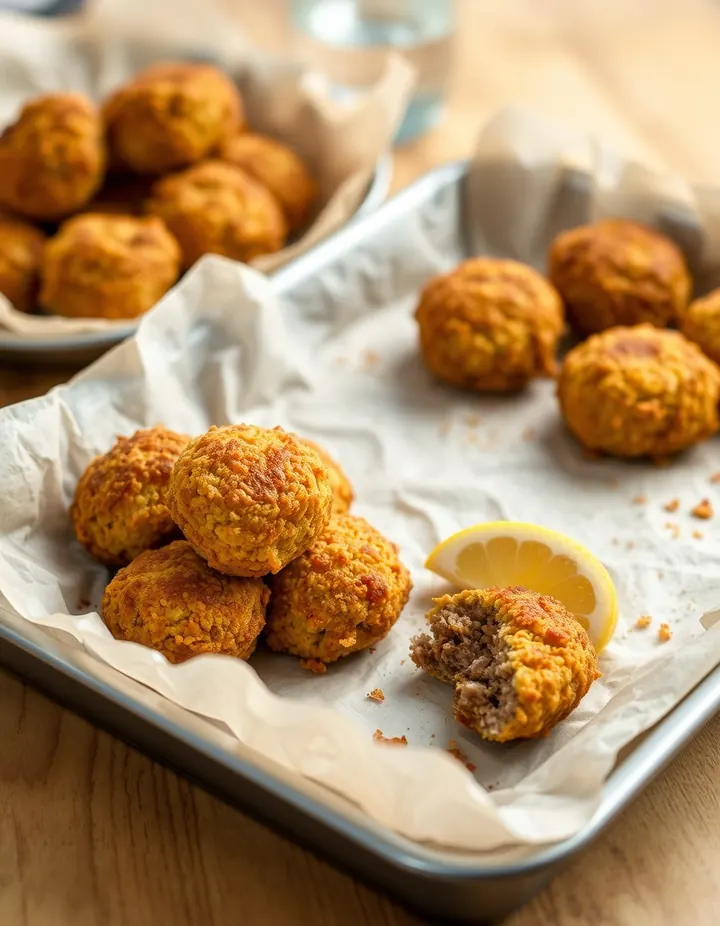 Meat Croquettes52 recipes
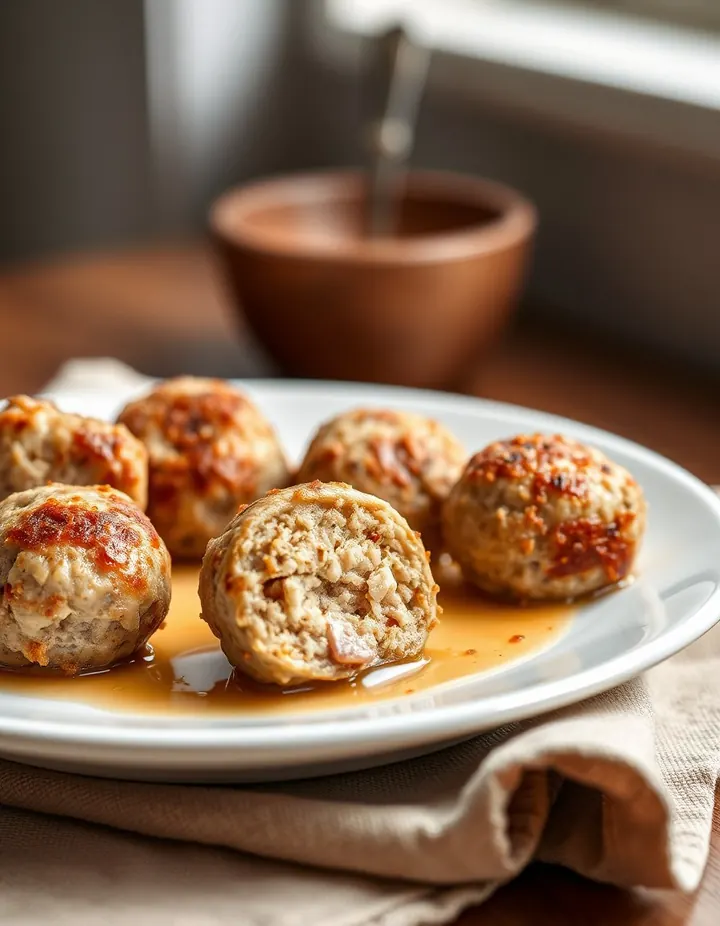 Meatballs37 recipes
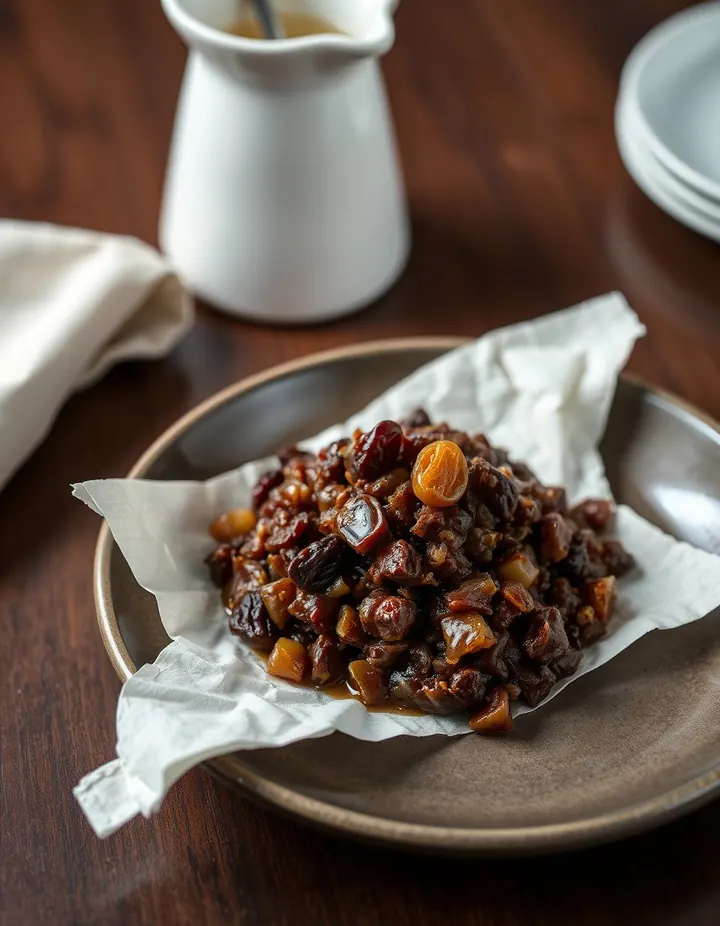 Mince Meat37 recipes
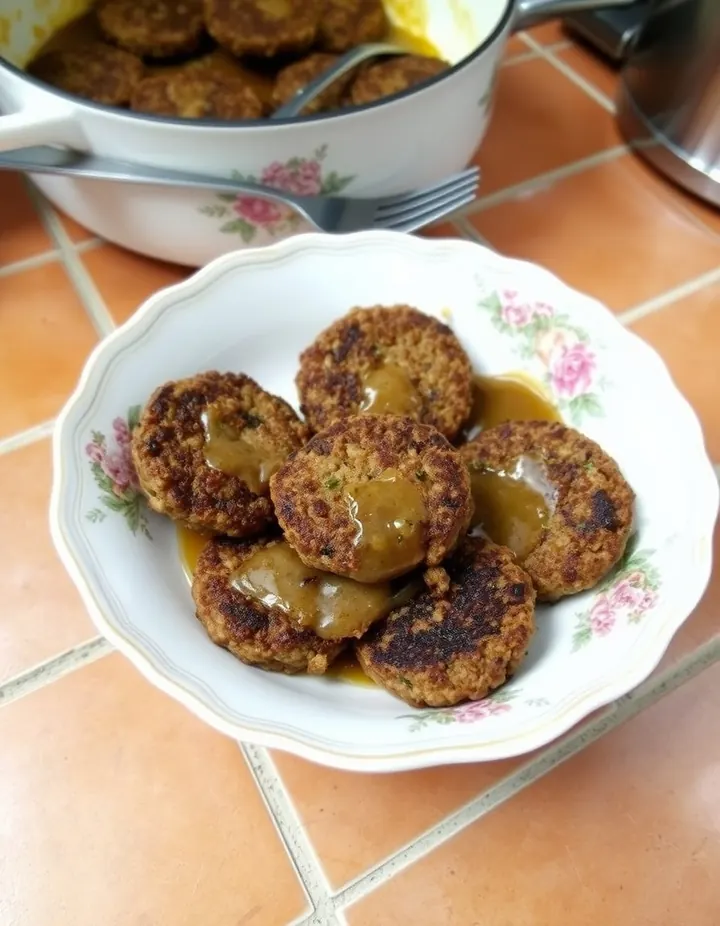 Meat Cakes35 recipes
The free Flavor Lab newsletter: one surprising pairing a week and the molecular reason it works, in 60 seconds. No spam, unsubscribe anytime.
Prefer an account? Create a free account to save pairings and unlock the full chemistry.