Why it works: Pepper and nutmeg match in chemistry and in kitchens. They rank in the top 7% of all ingredient pairs, and cooks put them together in 13,015 recipes. Both carry 4'-methylacetophenone, which smells bitter almond. The science ↓
‘Pain’ of Hare, Poivrade-sauce
Ingredients
Directions
Prepare the meat and aromatics
Trim the sinew and hard parts from the hare meat and cut it into small squares.
Cut fat bacon into squares.
Mix the hare meat with half its volume of fat bacon.
Chop the onion.
Sauté the chopped onion in a frying pan with some rasped fat bacon, bay leaf, and aromatics.
Add the hare and bacon mixture to the pan.
Season with salt, pepper, and nutmeg.
Cook on a brisk fire until set.
Make the liver and glaze
Fry the hare's liver in slices for a few minutes.
Add the liver to the pan.
Pour in the white wine.
Reduce quickly to a glaze.
Remove from heat.
Remove the bay leaf and aromatics.
Let the mixture cool.
Bind and fill the mold
Pound the mixture into a paste.
Gradually mix in a third volume of panada.
Add 4-5 egg yolks, one at a time.
Pass the mixture through a sieve.
Work it for two minutes with a spoon to smooth it.
Test a small part in a mold in the oven to check consistency.
Butter a cylindrical mold and fill the mold with the preparation.
Transcribed from a scanned cookbook and modernised for today's kitchens. Where the book gave no heat or time, or said "a moderate oven", the temperatures and times here may be modern equivalents rather than the book's own figures.
Explore the science
The flavor team
The pairs that carry this dish. Each one is judged two ways: how much their aromas overlap, and how often cooks already put them together.
-
Pepper + nutmegtop 7% of all pairsSmell alikestrongCooked together13,015 recipes
Shared aroma: 4'-methylacetophenone (bitter almond).
-
Onion + peppertop 11% of all pairsSmell alikemoderateCooked together68,474 recipes
Shared aroma: 2-isopropyl-3-methoxypyrazine (earthy, pea).
-
Onion + white winetop 12% of all pairsSmell alikemoderateCooked together4,535 recipes
Shared aroma: 2-isopropyl-3-methoxypyrazine (earthy, pea).
-
Onion + livertop 15% of all pairsSmell alikelowCooked together1,420 recipes
Shared aroma: furaneol (caramel, strawberry).
-
Pepper + white winetop 15% of all pairsSmell alikemoderateCooked together5,433 recipes
Shared aroma: 2-isopropyl-3-methoxypyrazine (earthy, pea).
Ranks compare each pair with 20,000 random ingredient pairs on CompKitchen. How we score pairs
What each ingredient does
- Hare meat
- Provides the main body and flavour of the loaf once cooked and pounded.
- Fat bacon
- Adds fat that keeps the loaf moist and carries flavour through the mixture.
- Hare's liver
- Adds rich, deep flavour and helps give the mixture its character.
- Egg yolks
- Bind the mixture and help it set firm when cooked.
- Panada
- Adds body and helps keep the loaf tender and moist.
The step that matters
Cooking the mixture until set on a brisk fire. Cooking too long or too hot can toughen the meat and dry the loaf, while stopping too early leaves it loose. The meat should just set so the later egg yolks and panada bind into a smooth, tender texture.
Swap the onion
How well each one fits the dish's main ingredients (meat, pepper, nutmeg, liver, white wine, egg):
- Shallotfits better
- Capsicumfits better
- Spinachfits better
- Onionthe original
Fit is the average pairing score against meat, pepper, nutmeg, liver, white wine, egg. Candidates are from the same food group and used in at least 100 recipes.
“What each ingredient does” and “The step that matters” were written by Claude from this recipe’s own method and reviewed in samples by CompKitchen.
You might also like
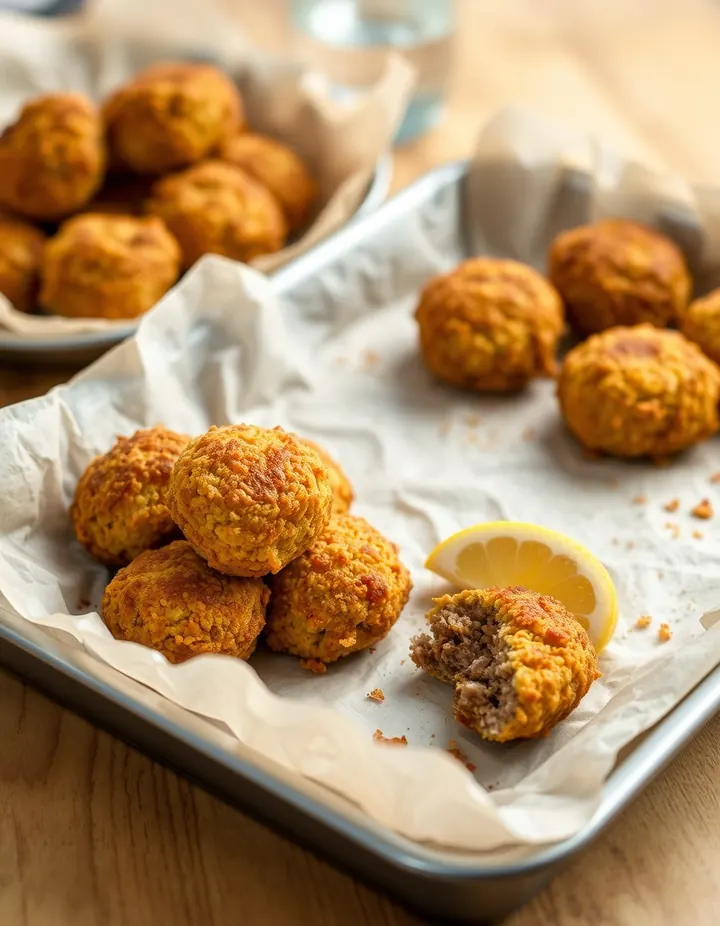 Meat Croquettes52 recipes
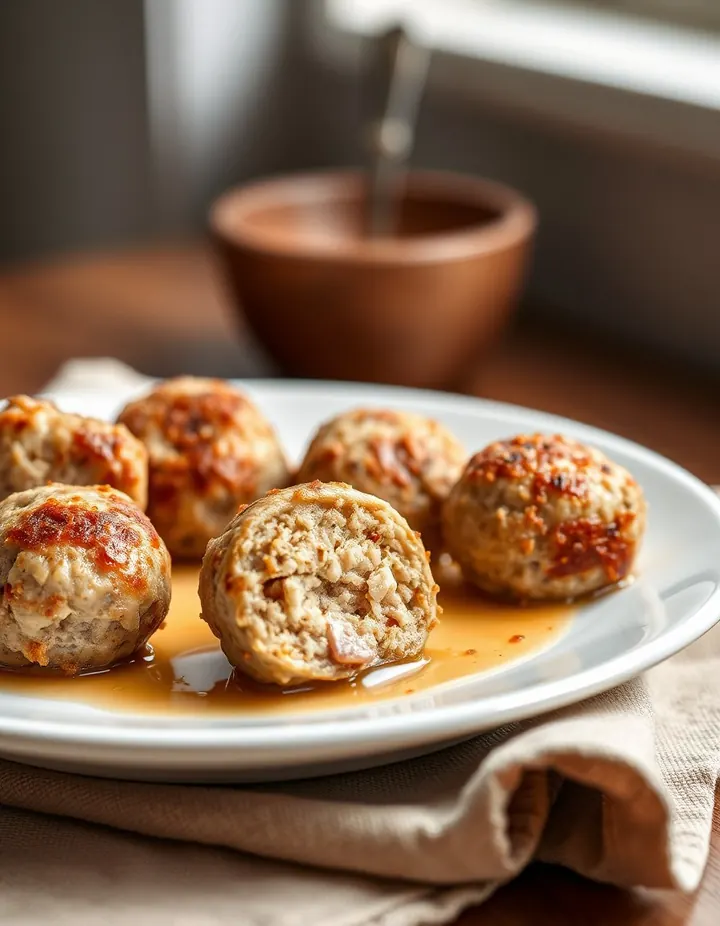 Meatballs37 recipes
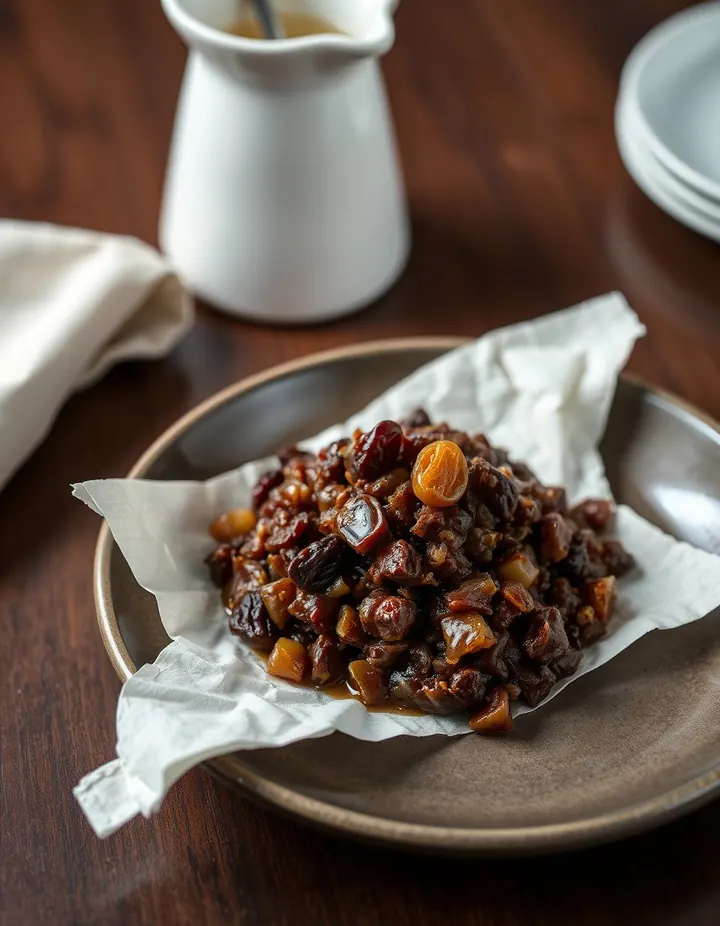 Mince Meat37 recipes
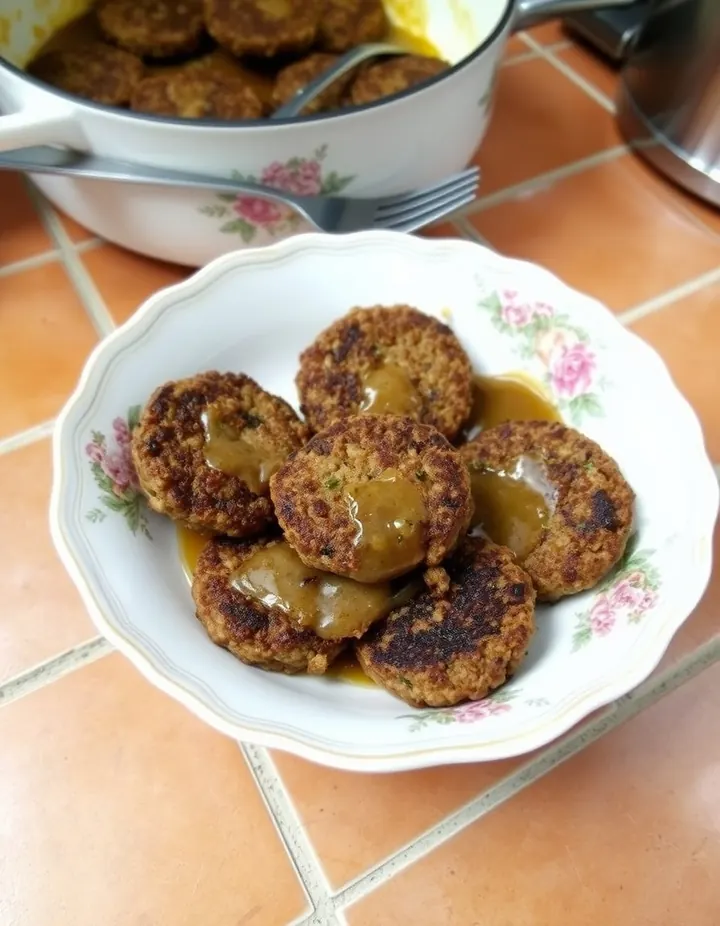 Meat Cakes35 recipes
The free Flavor Lab newsletter: one surprising pairing a week and the molecular reason it works, in 60 seconds. No spam, unsubscribe anytime.
Prefer an account? Create a free account to save pairings and unlock the full chemistry.