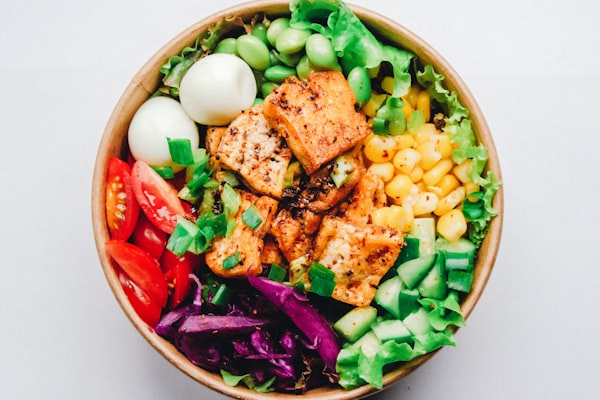
Photo: Lily Banse
Quick Cock (or coq if you're sensitive) Recipe
13 ingredients
4 servings
openrecipes
For a long time I made a sort of Salisbury Steak with cubed steak and it never really did it for me. No matter how cubed a piece of tough steak is it'll still...
Estimated Nutrition (whole recipe, rough)
866
Calories
51g
Protein
18g
Fat
120g
Carbs
Counts 13 of 15 ingredients — the other 2 aren't in our nutrition table and contribute nothing above, so the real totals are higher.
What these numbers assume — 13 portions →
| Ingredient | Portion assumed | kcal |
|---|---|---|
| Flour | 1 cup (125g) all-purpose | 455 |
| Chicken | 100g cooked | 165 |
| Butter | 1 tbsp (14g) | 102 |
| Onion | 1 medium (110g) | 44 |
| Shiitake | 1/2 cup (73g) | 34 |
| Wine | 2 tbsp cooking wine (30ml) | 25 |
| Mushroom | 1/2 cup sliced (35g) | 15 |
| Soy Sauce | 1 tbsp (15ml) | 9 |
| Black Pepper | 1 tsp ground (2.3g) | 6 |
| Garlic | 1 clove (3g) | 4 |
| Thyme | 1 tsp dried (1.4g) | 4 |
| Mustard | 1 tsp (5g) yellow | 3 |
| Salt | 1 tsp (6g) | 0 |
| Porcini | not in our table | 0 |
| Water | not in our table | 0 |
Totals for the whole recipe, adding one typical portion per ingredient — listed above. Quantities in the recipe are not counted, so this is a rough guide only — not suitable for medical or dietary planning.
Ingredients
- 4 Chicken breasts
- Flour, enough for a light dredge
- 1 medium onion, sliced thin
- 8 oz mushrooms (baby bellas, porcinis, shiitakes), sliced 1/8" to 1/4"
- 1 Tb garlic, minced or pressed
- 1 cup red wine, pinot noir works well
- 1 cup chicken stock or water
- 1 Tb demi-glace, such as the chicken variety by More Than Gourmet (optional, but recommended)
- 1 Tb fresh thyme, minced
- 2 tsp Worcestershire Sauce
- 1 Tb dijon mustard
- Salt and Pepper
- butter, amount suitable for your chosen pan
Directions
Step-by-step directions aren't available for this recipe in our database.
View the full recipe at the original source →
By chow ·
Recipe sourced from
openrecipes