Arugula and Romaine Salad with Red Grapes
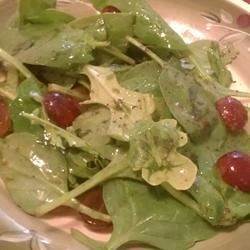
"I looked into my refrigerator to see what I had...and the ingredients jumped to my imagination. I thought: I think this has to taste good and go well with my baked grouper dinner...and it was not only good but great! The mild bitterness of the arugula and the sweetness of grapes and pickled veggies is a perfect combination. A cool crisp pinot bianco is the perfect match."
Estimated Nutrition (whole recipe, rough)
Counts 10 of 11 ingredients — the other 1 aren't in our nutrition table and contribute nothing above, so the real totals are higher.
What these numbers assume — 10 portions →
| Ingredient | Portion assumed | kcal |
|---|---|---|
| Olive Oil | 1 tbsp (14g) | 119 |
| Grape | 1/2 cup (76g) | 62 |
| Sugar | 1 tbsp (12.5g) granulated | 49 |
| Red Onion | 1 medium (110g) | 44 |
| Cucumber | 1/2 cup sliced (52g) | 16 |
| Black Pepper | 1 tsp ground (2.3g) | 6 |
| Romaine Lettuce | 1 cup shredded (36g) | 5 |
| Arugula | 1 cup (20g) | 5 |
| Vinegar | 1 tbsp (15ml) distilled | 3 |
| Salt | 1 tsp (6g) | 0 |
| Water | not in our table | 0 |
Totals for the whole recipe, adding one typical portion per ingredient — listed above. Quantities in the recipe are not counted, so this is a rough guide only — not suitable for medical or dietary planning.
Ingredients
- 1 cup water
- 1/4 cup white vinegar
- 3 tablespoons white sugar
- 1/2 cup sliced seedless cucumber
- 1/2 cup sliced red onion
- 1/4 head romaine lettuce, chopped
- 2 cups baby arugula
- 3 1/2 tablespoons olive oil
- 1 1/2 tablespoons balsamic vinegar
- salt and ground black pepper to taste
- 1/2 cup red seedless grapes, halved