Photo: Anna Pelzer
Avocado, Beet and Arugula Salad with Chevre Tartine
11 ingredients
20 min + 5 min
4 servings
openrecipes
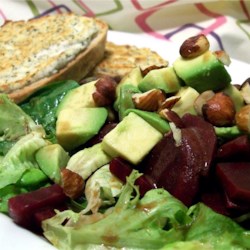
"'Tartine' is the French word for a slice of bread with a topping. Spread herbed goat cheese on crusty bread and toss together beets, avocadoes and greens for an usual, beautiful meal that combines warm with cool, bitter with sweet, and creamy with crisp."
Estimated Nutrition (whole recipe, rough)
970
Calories
24g
Protein
46g
Fat
119g
Carbs
Counts 11 of 13 ingredients — the other 2 aren't in our nutrition table and contribute nothing above, so the real totals are higher.
What these numbers assume — 11 portions →
| Ingredient | Portion assumed | kcal |
|---|---|---|
| Flour | 1 cup (125g) all-purpose | 455 |
| Avocado | 1 medium (150g) | 240 |
| Olive Oil | 1 tbsp (14g) | 119 |
| Goat Cheese | 1 oz (28g) | 103 |
| Beet | 1/2 cup (85g) | 35 |
| Black Pepper | 1 tsp ground (2.3g) | 6 |
| Arugula | 1 cup (20g) | 5 |
| Mustard | 1 tsp (5g) yellow | 3 |
| Vinegar | 1 tbsp (15ml) distilled | 3 |
| Basil | 5 leaves fresh (2.5g) | 1 |
| Salt | 1 tsp (6g) | 0 |
| Salad | not in our table | 0 |
| Hazelnut | not in our table | 0 |
Totals for the whole recipe, adding one typical portion per ingredient — listed above. Quantities in the recipe are not counted, so this is a rough guide only — not suitable for medical or dietary planning.
Ingredients
- 4 ounces goat cheese, softened
- 1 teaspoon dried basil
- 4 (1/2 inch thick) slices crusty bread
- 1 tablespoon Dijon mustard
- 2 tablespoons balsamic vinegar
- salt and pepper to taste
- 1/4 cup olive oil
- 1 (15 ounce) can sliced beets, drained and diced
- 1 (10 ounce) package mixed salad greens with arugula
- 2 avocados - peeled, pitted and diced
- 1/3 cup chopped toasted hazelnuts
Directions
Step-by-step directions aren't available for this recipe in our database.
View the full recipe at the original source →
By allrecipes ·
Recipe sourced from
openrecipes