Why it works: Pepper and lemon match in chemistry and in kitchens. They rank in the top 3% of all ingredient pairs, and cooks put them together in 27,047 recipes. Both carry trans-2-nonenal, which smells cardboard, fatty. The science ↓
Roast Wild Duck
Ingredients
Directions
The book says “a hot oven”. The 400°F (200°C) in the steps is the modern equivalent, not the book's own figure.
Prepare
Keep the duck for several days in cold weather before dressing.
Preheat the oven to 400°F (200°C).
Optionally, parboil the duck with a small peeled carrot or onion before roasting.
Roast
Bake the duck for 5 to 10 minutes without basting.
Baste the duck frequently with butter and water for 30 to 40 minutes until cooked.
Make the sauce and serve
Combine Worcestershire sauce, mushroom catsup, salt, cayenne pepper, and lemon juice in a small saucepan.
Heat the sauce, then remove from heat and stir in prepared mustard.
Serve the duck on a hot dish with the sauce in a hot gravy boat and a cut lemon.
Transcribed from a scanned cookbook and modernised for today's kitchens. Where the book gave no heat or time, or said "a moderate oven", the temperatures and times here may be modern equivalents rather than the book's own figures.
Explore the science
The flavor team
The pairs that carry this dish. Each one is judged two ways: how much their aromas overlap, and how often cooks already put them together.
-
Pepper + lemontop 3% of all pairsSmell alikestrongCooked together27,047 recipes
Shared aroma: trans-2-nonenal (cardboard, fatty).
-
Pepper + carrottop 6% of all pairsSmell alikestrongCooked together14,555 recipes
Shared aroma: 2-isopropyl-3-methoxypyrazine (earthy, pea).
-
Mustard + oniontop 6% of all pairsSmell alikestrongCooked together9,259 recipes
Shared aroma: 2-isopropyl-3-methoxypyrazine (earthy, pea).
-
Carrot + oniontop 6% of all pairsSmell alikemoderateCooked together21,601 recipes
Shared aroma: 2-isopropyl-3-methoxypyrazine (earthy, pea).
-
Butter + mushroomtop 7% of all pairsSmell alikemoderateCooked together12,525 recipes
Shared aroma: trans-2-decenal (waxy, orange).
Ranks compare each pair with 20,000 random ingredient pairs on CompKitchen. How we score pairs
What each ingredient does
- Wild duck
- Is the main protein, providing the meat that is roasted and served.
- Butter
- Bastes the duck, adding fat that carries flavor and helps the skin brown.
- Worcestershire sauce
- Adds savory, tangy depth to the sauce served with the duck.
- Mushroom catsup
- Adds concentrated savory, umami flavor to the sauce.
- Prepared mustard
- Adds sharp tang that balances the richness of the duck and sauce.
The step that matters
Baste the duck frequently with butter and water. Basting repeatedly transfers fat and moisture over the surface, which helps keep the lean meat from drying out and encourages even browning as the duck roasts.
Swap the carrot
The recipe marks carrot as optional. How well each one fits the dish's main ingredients (butter, sauce, mushroom, pepper, lemon, mustard, onion):
- Shallotfits better
- Horseradishfits better
- Chivefits better
- Carrotthe original
Fit is the average pairing score against butter, sauce, mushroom, pepper, lemon, mustard, onion. Candidates are from the same food group and used in at least 100 recipes.
“What each ingredient does” and “The step that matters” were written by Claude from this recipe’s own method and reviewed in samples by CompKitchen.
You might also like
 Lemon Sauce236 recipes
 Carrot Soup134 recipes
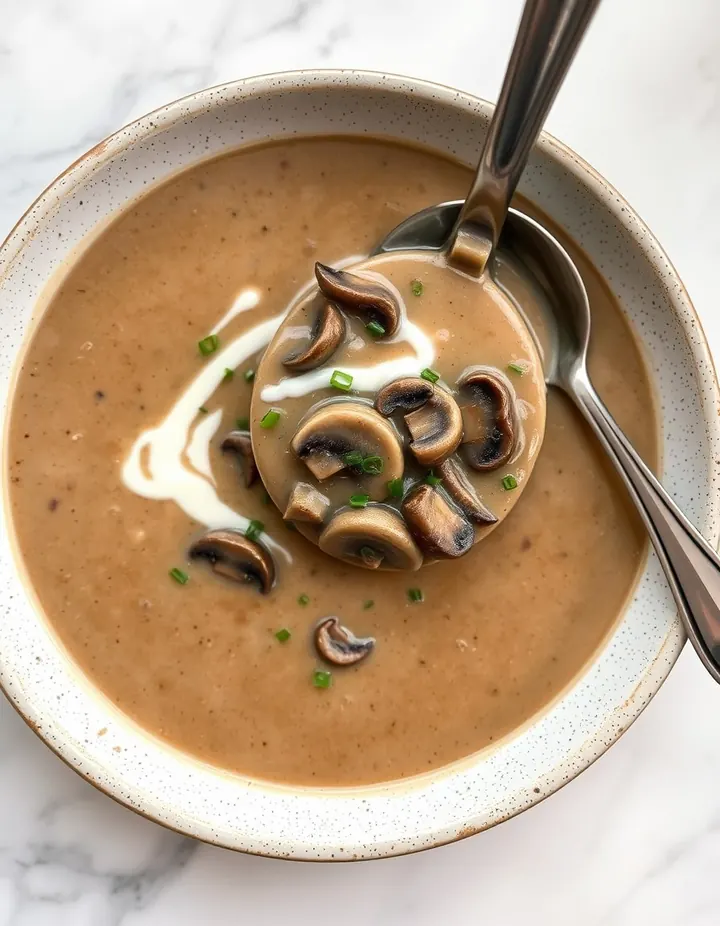 Mushroom Soup60 recipes
 Tomato Soup526 recipes
The free Flavor Lab newsletter: one surprising pairing a week and the molecular reason it works, in 60 seconds. No spam, unsubscribe anytime.
Prefer an account? Create a free account to save pairings and unlock the full chemistry.